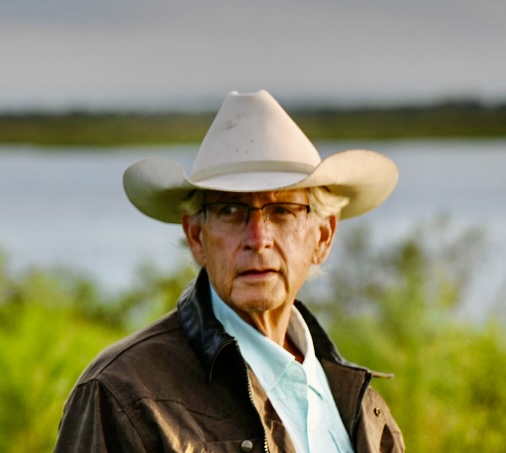
Jim Strickland is managing partner at Blackbeard’s Ranch in southwest Florida, co-founder of the Florida Conservation Group, and vice chair of the National Cattlemen’s Beef Association Environmental Stewardship Award Program. Over a seventy-year career in cattle, Jim watched nearly 100,000 acres of leased pasture disappear to development around Sarasota, and in response he helped build a coalition of ranchers, scientists, and conservation groups that has now facilitated roughly 160,000 acres of easements and pushed the Florida legislature toward a $300 million appropriation for easement funding. In this conversation, Jim and Tip discuss the mechanics and politics of conservation easements, the emerging market for paying ranchers for ecosystem services like Florida Panther habitat and aquifer recharge, prescribed fire on pyrogenic Florida rangelands, and Jim’s experience as reportedly the first rancher to deploy virtual fence at scale east of the Mississippi — now covering 7,000 acres. Florida’s ranchers are only one-half of one percent of the state’s population, but they steward the water, wildlife corridors, and working open space that 22 million Floridians depend on, and Jim makes a compelling case for why telling that story well may be the most important conservation work of all.
Music by Lewis Roise.
Tip Hudson: Welcome to The Art of Range, a podcast focused on rangelands and the people who manage them. I’m your host, Tip Hudson, Range and livestock specialist with Washington State University Extension. The goal of this podcast is education and conservation through conversation. Find us online at artofrange.com. Welcome back to The Art of Range. My guest today is Jim Strickland. Jim runs Blackbeard’s Ranch in southwest Florida just east of Sarasota. Jim, welcome.
Jim Strickland: Well, it’s a real pleasure to be on you today, and talk about cattle ranching and conservation, which is very dear to my heart.
Tip Hudson: I think it’s pretty important, which is one of the reasons why I’ve kept running this podcast. Well, we nearly met in person when I was in Florida in mid December, and I actually ended up visiting Myakka State Park and was on the edge of your place, according to ONC, in my route back to Buck Island Ranch, but we couldn’t make our schedules sync up. You live in a beautiful part of Florida.
Jim Strickland: Well, I’ve lived there my whole life, and Myakka State Park is one of the Florida’s most recognized area, and the Myakka River has got a designation of the Wild and Scenic River designation, which is one of only two in the state of Florida. So you are at a very special place with Blackbeard Ranch, I think we border them for maybe two miles along their northern border so we’re a buffer between, if you will, development and the Park.
Tip Hudson: Not know about the wild and scenic designation that it’s interesting because it always surprises me how quickly the scenery transitions from high rise vacation condos to pasture and jungle and hammocks, just within a few miles of the coast.
Jim Strickland: It does. Particularly in Florida I know there’s probably a lot of other states that certainly have the rapid development that we have in transitional lands. But in Florida, it seems like we have you step from a ranch. I’ll give you an example, a 27,000 acre ranch that whenever I had part of leased and leased land around it, we had three homes on it, 27,000 acres, and we were only 20 minutes from the Sarasota airport in downtown Sarasota. Now I think we have close to 8,000 homes with projected out for 12 to 14,000 homes, and all of the 27,000 acres within the next two years will be gone. You step out of there, and then hopefully we’re working very hard at doing conservation easements. That’s part of our job. Now is trying to advocate and lobby for funding. The concept of doing conservation easements on some of these lands here in Florida that we know we don’t have the money with the prices of land somewhere north of 20 up to $100,000 an acre on many of those lands surrounding that 27,000 acres I was talking about so yes, it can change rapidly.
Tip Hudson: But your predecessors were ranching there long before Sarasota Beach became a concrete jungle. What is the history of the ranch? How did you end up running it, because that’s not always how the story goes?
Jim Strickland: Yeah, it isn’t. One, right now, we have seven different ranches. I am managing partner at Black Beard. I certainly have a partner. I call myself the Por Broke Cowboy partner. But in addition to that, there is Strickland Ranch, which sits right next to Blackbeard Ranch. Then my wife has a NRCS easement on a ranch she just bought, and she has an easement on the entire property, and we’re doing partnerships with Ducks Unlimited and some with NRCS on that property, but it is a cow calf operation. It’s also an Alligator Haven. We counted 468 alligators over there the other night driving through, and we’re only talking to 1,300 acre ranch, so it’s not huge. We have that ranch, then we have Big Gray Cattle Company, which is a hay operation. We lease out farmland, and we have a purebreed Braford herd over there. We have a ranch further east than Blackbeard, which is called Blackbeard Ranch Prairie Ranch, and that has a purebred beef master herd on it. There’s no easement on that Blackbeard piece over there. Then we actually have one in Ocala, which is just south of Gainesville, where University of Florida is. We have a ranch up there. We’re spread out, and then we’ve got, I think, three or four other ranchers. We have two smart guys along I75 south of Tampa, and that is where we develop our heifers and once they are bred, and then we have a ranch we lease and facilitate feeding our weaning heifers. That’s over in the middle of the state, not too far from where you were at Buck Island.
Tip Hudson: Wow. Yeah, you talked about the development. I have seen those pressures all over the country, but it seems like the work or the effort that it would take or the mental and family commitment to resisting development here would be quite a challenge, because the economic pressures have to be huge. People want to think that with cattle prices this high, that this pressure should be less, but that misses the mark. It’s much more long term than that. You mentioned the easement on the entire property, the one that’s involved with Ducks limited that your wife owns. What has been the reception to conservation easements in Florida and what pulled you into it?
Jim Strickland: Well, actually, what pulled me into the whole conservation easement thing is we can start right off the Gulf of Mexico at Sarasota Bay that I had probably two or three miles along Sarasota Bay, which is solid homes now leased. During my cattle producing age of 70, I started borrowing money when I was 14-years-old to buy cattle. We added up how many acres of leased land that I have had, that I have lost to development, and it is right up next to 100,000 acres. That used to be pasture that I personally had leased during that time period. So whenever we started buying land and starting to look at actually buying land. All along, I would own a little bit of land, but in all honesty, my father died whenever I was 17-years-old, left us with unexpected debt because he didn’t expect to die at 47. So we had to sell the ranch. We sold the orange grove, we sold the home. I understand loss. When you sell everything except the cows, that was the one thing. By now, at 19-years-old, I was able to buy from the estate because we owe debt on a lot of that in a lot of different directions. But I kept the cattle and kept the lease ground. Then we migrated further east and east. This development essentially pushed us out of the ability to lease land. I had been blessed with two partners in my life, and both of them were not cow people, but we worked together and we trusted each other, which gave me the ability to now, I think we’re over about 12,000 acres and less than 2000 head of cattle. But we are certainly active in the cattle industry. Well, one of the ranches that I bought was the land called Blackbeard Ranch, and we wanted to do a portion of it, because the headwaters of Deer Prairie Slough, which provide the drinking water to a community right on the Gulf we wanted to do an easement on that. At that time, there was very little money in the easement coffers to do one on a statewide level. With the help of my now wife, at the time, the wildlife biologist, and facilitator of easements, Julie Morris, we partnered with NRCS, and we had the BP oil, gas and oil debacle out in the Gulf of Mexico. They put money into the pot, along with another group that I have lost, but we had three groups of funders just to do a approximately 2000 acre easement, maybe a little bit less. We had to look at every opportunity to fund one easement, and that’s when we started Florida Conservation Group. Florida Conservation Group is a nonprofit that ranchers and scientists put together on trying to find pots of money to where we could do more conservation easements. I was the Port Brooke cowboy once again, but I knew what losing land meant. I do have a background in real estate appraisal, real estate finance. That was my little bit of college education. I do understand and have done appraisals of land. We started down that road. We worked with the federal government. We worked with the state government. We worked with the legislature, Commissioner of Agriculture here in Florida. We worked with Department of Environmental Protection and their conservation easement program called Florida forever. We lobbied and lobbied and so just recently, at the time Senate President Wilton Simpson, he got passed through the legislature a $300 million appropriation to do conservation easements. The great thing was he got that appropriation and it was time for him to leave the Senate. He ran for Commissioner of Agriculture and Wilton Simpson and has managed that fund. In the meantime, he is a huge believer. It shows the difference that one man can make in a state. That through being Senate president, now Commissioner of Agriculture, if we can keep that amount to a recurring 100 million. We ask for special appropriations every year during the legislative session. We’re looking for 300 million this year. Then being able to leverage that money and partner with NRCS on ALE or WRE, we can partner on a lot of these lands. Plus, in the state of Florida, we’re talking about a desire. In Florida, we have just about 10 counties of our 67 counties that have environmental land protection programs that they also raise money through taxation and millage rates that go to all the county. This was voted on by every single county that voted to tax themselves to do conservation easements or land buys to help buffer the effects of development. We’re very fortunate in Florida. We also did a constitutional amendment, and it was one of the largest voting for conservation ever in the history of constitutional amendment votes by percentages. It showed that the people want to do conservation at the same time. Ranchers are about one half of 1% of the population of Florida so having the backing of those people really helped politically to garner up the desire to do that. Right now, our Florida Conservation Group has done well over 200, excuse me, about 160,000 acres of easements on private ranches that we act as if you will, the agent facilitator, walk them through all the ecological environmental process, the evaluations, the appraisal process, and there’s a bit of negotiation on when you do conservation easements, do I give up all my development rights or do I keep some? Do I give up all my ability to split that ranch in one, two or four parcels to where I could possibly sell those or distribute those parcels to air? Each one of those affects your conservation easement value. I’ll answer your question. Florida has a great desire to buffer, if you will, development, to have a ying and a yang. We know that development is not going to stop. It absolutely will not stop. We’re trying to give ranchers the ability to have something other than I’m going to sell to a developer or a more intensive use golf course or something like that and sell a conservation easement. Right now, the amount of applicants to the conservation easement programs in Florida on the state level. Now, this doesn’t include the federal level, but at the state level, that there is well over 600,000 acres of ranchers, excuse me. There’s over 600,000 acres owned by ranchers and timber operators, primarily that have signed up and put their application into the state of Florida for a conservation easement. Judging by the amount of money we have averaged across the board, paying for conservation easements in the state of Florida, if we had 2 billion that’s 2 billion with a B dollars in those accounts to do conservation easements, the money would be used up immediately. Just with the people applying and their applications in today.
Jim Strickland: I hope that shows that Florida wants to do it. The devils in the details, and the devil is funding is we have to keep robust funding. We have very little recurring funding, which means it’s set up to where every year you get x amount. My opinion is that Commissioner Simpson at Florida Department of Agriculture, he needs at least 500 million a year and our sister program Florida Forever with DEP, which really will utilize the same process and techniques for determining which properties elevate to the top of serving the taxpayers of Florida the best by doing those, I would love to see them getting the same amount, but I don’t think we’re going to see those levels, but we’re going to do everything we can to fight every year to try to get conservation easement funding because it doesn’t just affect the land owner. When we have 22 million people that live in Florida, plus the amount of people that vacation here, that Number 1 issue we worry about is water. Right now, we have diesel plants. We’re pumping saltwater in, and we’re taking the salt out and using it for drinking water. We have aquifers, which is where we pump water out of the ground, which are being depleted because of the use of not only farms, but a lot of the recharge area that recharges that aquifer is now paved over by [OVERLAPPING] surfaces. That water is not going to reach that aquifer. We’re also seeing saltwater intrusion to our wells along the Atlantic and along the Gulf Coast. We are seeing where those wells we use for farming, we can’t use for farming because the pressure of the aquifer, which flows that water down the middle of the state of Florida, that water goes west and goes east. We’re seeing that we have drawn so much water out of that aquifer and put impermeable surfaces in, and the use of water for drinking water and irrigation is such that saltwater is now pushing harder than the freshwater had done for a million years, so we’re having that issue, too. We are in a water crunch, but if we do a conservation easement, in addition to that, we have storm water recharge areas in the upper strata of water to where we could use shallow wells, but also during hurricanes, whenever we have 15, 20, 25 inches of rain, those areas actually act as a sponge with a sheet flow across it. It helps amiate the effects of the water that hits the Gulf Coast where the homes are. We help with their flooding by having these rangelands, and we haven’t even talked about endangered species out here.
Tip Hudson: What you’re describing are very much public ecological goods, wildlife habitat, clean water, clean air, non salty water. The list could go on, soilcarbon, and we have not had very many good ways to compensate the private landowners who are providing these public goods. It sounds like you’re a little bit it probably doesn’t feel like you’re ahead of the curve, but the situation is so much more extreme in Florida that these are somewhat new programs, I think, that would be of interest to other parts of the country where this hasn’t quite come home to roost in quite such an extreme way as it has there. I think we see that in a really significant increase in wildlife-oriented non-profits that are working with ranches to do things like incentivize habitat value and to keep them in open space and habitat. You mentioned Ducks Unlimited, the Audubon Society has a fairly well-publicized, at this point, conservation ranching program that’s also relatively new, but they’re doing a good job of getting that out there. I know pheasants forever have some similar programs. I’ve been talking pretty big about ranches providing wildlife habitat because I think it’s real. In the West, maybe that’s more obvious because you’ve got big wild open spaces with mostly native vegetation. When it gets grazed at a light to moderate intensity, you get good species composition, you get the right habitat values, that’s good for everything that’s out there, and better habitat than if there was nothing like grazing or fire to cycle those nutrients. To what extent have those wildlife organizations been working with ranching organizations and pushing for these programs, like you’re describing in Florida?
Jim Strickland: That’s a great question, and I am really proud to say about five years ago that at Blackbeard Ranch, it was about the time we had won the Environmental Stewardship Award Program that we put out a call to action to almost every single entity that we could find that had anything to do with wildlife, with water, with cattle ranching, agriculture, and we had a meeting, two day meeting at the ranch, and the focus of that meeting was all of us needed to agree that we believed in conservation easement funding, and we would love for everybody to get on board with trying to help us, meaning all of us were helping each other we get funding for conservation easements. I do believe we had 37 groups from the Sierra Club to the Audubon. By the way, we work with Audubon, too, not financially, but with a lot of great people, and we work on similar projects. That would be our Florida Conservation Group, which is made up of scientists and ranchers or land owners. We work with them, but we actually invited the Hunters Farm Bureau, the saltwater fishermen, commercial fishermen, anybody that had something to do with telling the story of why we needed to conserve these rangelands, we brought to the table, every single one of them. Now, some of them had to go back to their boards and get permission. Every single one of them signed onto that agreement that we would all work together to try to get conservation funding through the national level and the state level. Since then, we have, funny enough, we’ve started the call for, and you touched on ecosystem services, which identify those things that ranchers are doing for the greater good of society and the land itself, that we’re just a snapshot here. I don’t want to think in terms of what we’re going to do next week, next year, or 10 years from now. I want to think about in terms of what’s Florida going to look like 100 years from now. Let’s look at that now. We can talk about carbon sequestration, we can talk about oxygen, we can talk about endangered species like the Florida grasshopper sparrow, it is the most endangered bird species in North America, we can talk about the Panther. We have so many groups that have been startup groups since that meeting on the wildlife corridor, which we have the designated wildlife corridor throughout Florida, which we are supposed to as government, I’ll take my private hat off, as government that are looking at buying land or doing conservation easements are garnered with a responsibility through legislation that passed two or three years ago that said we are going to prioritize our buying of conservation easements in the Florida wildlife corridor. We are protecting all these species. Well, in wildlife corridor, a lot of the wildlife corridor is all the rivers and the streams that flow into the estuary. You’re protecting the wildlife, but at the same time, you’re protecting the water sources of all the people on the coastal areas. Of course, those coastal areas are very rapidly progressing towards the center of the state. One of the first ecosystem services that we received last year was through the Florida Wildlife Federation, and they got a grant. They threw a million dollars into the pot, and we said, We’re going to protect Panther habitat. We have to prime the pump conceptually about ecosystem services. We have to prime the pump about what do ranchers do for society that we’re not getting paid for. They’re not getting paid for, meaning all my neighbors across the whole America. We have now been working with Florida Gulf Coast University on trying to come up with a methodology for what is land worth that supplies carbon? Carbon sequestration, oxygen, habitat for gopher tortoises, habitat for grasshopper sparrows, habitat that’s going to help with flooding, habitat for ephemeral wetlands, for all the species that we’re a big ephemeral wetland state here, that we don’t always have lakes that water levels go up, water levels go down, they go dry. We have a lot we have a lot of those areas. We primed the pump, overwhelmingly, the group of ranchers that applied for the Panther habitat, it was full in weeks. All of us applied. I think we’re now getting the public to start maybe grasping, and we’ll have a little bit of a track record to set the stage for in the future, whether you have an easement or not, that we need to identify all those attributes that greenspace offers by keeping at green space to the 22 million people that are living here, but with our population studies, we’re going to double that within x amount of years, and it’s going to be even more important because we’re going to lose our natural green space and habitats, and water recharge areas. Let’s plan now. Florida is working at it. Going back to the devil in the detail is money, is funding for those things, but right now, we need to be able to quantify what we do as land owners for the greater society, and then somehow extrapolate out, what is it worth to save a grasshopper sparrow? A Panther, water recharge areas? Conservation lands that are going to protect other communities from flooding, oxygen, carbon sequestration. All those studies are on the way. I know Archbold Biological is doing quite a few of those studies. The University of Florida is all over the state, and they are now starting to put money into the budget to do those studies.
Tip Hudson: That’s encouraging. People hear things like clean air, clean water, open space, habitat, food, and I think their eyes glaze over. It sounds too esoteric until they’re gone, and then we really need to pay attention to that. As you’re describing well-managed grazing lands, do all of that, but they also grow food. I see some of these graphics out there. I don’t know, I’m not much of a Facebook fiend, but I get caught looking at LinkedIn every once in a while, and I see these graphics showing the land footprint to grow a pound of beef, compared to a pound of carrots or something. The carrots take a tiny little patch, and the beef takes up, however many big acres. I think what gets lost there is in the space that you’re going, carrots or corn, that’s definitely not Panther habitat, and it’s not a habitat for the grasshopper or sparrow or anything else. We, the people, are throwing gigantic amounts of money and effort toward data centers and the infrastructure to support them to run AI, but we are still embodied beings that need food and clothing, and shelter. That all has to come from somewhere, and I’m sure people are tired of hearing me say it, but I feel this is the story that doesn’t get told, and I’m not quite sure why. A well-managed ranch is providing the resources for food and clothing, and shelter, and is providing most of the wildlife habitat and open space, and clean water in the country, and I don’t know how we get that out better.
Jim Strickland: It’s tough to talk to people about hunger when they’re not hungry. The large amount of people that are taxpayers are not hungry, but there is a large section of society that are hungry, but they’re not the voice. A lot of them may not vote, but we need to take care of that portion of society. I’ll never forget that because we have a huge food bank program and a lot of my rancher friends, my vegetable friends, my citrus friends, that there is a huge amount of millions of tons of food that are supplied to that group that are hungry, but the ones making the decision aren’t hungry, and if you’re not hungry and you haven’t been hungry, if you’re not cold, you don’t worry about heat. If you’re not hungry, you don’t worry about food because you can DoorDash it in, or you can go to the grocery store and buy anything you want, but food security, there’s a lot of things happening in our world. Food security, America, United States, having food security needs to come to be, maybe not the forefront, but be recognized constantly that food security means a big thing, too, because so many of these diversified cattle operations, lease land out for farmland, lease land out for carrots, lease land out for watermelons, for corn, for all of these things, and they provide maybe not as good a habitat as a native grassland ranch, whether you’re in Texas or Florida, because those big rangelands are the closest thing to Pristine wilderness as there is. You can’t buy up every acre and make a state park out of it and close the gate by doing conservation easements and recognizing all of these things, and it’s your job. I hate to put the onus on you today, but it’s your job to get the word out, because we are passionate about what we do, but we don’t have those social media outlets that tell the story. It’s people like you that tell the story for us, and it’s greatly appreciated.
Tip Hudson: I appreciate that. We are trying to get that done. I’m actually interested in trying to get this podcast out to a broader. The sociologists say there’s no such thing as the general public. Trying to get it out to other publics besides just natural resource professionals and ranchers, and I’ve taking some steps to get there. I want to ask you about the environmental stewardship program. Did I hear correctly that you’re the vice chair for the National Cattlemen’s Beef Association Environmental Stewardship Award Program?
Jim Strickland: Yes.
Tip Hudson: What is the history of that? How far back does that go? What was the original intent of the award?
Jim Strickland: It was started in 1991, and it was, of course, NCBA, National Cattlemen’s Beef Association was instrumental in doing it, but we wanted to and I wasn’t involved at the time, but we wanted to get the word out to tell the story of exactly what you and I are talking about. We started that and we have, I do believe it is eight regions in the United States, and they would put in their applications for Environmental Stewardship Award Program. Then we judge those. Each winner from each area then goes to a group which is the Environmental Stewardship Awards committee, and then we determine and select who wins the National Award.
Tip Hudson: As was a pretty impressive list. I was taking a look at who has received the award, and at this point we’ve featured on the show Clint Richardson, Lisa Pretty now, and I just interviewed last week, Alan Miller here in Washington State. I think he was the first recipient from Washington State, and he was pretty excited about it. It was an emotional thing for them. How would you say this award impacts the ranch? In what way does it benefit them other than just recognition?
Jim Strickland: Other than recognition, if they have, I’m looking at a micro level, but if they’re doing eco tours or selling their own food products, it would help them. Basically, we need them to be spokespeople. That’s one of the things that I have always said since I was on this committee that as we’re selecting these, we need to look at what they have done, who they worked with, how they’ve managed their properties. I can tell you, I’m blown away. It is a very hard decision regionally and nationwide to select within a great group of ranchers. Just unbelievable. There’s so many times we say, you didn’t win, but you have the ability to put your application. Again, so many of you are great. What we are looking for is, are those ranches that do all the right things, the conservation programs and working with people and advocating and outreach. Outreach is one of the things we look at. What kind of outreach have you had? How many people have you run through the ranch that you’re telling our story, maybe your story, but it’s our story as ranchers together. From California to Florida, we’re all in this ranch your boat together is, how do you tell the story? Then how can we help them tell the story and put them through leadership training, put them to media and help them say, somebody calls from New York or Los Angeles and calls the National Cattlemen’s Beef Association and says, I need a spokesperson. We have New World screw worm. Who are we going to talk to? Probably you’re going to talk to the Commissioner of Agriculture in Texas, but wouldn’t it be nice to talk to some really good rancher spokespeople that have been vetted through this program, and they may not have won the national award, but if they won a regional award or been in the running for a regional award, that we have this list of ranchers that we know are going to be great spokespeople for us. That is one of the desires of the ECIP program is to have a great group of ranchers, women, men and many of their children that I have heard interviewed that are just phenomenal spokespeople for our industry.
Tip Hudson: That is a good effort. And I have heard some of them. I would say that has been effective, and it definitely needs to continue. How is that program funded? Is that part of NCBA’s operating budget or are there sponsors that support that effort?
Jim Strickland: We do have. It is a small part is their budget, but we also have and in fact, I hate to say I’m looking it up now, and you may be looking at it to see who our sponsors are.
Tip Hudson: No, I had not. I suspected that was probably the case, but I figured I’d just ask.
Jim Strickland: Yeah, because we have quite a few. Here we go. One sponsor is Corteva Agriscience. One is USDA Natural Resources, US Fish and Wildlife Service, National Academies Foundation. I do believe that in the past, McDonald’s has been part of. Oh, they are listed as a sponsor. We have McDonald’s. We are always looking for good, appropriate sponsors. But these are the people that have been sponsors in the past, are sponsors now, and we hope they are in the future, but they also have board seats that sit on the board. It’s a great cross-section. It isn’t just a group of Cowboys that we do have. We do have rangeland specialist and scientists, and we have corporate America. We have the people that buy our product, the people that furnish good for the product. I think it’s a good cross section. I can tell you the conversations that we have in those board meetings is we are trying to evaluate all these great spokespeople with great ranches across America. It gets really tough because everybody is such experts in their area and they bring it to the table, and it gets tough to go through all the science to the spokesman to the legacy to what they have done, partnering with NRCS to change their ranch into a better ranch, what they are continuing to do. Whether it’s Vince collars, which we happen to be using Vince collars. I’m a big proponent of that technology into the future. Or it is working with NRCS on drainage, working with NRCS on water supplies or working with Wildlife Habitat or land conservation or riparian areas. It’s tough to make a decision. We have a lot of great ranches out there.
Tip Hudson: I know I’m asking you some questions you weren’t prepped for. Have there been any ranches that really surprised you? What was your favorite award that you’ve seen in the years that you’ve been involved with the program? You can also decline.
Jim Strickland: No, I won’t decline because I’m constantly amazed. There have been some smaller ranchers. I’m not going to mention names. But I say smaller that may have 500,000 acres compared to somebody who might have 20,000, 30,000 acres. You naturally, as a rancher, gravitate to the large ranch. I have been amazed at some of the efforts put forth by not only multigenerational ranchers, but first generation ranchers. It’s dear to my heart to see first generation ranchers the average age of us here in Florida, 65-years-old for an average rancher. But to see those first generation ranchers, a rebirth into the ranching industry is very important to me. But when I find a first or second generation family, they might be in Pennsylvania or they might be in Ohio. Do we think of Pennsylvania or Ohio as being big ranchers state? I can tell you some of the stories that are told that what they’ve done with that ranch and the outreach programs that they have done has been phenomenal. We have a lot of huge ranches, but we also have small ranches. If you’re listening to this and you’re a small rancher and you’re working very hard, think about putting your application in because they are all put on the table and looked at whether you’re big or small.
Tip Hudson: The question I had just typed up while you were talking was, if I were a good media person, this is where I would say, where can people go to learn about the Environmental Stewardship Program and how to apply or nominate someone? What does the application process look like and how do you do it?
Jim Strickland: First, you’re going to have to go to the National Cattlemen’s Beef Association and go on their website, and you’re going to download the application. I was extremely fortunate and I would strongly suggest that you find that person that understands ranching, but understands what you have done conservation wise, what you’ve done outreach wise, what you’ve done technology wise, what maybe you’ve done in new marketing. You’ve opened up and you’re selling your own beef. You’re selling your own honey. You’re selling your own guava jelly, and where are those profits going back to and find somebody that can help you along that route because ranchers I’m one of them. I’m 70-years-old and I’m a rancher. We want to tell our story. Some of the time the stories that other people that look at us can tell are just as meaningful that Jim, you forgot about you’re selling guava jelly honey and some meat products, and all the profits from those are going back into a non profit to help with conservation, which is one of the things that we had on our application years ago, and I wouldn’t have thought about it. I thought we were just doing good. I thought we were talking about cows and management and rotational grazing and all those things and different water systems we’re working with a NRCS and different people. Find that. Then, of course, you’re going to have to get letters of recommendation, and you’re going to get them from either politicians in your area, conservation groups in your area. You’re going to get them from any number of people that use your ranch for any number of things, and get those letters in, compile them, and once you reach a stage, we’re going to send somebody out to video your ranch, and then we may not be able to travel to all the regions, but we’re going to read your story, read your application, and we’re going to watch your video. I can tell you, I feel like I’m blessed to be on that committee just to be on that committee to see what our people are doing. We’re talking about subject matter today is what we do with conservation and ranch lands. This is a perfect award to showcase all those ranchers and then be able to tell the story. Not to us. We don’t need to hear the story. People like you need to be telling our story for us, and we need spokespeople.
Tip Hudson: That’s good. We will definitely put some links in the show notes to the NCBA’s page on the Environmental Stewardship Program and get that out there and promote it. I think there’s a lot of people that just don’t even know about it if they haven’t been especially involved with the NCBA. Just a couple of things. I want to shift gears and ask a few more specific questions. My primary role with Washington State University is as an extension range and livestock specialist. My first love is helping ranchers implement the land and livestock management that results in healthy animals and healthy land and supports all the stuff that we’ve been talking about. I want to get a little bit lower on the ladder of abstraction here and ask you, what does grazing management look like on the ranches that you’re responsible for to get those results?
Jim Strickland: Let me just preface this by telling you, I’m surrounded by some of the most knowledgeable, smartest compassionate people in the world, and I’m blessed to be and not every rancher is. My wife happens to be one of, I think, the best facilitators of conservation easements and what land does for society to sell that sizzle because she represents a lot of ranches across the whole state of Florida. I’m blessed there. Also, that we received a grant from USDA, and we were able to hire grazing land specialist for our nonprofit. I’m surrounded by 1,2,3 grazing land specialist, a weed science all with master’s degrees from Auburn to A&M to University in Florida. I have the ability to pick up the phone or I’m going to see them in the office and be able to ask questions about, hey, I’m having this issue. I would, number one, say, look at NRCS as maybe your local livestock agent, your local NRCS office. If you don’t have one in your county, you certainly has a regional one. They have a lot of cost share programs, which has been very meaningful to us.
Jim Strickland: I have one lady that she takes care of all of our cost share programs with NRCS, all of our programs with FSA, Farm Service Agency. We also have a cost-share budget within Florida Department of Agriculture. We every year apply. For some years, we get it; some years we don’t. For conservation practices, some of which are in the book, rotational grazing, some of which aren’t, we’ve put in approximately 75 mini dams. When I call mini dams, we bring shell. Because we live in Florida, we have shell pits, and we set up a series of mini dams that you can drive across, cattle. We can cross equipment across these creeks, and strands, and wetlands that we can cross them, but mainly the creeks probably shouldn’t have spoken to wetlands on that because most of them are creeks to where we can keep restoring that level of water, because most of our ranches have been ditched and drained, and back **** have done these things. We’re now putting our mini dams, and if it’s too high, I take a front-end loader, and I scrape off 4″. If it’s too low, I bring it up 4″. Of course, I’m working with some grazing land specialists, and you could work with NRCS. We didn’t need permits to do this. We actually establishing crossings, and a lot of these crossings are where we cross cattle and equipment, we’re pyrogenic state, so we’re burning our native pastures all the time. We’re pulling tractors and disc, and loaders back to through these creeks, and we didn’t want to continually stir up the mud, so we’re doing these things now. Once it settles in, then the cattle start using those crossings. Those are some of the things that we’ve been able to do. I think I tried to answer your question on who to reach out to, and I think it’s going to meet mainly NRCS, USDA, and your local livestock agents that are going to be able to connect you probably with the University of Florida, University, Texas A&M, Auburn, Washington State, and help you to see what programs there are out there.
Tip Hudson: Now, that’s great. I think I heard you say we are a pyrogenic state?
Jim Strickland: Yes.
Tip Hudson: What did you mean by that? I have my own ideas, but I want to know what you mean by that.
Jim Strickland: Florida was formed by a lot of water, a lot of seismic shifts, and fire. Not close to where I am is deemed almost to be the lightning capital of the United States. We have had lightning strikes, which, over hundreds of thousands of years, have formed species of which a lot of those species depend on fire to reproduce, to provide forage, to get rid of unusable biomass, and turn it into something that’s palatable and more nutritious. We have wetland and upland species that have been formed over all these years that depend on fire. We still have a robust burning program on all of our ranches. Now, our employees are certified burn managers. They’re certified through Department of Agriculture that they went through the training. They’ve done test burns. They know about smoke dispersion. They know about relative humidity, and when the winds are going to come up, and when we’re going to have fire out. When did back burn? When we had fire. What species do we head fire, which means light it with the wind, and it blows through there like a wildfire, and when do we need to back burn it where it’s burning against the wind, and it’s helping those species? When I say species, I’m talking about everything. I’m talking about flora and fauna. I’m talking about deer and wildlife and quail and Osceola turkey. I’m talking about grasshoppers, sparrows, and Panthers. I’m talking about white-tailed deer. I also talking about ducks. There’s times when those riper ephemeral wetlands need a burn because it was naturally occurring to help those species. There’s also species that depend on fire to help them regenerate to bust open the seeds. We have longleaf pine down here. We have those species. Also, there’s invasive management. We live in a tropical state. We have a lot of invasive species from South America. Burning helps us control cogongrass, tropical soda, apple, all these invasive species. We do it for food for the cows, and under these really well-maintained and, you’ve used the terminology of well-maintained cattle ranch that we’re managing not only for wildlife but for cattle and feed, but we’re also managing for plant species. In managing, we just don’t burn and turn the cows loose. A lot of us will burn a lot of mosaics rather than like I used to burn 4,000-5,000-6,000 acres a day, we’ll now burn 200 or 400 acres a day in this checkerboard mosaic to where these species will have a lot of those edges, now we’re getting into rangeland science, those edges where they can feed and go out on the burns and feed and come back in to protection from predators. I love what I do, and I appreciate what the ranchers in the United States of America do for not just food security, but for wildlife protection, and water quality, and air.
Tip Hudson: That’s a great answer. Sam Fuhlendorf would be proud. Have you met Sam? He’s a Tallgrass Prairie guy from Oklahoma who’s done much of his work on the importance of heterogeneity and various spatial scales and patch burning and all of that stuff. He would be excited about what you just said.
Jim Strickland: I’m excited because I’m not the guy that thought about it. I have read about him, heard about him, and other people that have sold us on that because we work with so many people. Also, as a winner of the ASAP Award, we have had a lot of calls, and we’ve had the Secretary of Agriculture there for the United States. We’ve had undersecretaries there. We’ve had a lot of congressmen there, with a lot of senators there, a lot of policymakers there, that as people get calls in, they’ll go, “Well, let’s send them to an ASAP Award winner. ” They’ve already been vetted. We can easily go online and read about them. We’ve had the opportunity to talk about all of these things you and I are talking about to people that actually fund us, and when I say us, I probably misspoke. But we actually get to talk with people that fund a lot of those government programs that help conservation on ranch lands and timber lands.
Tip Hudson: I want to ask about two more things, and I know we’re getting close to an hour, but we don’t actually have a hard cut-off unless you do. I want to ask about virtual fence and Panthers and see if we can cover them both in 10 minutes.
Jim Strickland: All right. Virtual fence, according to Vince and NRCS, I think I was the first one that did virtual fencing of scale on the east side of the Mississippi River for the United States. The reason it happened was we were at a Wildlife Corridor. I’m going to blow the Panther in here. A Wildlife Corridor with Panther is the heightened species that everybody’s aware of in the Wildlife Corridor. One of my rancher friends once said, “If we save the Panthers, we’ll save ranches.” I didn’t quite get it at the time. I get it now through conservation easements and society understanding what we do. We were at the Wildlife Corridor. One of our NRCS people was there, and he said, “Jim, did you see the hair on the barbed wire fence?” I was like, “Yeah.” He goes, “There’s a new product out there. Can you write a grant proposal and do a virtual fence proposal?” I said, “Sure, I’d be glad to. I’m always open to new things, and so I had to have an intern.” She wrote a grant proposal. We got it. I think we started with 150 head of cows. We now have a lot of cows. We now cover 7,000 acres of virtual fencing. I can tell you I am a firm believer in that technology. I am a firm believer in where we’re going with this, not only for cattle ranchers, but for species, for water quality, for all those things we’ve been talking about. Now, instead of having to build fence in Florida, it cost $15,000 a mile to build a four-strand fence with posts approximately 18 feet apart. I think we have a little over 200 miles of fence that we have to maintain. Now, with a click of a mouse, as long as I don’t exceed 18 points in a polygon, I can fence in, fence out anywhere from 5,000 acres down to 20 or 30 acres. I can fence cattle in. I can fence cattle out once they are trained, which we found out, our cows take about 72 hours to train to recognize the beep. Usually, once they hear the beep, they’re never nudged by a little electrical stimulation. We can protect nesting birds. We can protect upland birds. We can protect water quality. We can do all these different things. Not only that, now there’s now five different companies selling them that we need to robustly fund this for a equip conservation project across the United States and start doing a cost share on virtual fencing for all the right reasons. Panthers, one of the reasons we did the fencing was we were there at one of these, save the Wildlife Corridor, save the Panthers, save the grasshopper sparrows. Wildlife was the catalyst of which we moved to a virtual fence. We do have Panthers on our two ranches, the southernmost ranches we have here in Florida. We have seen Panthers. We’ve seen scat. We actually have done coyote studies with University of Florida and Florida Wildlife Commission on both ranches, where we tag coyotes and see how coyotes interact with our cows during calving season and different things. We also have the ability in the future, receive funding if we are providing Panther habitat. What I’d love to do is one day see us paid for or compensated in some way or recognized in some way, even if we’re recognized of what we do to tell a story for conservation funding, saying, “Hey, not only are we going to have a buffer between development and parks, but we’re also going to be able to have wildlife habitat, and have carbon sequestration, and have restoration of the water supply.” All of these things and storm surge, and sheet flow, even if we just document what we do to tell the story for conservation easement, it’s going to win, but I would love for us to be compensated for carbon sequestration, to me is the wild west right now. We haven’t nailed that down yet. But if we can start with Panther protection, maybe we can extrapolate that out to the grasshopper sparrow, and the gopher tortoise, and some of those other species that we are very concerned with that are endangered species in Florida.
Tip Hudson: That’s a good word. I’m going to let you have the final word. Jim, thank you for your time, and thank you for all the time you’ve been spending as an advocate for environmentally sustainable ranching. I hope that you’re getting this out there like this; your eloquence inspires new spokesmen and women for agriculture. Thank you.
Jim Strickland: You’re welcome. I think you’re going to give me your last word, and you’re welcome to cut it.
Tip Hudson: Yes. No, you didn’t have it.
Jim Strickland: But my last word is thank you. Not only thank you, but thank everybody like you. You’re the ones that tell our story. The storytellers ultimately are the media. At one half of 1% of the population, we have a great voice, but it’s an unheard voice. Through projects like this, from podcast to videos to Facebook, all the different formats, you’re the one that’s going to save Ranch Land. You’re the one. Tell our story for us.
[MUSIC]
Tip Hudson: I appreciate it. Jim, thanks again.
Jim Strickland: You’re welcome.
Tip Hudson: Thank you for listening to the Art of Range podcast. Links to websites or documents mentioned in each episode are available at Artofrange.com. Be sure to subscribe to the show through Apple Podcast, Podbean, Spotify, Stitcher, or your favorite podcasting app so that each new episode will automatically show up in your podcast feed. Just search for Art of Range. If you are not a social media addict, don’t start now. If you are, please like or otherwise follow the Art of Range on Facebook, LinkedIn, and X formally Twitter. We value listener feedback. If you have questions or comments for us to address in a future episode, or just want to let me know you’re listening, send an email to show@artofrange.com. For more direct communication from me, sign up for a regular email from the podcast on the homepage at artofrange.com. This podcast is produced by CAHNRS Communications in the College of Agricultural, Human and Natural Resource Sciences at Washington State University. The project is supported by the University of Arizona and funded by sponsors. If you’re interested in being a sponsor, send an email to show@artofrange.com.
Speaker 1: The views, thoughts, and opinions expressed by guests of this podcast are their own and does not imply Washington State University’s endorsement.
Mentioned resources
Jim participated in a February 2026 panel discussion with Erik Glenn and Chad Ellis on conservation easements on NCBA’s Cattlemen to Cattlemen – March 2, 2026
Learn more about the National Cattlemen’s Beef Association Environmental Stewardship Award
Jim’s Blackbeard Ranch was the Environmental Stewardship Award national winner in 2019.