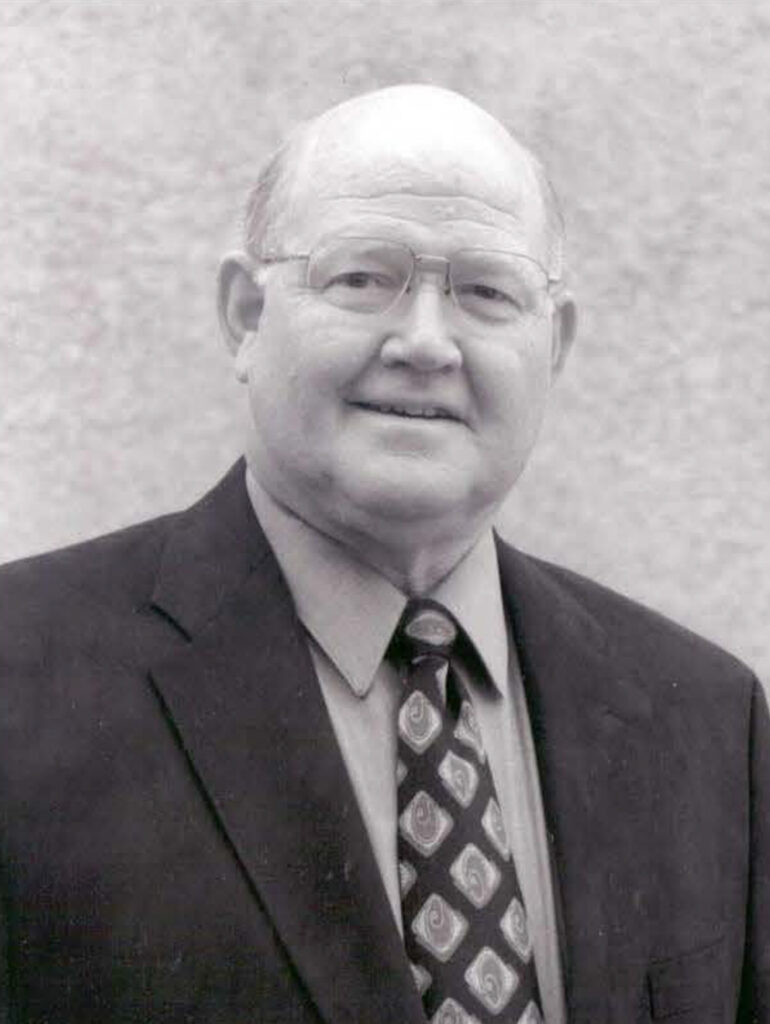
From fighter pilot instructor to rangeland science legend, Rod Heitschmidt has done it all. In this Sages of Rangelands conversation, Tip Hudson sits down with Rod at his home to trace his path from flying supersonic T-38s to studying livestock grazing at the Texas Experimental Ranch and USDA’s Fort Keogh lab. Rod recounts his spirited clashes with Allan Savory over rotational grazing and stocking rates, the research on drought management, early weaning, prairie dogs, and mesquite that shaped his career, and the story behind his enduring textbook Grazing Management: An Ecological Perspective. Rod shares hard-won wisdom on economics as “a measure of one’s beliefs,” the real progress rangeland stewardship has made, and why anyone entering natural resources has to genuinely care about the land.
Rodney Heitschmidt received the Society for Range Management’s Outstanding Achievement Award in 1991 and the SRM Fellow Award in 2004. He was honored with the Frederic G. Renner Award in 2013, which is the Society’s premier award for sustained accomplishments in range management. Rod served as the SRM President in 2002.
Support for The Art of Range comes from the Western Extension Risk Management Education Center, RanchBot, and the Western SARE grant “Evaluating the Affective Power of Art to Increase Knowledge and Support for North American Rangelands, Grasslands, and Grassland Peoples“.
Music by Lewis Roise.
RESOURCES MENTIONED IN THIS EPISODE
Rod’s textbook is available in print through Abe Books.
Fort Keogh Livestock and Range Research Laboratory: https://www.ars.usda.gov/plains-area/miles-city-mt/larrl/
Fort Keogh genetics / Line 1 history page: https://www.ars.usda.gov/plains-area/miles-city-mt/larrl/docs/genetics-history/
Line 1 Hereford background (AgResearch Magazine, “More Than 75 Years of Research”): https://agresearchmag.ars.usda.gov/2010/mar/hereford/
CSU Natural Resource Ecology Laboratory — history (Van Dyne, IBP Grassland Biome): https://www.nrel.colostate.edu/about-us/nrel-history/
George Van Dyne (bio): https://en.wikipedia.org/wiki/George_Van_Dyne
Tip Hudson: [MUSIC] Welcome to the Art of Range, a podcast focused on rangelands and the people who manage them. I’m your host, Tip Hudson, range and livestock specialist with Washington State University Extension. The goal of this podcast is education and conservation through conversation. Find us online at Artofrange.com. In the spring of 2026, I had the opportunity to interview several individuals in Texas in person as part of our Sages of Range Lands series. We often just began talking with the tape rolling, so to speak. I will provide some brief context and an introduction for each one. Rod Heitschmidt is well known to many in the rangelands science world. He served as a professor and research coordinator at the Texas A&M University Research and Extension Center in Vernon, Texas, where he oversaw work at the Experimental Ranch before becoming the research leader and superintendent at the USDA, Agricultural Research Service Fort Keogh Livestock and Range Research Laboratory in Miles City, Montana, in 1990. Rod spent over 30 years researching livestock grazing processes from both ecological and production agriculture perspectives, authoring or co-authoring more than 200 journal articles. He might be best known for co-editing the textbook Grazing Management in Ecological Perspective, published in 1991, which remains an influential reference in rangeland science, despite its age. I think this is due to the emphasis on application, a focus that is unusual in a textbook. We spoke at his home, and there is some background noise and background exchange with Sue, Rod’s wife. I hope you enjoy the interview. How did you get into Range? I know a little bit of where you came from.
Rod Heitschmidt: Fort Hays State.
Tip Hudson: What made you interested in range?
Rod Heitschmidt: Well, I wasn’t interested. Of course, when you start out from high school to college, you’re going to be just like your favorite high school teacher, who was, of course, the coach and a good math teacher. I started that way, but at the end of my first semester, I had a course, I had basic biology. It was really hard, but it was really good. I got interested in biology, then. Then at Fort Hays at that time, we were in the grassland ecology, rangeland ecology school, and I worked for Dr. Tamani, and he was very influential. By the time I got into it, we had a tradition. When I was a senior, we had 76 PhDs out of biology, which was not wildlife range, and then we had just animal ecology, plant ecology, animal ecology. Dr. Tamani was department head, and Dr. Hulett, and they just really piqued my interest. Always I’d been raised on a ranch and a farm, and I didn’t pay close attention to it until I got started with that. Then I worked for Dr. Tamani, and of course, he was a great guy to work for. He ended up being the president of the university. Dr. Hulett, and it just went from there. We just had a tradition. I’m just trying to get ahold of a former friend or a friend of mine that I haven’t seen in I don’t know how many years, Dale Bartos. There were five in my class that we all got our master’s together, and all got our PhDs together, except I took time off to go to the Air Force, and another buddy of mine took time off to go to the Army, and the other three guys, they weren’t even married. But back then, it was just you had a quota by counties.
Tip Hudson: What years would that have been?
Rod Heitschmidt: That would have been 1967, 1968.
Tip Hudson: That was Vietnam.
Rod Heitschmidt: It was during Vietnam. By the time I got out, I flew T-38 instructor pilot in Del Rio. By the time I got out in 1974, it was over. If you’re not fighting that war, well, everything becomes safety. I had a lot of friends that stayed in and got out after 10 years because they just couldn’t take it anymore. As pilots, they didn’t get to do a lot of the things that we did, anyway.
Tip Hudson: I’m not familiar with the T-38. What is that plane?
Rod Heitschmidt: It’s a supersonic trainer, it’s the same as an F-5. An F-5 has a little bigger engine. It’s the same here, it does 1.2 Mach. Students get 90 hours in it. Bring my airplane in, please. It’s a great airplane, really, a good airplane.
Sue: They don’t make them anymore?
Rod Heitschmidt: Well, they don’t make them, but they haven’t found anything to replace it yet. Anyway, that’s a T-38. They’ve been around since the Air Force used them. You had three, you start out with what we call a T-41, which is a 172. They flew that, and you sorted some people out that didn’t really want to fly. Your instructor gets out, and he says, take it off and do two touch-and-gos, and then a full stop, and they look over, and they go, I’m not going to do that. They go, okay, glad we got you not. Then the T-37 was a Cessna T-37. It’s called a bird whistle, but it does about 400 knots, and it’s got a real high-pitched engine on it. It’s the only jet that you spin. You go up and actually spin it. I still remember exactly how you do it. Then you go to a T-38, which is a high-performance. Now they’ve changed all that. Used to be that every pilot went through that, but not anymore. They break them up after T-37, and you either go to it’s called, I think it’s called a T-2, which is a multi-engine. But it’s just small, but you’ve got the cabin and the like where you sit in there, and then the others go to a fighter type through T-38. I did that for five years, and then almost stayed in and had little two boys. One was two, and one was five. I was either going to go remotes, which I wanted to do if I could get a fighter. But I didn’t want to go anyplace if I didn’t have a fighter. They said, well, you’ve already got a masters, and you’ve worked some on a PhD, and you should be a general. I said, I don’t want to be a general. I want to fly for 20 years, and then you throw me out. They said no, and then I decided, well, if you’re going to put me behind a desk, I just as well decide what desk I want to be behind. I got out, and I don’t regret getting out, but I love my wife loved it. Del Rio was a great place. She’d go to Mexico by herself, but not anymore. Back then, we’d go to a party. We’d go to a party. We had a place called Los Alpes. We’d go over there, party, and you’d just go on and on, and you’d order, and then you wouldn’t get anything, another round of margaritas. About nine o’clock, you’d say, we’re not going to have any more margaritas. We’re out here if we don’t have food within 10 minutes. All of a sudden, the food all shows.
Tip Hudson: They had that figure down.
Rod Heitschmidt: But anyway, it was a great flight. We really enjoyed it. I got out, went back, and I went to Colorado State, finished my PhD in Natural Resource ecology lab. I don’t know whether you’ve ever heard of George Van Dyne, but he started it.
Tip Hudson: I know the name.
Rod Heitschmidt: He started, and it was world-famous as far as that goes for grasslands. They did all the grassland research for that. I don’t know whether you probably don’t recall the biome program, but it was a National Science Foundation program, and you studied each biome product, primary production, and secondary consumption, and all those things. Just ecosystem work, and that’s natural resource ecology lab. That’s what it was. It was a great place to get a PhD. It was just really good, I loved it.
Tip Hudson: I interviewed Tom Bartlett back at the meeting in Monterey, and he spoke fairly highly of his time at CSU.
Rod Heitschmidt: Tom was there when I was there. He was a professor. I never did take a course under him, but a lot of my work that I did at the Texas Experimental Ranch, I had Richard Connors, who was an economist. Well, before him, Whitson was the economist, but he went to Oklahoma State as director of the experiment station, but he and I did stuff together. Whenever I do large landscape-level research like grazing management, where you looked at livestock production as well as what it was doing to the resource, we always did economic analysis, and that made good. I do the biology, and they’d do the economics.
Tip Hudson: Was that your first stop after your PhD, was the Texas Pyramid Station, and where is that one?
Rod Heitschmidt: It was in Throckmorton County. I was stationed in Vernon, and that’s 80 miles north, straight north of the experiment station or the experimental ranch. If you want to, I’ll give you a copy of the book I wrote on it. But the Experimental Ranch grew out of a cooperative agreement between the Texas Agricultural Experiment Station and a group of ranchers and the Swenson Land Cattle Company. Swenson Land and Cattle gave us the land and the cattle, and the experiment, or the Texas Experimental Ranch Committee, put some money into it to get it fenced and all those things. It was 7,600 acres, and it had research. Mort was working on it, and then Britten house took it over. Then when I showed up, I ran it until they closed it. Never knew why they closed it. The guy that closed it was the foreman. The Swensons was about 250,000 acres. They gave us 7,600, and everything was fine except this guy decided to close it, and he lost his job over it, but it wasn’t any of our business. Nobody could figure it out. Dub Waldrip, who was big. Well, he’s president of the National Cattlemen’s Association at one time, and he started the research, and Dub came in and said, look, I’ll lease it. He gave him about double what they normally would because they had no expenses in labor or anything. The only thing that they bought was they bought some fencing, and they bought a winter supplement, and that was it. We did we worked all the cattle, we did it all. I had to be a big moneymaker, but I don’t know what happened. They closed that in 1989, then I went with ARS up in Montana, Fort Keogh Livestock and Range Research Laboratory. It was 55,000 acres. It was somewhat like burns, the same thing. I was there for almost 17 years.
Tip Hudson: I haven’t reviewed your list of papers. What stuff were you working on?
Rod Heitschmidt: Well, until I was at the Experimental Ranch. Well, I got my PhD, this, believe it or not, doing research in Montana, exactly where I went back to on the effects of a coal-fired power plant on grassland ecosystems. Back in the 60s, it was going to kill everything and so on and so forth. Well, so that’s what my PhD was on, and it was funded by EPA, but we did it through the Natural Resource Ecology Lab. We looked at forage production. We looked at diversity, we looked at insects, acid rain, everything. Well, what we found was if you met federal standards, we couldn’t measure that it did anything. The main thing that it did was, well, we set up a system where we had, I believe, it was half-acre plots. Then we put sulfur dioxide, and we put pipes going about this high over the entire place with holes for sulfur dioxide. Then we had three treatments plus a control, and we had sulfur dioxide at ambient at just about, and then what the standard was, or EPA standard, and then double that, and then we looked. We found that most plants just use sulfur dioxide to get their sulfur. That was about the main thing we found. I did mine on my specific work was on Texas Experimental Ranch or on Western wheat grass, but we would go up. Sue, and I, and the boys would go up in the summer, and we would stay outside of Miles City in a trailer house. That’s where we spent our summer, and we took a crew of about five, six college kids, and we clipped and clipped and clipped and clipped some more, doing that just about all the time. But we did it in ’75, ’76, and part of ’77, but we didn’t go up in ’77. We just went up two years, but we had a lot of fun.
Tip Hudson: Did you ever know a rancher in the area named Freddie Loomis?
Rod Heitschmidt: No.
Tip Hudson: No, maybe I got the wrong spot.
Rod Heitschmidt: Well, Miles City is in the eastern part. Well, it’s 100 miles north of Wyoming and 100 miles west of the North-South Dakota Line and on the Yellowstone River.
Tip Hudson: For a while, my dad and mother lived out there, and she taught in the one-room schoolhouse in Jordan. He worked on a ranch near Miles. I thought it was Miles City.
Rod Heitschmidt: It could have been.
Tip Hudson: The guy’s name was Freddie Loomis.
Rod Heitschmidt: No, I never heard of him. We had a committee up there, and most of the guys had been president of the stock growers. Stock growers are strong in the state, really strong. Breeding is selling seed stock, it’s really big up there, but most of my guys that were on the committee were at some time had been president of the Stock Growers Association. But Jordan was a suburb of Miles City, just happened to be 100 miles away. You’d take off going north and go to Jordan, and it took a while. Your dad was there?
Tip Hudson: They worked there for a little while before he moved back to take over the family nursing home back in Arkansas.
Tip Hudson: I’m surprised [OVERLAPPING] it was a change for.
Rod Heitschmidt: Cattle ranch.
Tip Hudson: It’s quite a change to go from Northeastern Montana. Then back to Arkansas. We’re doing ranching. Cowboyings a big deal up in Montana, really a big deal. I’ve got a book in there on Montana Cowboys. It’s really pretty amazing. I had about 12 cowboys that worked for me and they were real cowboys. Then we worked all the cattle out the isle and the pastures and we had about, somewhere around 1,500 head of mother cows. We had Line 1 Hereford. Do you ever hear of Line 1 Hereford?
Rod Heitschmidt: Heard of it.
Tip Hudson: The oldest and purest line of Hereford in the world. We’ve been in breeding them since 1934. When they came to map the genome, they cut a little piece out of one of our cows’ ear about a little piece like that. That’s what they mapped it from. They used ours because there was so much knowledge about the herd. The primary thing that they do with Line 1 Hereford. There’s a few people that raise just Line 1 Herefords but most of them, they use them as a cross breed and get the hybrid vegan. Then I had three physiologists, beef cattle physiologists and a range animal and nutritionist and a couple of range scientists and a couple of geneticists. I think there were 10 of us with me. We had half of the staff below us was Experiment Station with Montana. The way we paid for those was when we sold livestock, that money was used to pay for the Cowboys. Then we had indoor technicians and the like. We had about 15, and then the rest of them were scientists primarily. It was a great job. When I got there, it was really a challenge. Things had not gone well. State and the feds were fighting, and I don’t know, I just got in the middle of it and I told I told my staff, you’re not federal and you’re not state. You’re Fort Keogh and if you’re going to work here, you’re going to be Fort Keogh and that’s it. The state come up and said, Well, we’re going to have our Christmas party. I went, you’re kidding me. No. I went in and said, no, that’s not the way it’s going to work. The lady that headed up the state, she was bawling. I said, I’m not putting up with it. That’s not the way we work. Sue put on a well, the first year we didn’t have any place we could put on. We didn’t have a home yet but she put it on, a christmas party for everybody. Two groups come in at times but the next year, we had a large house that we could accommodate everybody and every christmas, we had a Fort Keogh Christmas party and they just loved it. Then, one of the things I did, and this was lucky, but I had a not a friend, but a guy that I’d listened to before at some seminar. He was a motivational speaker but he was really good. I made a deal with him to come to Fort Keogh, and I said, now, here’s who you got to talk to. You got to talk to Cowboys to PhDs and everything in between. That’s no problem. I can do that. The outside guys, the Cowboys, they go, what do you want us to do? I said, You’re going to have everything fed by 9:00 in the morning. You’re going to be at this seminar at 9:30. Oh my God, how stupid is this? Within an hour after he started, he had the eaten out of his hand. All of them except one guy. One guy who wouldn’t just go along with him, but when they got done, they’d never been through this before. Well, the PHDs never been through it before. Something that really gives them a model of how to work together, and the next morning, I was driving to work, and I heard on the radio. I’m alive. I’m awake. I feel great. That was one of the things he taught him. I went, we got this thing going now. We really did. It turned the whole place around. They just understood that everybody thinks they’re doing a great job. You can’t sit around and criticize what the other person’s doing. Do your job. I will worry if they’re not going to get their job done, but not you but he was just a master at it, and it did so much good. It’s a couple thousand dollars, but it just was incredible. Anyway, we had about 1,000 acres of irrigated land. We raised corn for silage and hay and barley. We had a feed lot, and when we’d wean calves, we’d bring them all in, and they all went to the feed lot. After one year, the Line 1 had been selected on whoever’s the biggest of the males, whoever’s the biggest at one year is the winner. What we had, and then we selected the cows we didn’t really select, but we had to turn them over all the time. We ended up in the 60s with a cow that was about this tall and about from here to that door and nobody wanted it. The ranchers were complaining about it. Why are you guys doing this experiment? You’re doing the experiment because it needed to be done and it needed to be done for a long term. You can do mice. What we did in 50 years, you could do with mice in a year. You go through that many generations but if you stop and think about it from the time a cow is bred until her offspring’s going to be bred, it’s three years. Then all of a sudden, in 1969, we sold a bull for $60,000 just unheard of. The reason was we had this long, big just how everybody changed their minds. They no longer wanted this square thing about like this. Legs about this long and we had it. Until I left, we still have Line 1 sales and it was funny. We have a Line 1 sale, and we’d have a CGC, which is a gene combination. We had Tarentaise, Charolais and I think some Shorthorn. It was in proportion, and then that’s what you kept. We’d sell their bulls, and they were pirate bulls, but they didn’t sell us wood, but we’d have the Line 1 sale, and when it was over, we’d go right into CGC, and all the Line 1 people would get up and walk out.
Rod Heitschmidt: I wouldn’t even sit and visit and watch. They just get up and they all walk out.
Tip Hudson: It was a great job. We had some good people.
Rod Heitschmidt: Did you feel like there were some research results or discoveries that changed things or that were new to you.
Tip Hudson: I had an offer at the Texas Agricultural Experiment Station and Texas Agricultural Extension Service. They both agreed upon the same salary but one of them was at Vernon and one was at Uvalde. I took the experiment station because, number one, that’s all I knew really was research. I always felt like if I wanted to get out of research, it was easier to get out of research and go to extension than it was to go from extension to research. I loved extension. In fact, while I was at Mile City, we got two extensions, a beef cattle extension specialist and a range extension specialist for the state, and they were at our office building. In fact, I got an award from the county extension agents, the United States County Extensions agents for the agriculturalist of the year or whatever and it was because I didn’t distinguish between them. We were all one. We’re one. You die, we die. Then when I got to the experiment station, that’s what they did was research on that. There were so many opportunities to look at ranch style decisions. Then along came Allan Savory. Allan Savory and I didn’t see eye to eye. We didn’t see eye to eye before we got together, but I really was disgusted with him from the way he treated traditional grazing ecologists and the Leo Merrill, in particular, who wasn’t the easiest guy in the world to get along with, but he was he had some things that he knew. He may not have published it, but he knew it. He got everybody I don’t know whether you were around in those years, but Gee willikers he got people excited, but he was telling them, double your stocking rate and go into a rotational system. I was arguing it’s okay to go into a rotational system. There are some advantages to it but not double stocking rate. You’ve already screwed up the system because you’ve got too many livestock, and there’s nothing you can do. I don’t care whether you rotate or you don’t. You got too many [OVERLAPPING].
Rod Heitschmidt: Got so much grass.
Tip Hudson: But he went on and on about that. Then the rancher sent me to his school. I come back, and I liked a few things I heard, but the biology was just bull. But I like the economics and the like. He didn’t do the economics. I can’t even remember his name now. Sue, what was I can’t remember anyway. The economist that he worked with, since I didn’t know economics, he sounded good to me but it may have just been. Anyway, I come back and I wrote a critique of the entire school, the two week school. Alan went berserk because I said, this is bull. This doubling stocking rate. Everything about it is great, except that. We got into a little tussle and there wasn’t anything, then I and John Walker the research, and we put together a synthesis of the all that we knew about it. We even went around to some ranchers that was in the school when I was there and went to their places, and, it’s well, some people can tell you a story, and they just believe it because they want to. We went to a couple ranchers. One of them I remember told us how his system was working. He said, You have doubled the cat? I do but he said, Usually, I can only go around one turn. Then the next time I go around, I have to get out of it and then I go back in like two months and I’ll do it again. I said. The I’ll tell you something. We put all that stuff together, and then we did a presentation out at Albuquerque when we had it out there in that Mio and Ades. Both Alan and Stan both showed up for it. We had disagreements, but not with Stan, but we did with Alan. Alan had an ego. He had a big problem. Of course, I’ve got an ego, too, so we butted heads, and I was up at the at the school or the meeting that we had in Spokane. I guess it was the last time I was in Spokane, a couple of years ago. They’re their holistic group. They had Allan Savory. I should have stood up and said, Hey, Alan. He probably would have fell over, but he was talking about this guy from Texas A&M that was trying to get rid of him out of the state on and on and on. He’s talking about me, which was a crock Bill. I wasn’t trying to get rid of him. But I just wasn’t going to let him lie to people and watch their place go into the ground. That’s where I really got into the grazing was the rotational grazing. I did a lot of work on it. We did almost for six years. Five years, we did trials usually for a year where we did intake we did diet selection. We had a graduate student doing diet selection. We had a graduate student doing intake. We had a graduate student doing behavior. We were looking at forage production, changes in species composition. We even looked at trails and those sorts of things beacuse Alan claimed that, because you’re rotating these, you’ll never have trails. [inaudible]. We went out and did some work on that.
Rod Heitschmidt: As long as is in the same place.
Tip Hudson: [OVERLAPPING] they’re always walking into this place, and they do. Everybody knows that, but except Alan, and so we anyway, did a presentation up there, and he did go back to Africa. He was a good guy. He was a lot of fun to be. He jumped out of airplanes, when he was in the service. One time he jumped out and he didn’t have it all connected right, and he reached up and grabbed the thing and went to the ground hanging on like this. He was he was a fascinating guy. Another funny thing was happened. I was asked to speak at forage productions. It was the grass landing forage group back in Clemson. I was back there and the next morning, the guys said, What were you doing last night? I said, Well, I slept. Why? Now, look at this. It was USA today and somebody and Savory’s name was in there because somebody had shot him in New Mexico while he was camping. They say, were you in New Mexico last night? No, I was not, but anyway, a sniper, I guess. I don’t know where they are.
Rod Heitschmidt: My Goodness.
Tip Hudson: But he was out camping but really interesting. Then when I got to Fort Keogh, they didn’t need that type of research. I worked largely on drought management and trying to, ranchers are eternal optimist. If it doesn’t rain today, it’ll rain tomorrow. It doesn’t rain this week, it’ll rain next week. F it doesn’t rain this month, it’ll rain the next month. we built a rainout shelter where we could set up and could get rain over here on the control and stop it over here. We looked at spring drought, summer drought, fall drought and looked at just forage production and the like. Then I took there’s a you can go to NRCS. No, it’s not either NRCS. It’s the weather, people, whatever. I can’t even remember it now. They have programs.
Rod Heitschmidt: That they can tell you we can look it up for Granbury, and it will tell you what’s the probability that I’m going to get this much rain at this month? What I tried to do was I tried to explain that in the northern plains, at least, and I know a little bit about the Southern Plains. But Northern Plains, if you don’t grow your forage in the spring.
Tip Hudson: You’re not going to get it.
Rod Heitschmidt: You’re not going to get it, and 90% of your forage has grown by the 4th of July up there, and this idea that, well, sometimes we’ll get 90% of it by October. That’s right, but that’s not very much. Because you didn’t get a decent year. Then get them to look at that and say, you guys, you pretty much know what’s average; you know that we’re not growing forage like normally. It’s okay to be an optimist. But understand there’s information there that you can say, what’s the probability in Miles City that I’m going to get two inches of rain in August? It’s about one in 12 years. Now, are you willing to take that chance? We also did research on early weaning, and the like. We showed that early weaning is pretty darn profitable. Even if you are in a normal year. In terms of economics. You can take those calves, wean them at 90 days, and put them in a feedlot, and you’ll still make more money than probably leaving them out there on the mother cow. Because as soon as you do that, her nutrient requirements decline by 30%. She’s tough. She can do that. But when she’s got a calf on her, that’s really pulling her down. Anyway, that’s what I worked a lot on while I was up there. Was trying to get across, and then I could give presentations on that about any place you want to go, and you can talk about. When your calves are not doing as well as you’d like for them to do? Just put them in the feed lot. You can’t feed them. Yes, you can. We did all the economics. We had economists doing it. That was one of the shockers to us was that even in a good year, weaning early.
Tip Hudson: Still profitable.
Rod Heitschmidt: Still profitable. But, I argue that let’s take our chances, and let’s not wean early. Let’s just do a little feeding if we have to out there. The problem is doing that, you can go broke. If you wean early, you may not make as much as you would have liked to have, but you won’t go broke, and trying to get that concept. Most of the good ranchers already knew it. They didn’t like to admit it, because all of them are great drought managers, but to them, good drought management is that I got through it without having to get rid of any cattle. It’s up to them. But I worked a lot on that, and enjoyed it a lot. That’s what I did. Then when I retired, I wrote a book on the Experimental Ranch. I’ll give you a copy of it. On the History of the Experimental Ranch, and all the research that we did that was refereed. For everybody that wrote. It was very productive place. We did when we were working on the rotation, we also did watershed research. That was another graduate student. Jenny Pluhar. I don’t know whether you know Jenny or not.
Tip Hudson: I do; I know her pretty well.
Rod Heitschmidt: Jenny and I. I even took my oldest son. He’s about eight, nine, and he’d help us on the weekend, and we’d go down, and she did as much research as most PhDs with just her master’s, but she was a good student. She was really good, so. We also did work over. They started an experiment on the effect of honey mesquite on forage production, and water cycle, and all those things. We did some good research there; they talked about if you get rid of the mesquite, you’ll grow more grass. That’s really not true. You don’t, and part of the reason is, well, the thinking then was, well, these roots they don’t compete with the grass. One of the articles that I wrote: it gets so hot in the summer. We were working there in 1980, and it be 115 degrees by noon. I had about five students, I guess, probably three college and two high school. After we’d go to work at six to clip, and then we would be done, and we’d stop at noon, eat our lunch, and then I had a mesquite tree that I’d give them a spoon on a fork, and said, dig out the roots. That’s what they did during the summer for about two hours in the afternoon, and then they’d go home. What are you going to do with that information? I wrote an article on used pictures, and the like. I don’t know. But the amazing thing was that mesquite, those roots would go out, and they’d be just about this far underneath the soil. But they all had tentacles that came right to the surface. That whole, and tell me it doesn’t compete with grass. It does compete with grass. It was good. I got it published. I got a lot of requests for the thing. But the one thing that I got the most requests for, we published 1,000 of them. They were gone within three weeks. It was a bulletin from USDA ARS. Back in the early 1900, Dr. Shantz went to some spots and took some pictures. Then, at about 1960, another guy, I know his name. But I can’t think of it now. But anyway, he went back, did the same thing. Then somebody did it in, I think, the ’70s. In the ’90s, I decided, let’s go back and do that again, and let’s do it a little more accurately. We located all the sites, got them all in with the GPS. We knew exactly where they were. We went back, and we took photos, and my postdoc at that time. No, he wasn’t a postdoc. He was just my research associate. I sent him to all the sites. He was a good taxonomist, telling me while all is there. It was really interesting. The ranchers gave me hell because I didn’t say that they had not abused the land, but basically, it showed that we had made drastic improvements from back in the teens, all the way up until the ’90s. The country was so much better off. There were three things that we concluded. One was that in the background, you could see this was ponderosa pine thickened up a lot over that 80 years in all the backgrounds. We’d introduce some new species, which crested wheatgrass, some of those things. But overall, the country was really much better than it was. The ranchers didn’t care about anything except the last statement. I didn’t say it strong enough, but I said, that’s all you can say; from the photographs you can see that it’s not barren land, like it’s portrayed quite often. We had 60 sites in Montana. I can’t remember whether we used some out of North Dakota or not, but it was really interesting. It was put out as a bulletin, probably a 10-page bulletin. By USDA ARS, and we were out within six months; there’s nothing quantitative about it. There’s nothing research about it. It’s about observation, basically. But it was things that the ranchers could grab hold of, and say, see, this is what’s happened to it. The riparian areas, particularly, had really improved. If you call improvement, having grass cover in the lake. It was really much better. But that’s probably the biggest thing that we did with that, so it was great.
Tip Hudson: What prompted you to write a textbook? Is that what you’d call it?
Rod Heitschmidt: Yes. It’s a very popular textbook. Very popular, and it’s unfortunate in that it’s still used.
Tip Hudson: I’ve got a good friend who’s a large animal veterinarian, and he teaches an agroecology course every year, and he said it’s the only one that he likes.
Rod Heitschmidt: We’ve been told that a lot, and some people have encouraged us to do it again, and that’s fine. I did it. I shoved on it because I thought that the relationship between ranch management and ecology was just not understood well. You’re either a rancher or you’re an ecologist. I argued that ranchers are basically practicing ecologists. They just don’t know it. But that’s really what they have to have. That’s what we emphasized. I edited, and I had really good luck with everybody except one chapter. What we wanted to do was go from one chapter, lead into the next. We got that done. But the hardest chapter to write, I guess, from an ecological perspective, was animal nutrition. Getting John Walker. No, John didn’t write on it. Bill Pincheck and Ed Houston wrote that. I turned it down probably three or four times before they got it where I thought they’d really pulled it in together, and said, this is what’s happening. We tried to talk about energy flow, nutrient cycling, and how all this stuff ties in to ranching. I know it’s been used a lot, but it’s 1990. That sucker is 35-years-old, and they came, and they said, “Can you guys update it?” I said, somebody can, but it’s not going to be me [LAUGHTER]. But we’re all basically retired since then. I think the only one that’s still working is Pincheck. He’s completely changed from being a range animal nutritionist. Now, he’s a gastro economist or something. I don’t know what it is. He works on bloat, and wheat pasture, and all those things. Completely reinvented himself. We lost the experimental ranch, so he didn’t have a good place to go do some of the work that he wanted, so.
Tip Hudson: How long did it take to put that together? Or, what does that look like? You hand-picked people that you wanted to write different [OVERLAPPING]?
Rod Heitschmidt: No. We were all involved. If I remember right, we had a grazing management group. Mort Cothman, and myself, and Stuth, and Pincheck, and Ed Houston. Butch Taylor. We were talking about things, and I was the one that said, I think we ought to do a book. But let’s not just call it Grazing Management. Let’s call it Ecological Perspective. Let’s take a look at it from ecology because from natural resource ecology lab, some of my old buddies and professors used to say, “Rod, when you go to get back into just good old ecological work?” My argument always was, well, that’s what I do. But I’m trying to bridge this gap between applied ranch management, which is applied ecology. That’s what ranchers do. They just don’t always understand it. The ecologists certainly don’t understand it. Most ecologists don’t even think about it. I don’t know whether you’ve ever read the opening chapter on that book, but it’s about new energy, and it sets the stage, I think, really well for what we wanted to get down. Then we had all those different chapters, and it was fun, but I wouldn’t do it again, I don’t think. I was senior editor; Stuth was editing with me, but he was busy, and so I did most of the editing, and you get tired of it after a while, but I knew what I wanted, and everybody agreed to it. It was just getting us to know what the next guy is writing. What’s the next chapter? How do I leave it open, and people go, “We need a good chapter on nutrition.” It’s right next chapter. A couple of times I’d been challenged. What’s the best work I ever did. I think that that’s one of them; I really think that we hit a niche. We really hit a niche. There was range management books. But this was from an ecological perspective. I felt good about it. I don’t know. We sold lots of books. We didn’t get much out of it, but that’s not the reason we wrote it. That had nothing to do with it, so.
Tip Hudson: My colleague said it’s the best concise summary of Grazing Ecology I’ve ever read. One of his comments was, do you have any ideas about what you think has changed in the last 35 years that ought to be updated if somebody were to take that on.
Rod Heitschmidt: I’m not really familiar with all of that, but I know people that do, and I said, well, you ought to take that. The whole concept of plant ecology that’s been changed. We know so much more about succession, and what happens once you get a woody encroachment, that changes the whole system. You’re not going to control that by grazing management. It’s going to take some inputs to get it changed because it won’t change. It probably won’t go back to where it was, and that whole concept, Archer’s as good at that as anybody. Archer did handle that; he and Fred’s- I think Fred’s Minds worked on it.
Rod Heitschmidt: Then, we had Tom Threat did the watershed. We’ve learned a lot of things about the watersheds. Nutrition, if there’s one thing if there’s one secret, in range, I’m talking about all of range. If there’s some way that we could measure intake accurately. We can get it within, 2% of body weight or 2.5% something. Well, you can’t separate that out. I mean, a cow May 1 day do 2.5 and the next day do a half. We can’t measure it. But if you could figure out some way to measure intake accurately, what we did was we started an experiment partly mostly because I used to do a few talks on it, and I drove my geneticist crazy because I used to say, when we can talk about it I said, I have a dog, a hunting dog, and I did. I had a Brittany, and she was one smart dog. She was a great hunting dog. I said, If there’s a bird there, she’ll go out there and she’ll point it. It comes up, and if I shoot it, she’ll go over there and pick it up. If I don’t, she’ll go like this to me. I said, I’ve had a rat terrier. I guarantee you don’t know where they get their name, but go out and put a water hose underneath a green bin and watch the rats come out and watch what that at terrier does to them. I mean, she’ll go over there and grab one and just bite its back, break its back. He’ll be hanging on her, and she’ll go to the next one. The next day, she’ll have swollen up like this, but she’ll kill 20 rats in just a few minutes. That’s what genetics can do. Now, what we have done in beef cattle is we’ve got red white face. We’ve got black. We’ve got Charlot, we got white. We’ve got brown with a hump. Stop and think. That’s what we have done. What we need to do what do ranchers want? They want a cow that eats nothing, doesn’t need any minerals, needs very little water, but she breeds every year and produces a calf. That’s what they want. They don’t think about it that way because they want that big Bama style cow out there. But they really would like if you could breed that, that’d be fine. We started a research project, and they started it before I left of looking at the genetics of grazing management, basically. Looking at intake and the like. The way we did it was had Kalin gates, and we’d bring their offspring in, and we’d put them in Kalin gates and see differences in their feed. What you do with the Kalin gates is they can only get into their trough. You have somebody that knows what they’re doing, and we had guys that would do it. They knew this one here ate yesterday four pounds. They’ve got a little bit left, so I’m just going to give him three pounds. Over time, they will see there’s a difference between how much they eat and finish. Well, basically, the one that finished the best ate the most. Well, is there any way of improving on that? We don’t know, because we’ve always selected for that. I went to the International Bison conference. They wanted me to come and talk, and I knew what they wanted me to talk about. They wanted me to talk about that bison are more sustainable than livestock. Well, that’s not what I told them. I told him, as we understand it right now, yes, they’re hearty here. But you guys are doing what now? You’re taking them into the feed lot and selecting them out of the feed lot. What you’re going to end up with is a long, rangy cow with long hair that looks just like a Heford O something.
Rod Heitschmidt: You’re going to select that performs well on feed.
Rod Heitschmidt: Yeah. Whoever’s the biggest at one year age wins, and that’s what you’re going to end up with. They went, Oh, and I said, Think about it. But they wanted me to say they’re more sustainable and that they should be getting more of that. I said, they are bred to survive. They’re not bred to produce beef. They’re bred to survive. Now you’re trying to change them to be bred to produce and you’ll do it. If you work at it long enough. Right. You’ll settle them down, and they’ll be much happier than they are now. They all we didn’t want to hear that. I said, Well, think about it. It’s all you’re doing. You put them in the feed lot, and you’re going to select them out of a feed lot. They’re just going to whoever eats the most is gonna be the winner. I had a lot of fun. Turner was there, and Ted Turner. he was he was pretty reserved. He didn’t. I listened to him at the Montana Livestock Association Annual meeting. I wrote him a letter I said, If you and Shane would just come to the experimental ranch. I will give you a tour. We will talk about beef cattle and the like, and I’ll tell nobody that you’re coming. We’ll keep that to a minimum. I got a letter back from him, and he said, I’d love to do it, but I just don’t have time. That makes sense. But I thought if I could get him out on the range for half a day, I could teach something. He had he had some reasonable ideas. But he looked at it as a businessman, and not having a love of the country and wanting to see it improve and those sorts of things.
Rod Heitschmidt: When was that?
Rod Heitschmidt: That was probably about 1995, maybe. Somewhere along in there. A few years ago, I interviewed Mark Kossler who ended up managing a bunch of Turner’s Bison ranches. He definitely seemed pretty interested in grazing ecology, and managing landscapes. It might have had some effect, even though he didn’t end up coming to visit. Well, his idea was open it up and let the cattle or let the Bison go where they want to. Yeah. But Bison just spread out and used the whole area, and I said, Well, they may. I don’t know if anybody’s proven that. But put them in a certain situation, and we need to understand what they do. But they have got to get more productive. Right now, the only way guys are making it is their meat is so much higher. I mean, they’ve got to settle it at a higher price. Than just beef cattle. Now, I don’t know the way they can do that right now or not. Yeah, I don’t know what Bisons selling for, but I know what we went and had we had steak the other day. We go to Costco. Do you have Costco? We do. We went to Costco and nice big Kansas City strips. Had pretty good meat. I said, we buy all of our meat there. I thought it was $52, and it turned out to be $72. For four State. We don’t have we don’t even have hamburger anymore to speak of. I mean, it’s $5 a pound. But goodness gracious. I’ve got some friends in the business that just grinning. There’s a lot of talk in the Bison literature about free distribution ideal free distribution. But, of course, almost nowhere do they have enough area to exhibit that kind of distribution. Do you have any thoughts on how much ground that would take?
Rod Heitschmidt: I have no idea. All I know is that, I don’t know whether you knew, ****, well, anyway, a Cheyenne. Anyway, he wrote an article. Thank you, dear. It was in the JRM, I think, rangelands, on the history of what we knew about Bison grazing.
Rod Heitschmidt: It tells about the riparian areas we’re just denuded. It makes sense if you stop and think about it. If you’re a Bison and you’ve got water here, and you don’t know what’s over the next range of hills. You may not go over there very often. But, he talks, and that was well documented. There’s a lot of work being done on animal behavior as it should be. I don’t know whether it’s got the girl that you would think that it would. I mean, everybody dreams about this cow that’s going to go up and eat on the hilltop instead of down on the bottom. But, my argument is, where do people live? Where do people live? Namely a town that is up on top of a Right. There are a few. I mean, Russell County Russell Kansas is up on a flat, and they have to get their water from the smoky hill, which is about 20 miles away. Every place that I can think of, it’s down in the bottom.
Rod Heitschmidt: That’s certainly where people settled. They sometimes put houses in great places.
Rod Heitschmidt: We’re not any different water.
Rod Heitschmidt: Good soil.
Rod Heitschmidt: One of the projects that I work on was we had a graduate student, Steve Archer and I really a sharp kid. I mean, it used to make Archer mad because he’d say, you know, that kid’s smarter than I am. That really burns me up. I’m trying to trying to help him and he’s smarter than I am. But anyway. We were going to do a study on mesquite on native Mesquite. We went and talked to this rancher. He was an older. He was probably 85 at that time. We said, What was it like when you got here, this was near Throckmorton? He said, Well, when I got here, it was nothing but prairie dogs. I prairie dogs. He said, prairie dogs were everywhere, but down along the streams. But he said, they were everywhere, Well, I found a reference in a Swenson book of a town that went from Wichita Falls to Abilene to Lubbock to Amarillo. Guys told about if they were going to go from Wichita Falls to Lubbock, they would have to take hay and the like and water. The water was so foul that the horses wouldn’t drink it and the like. And it was like, I don’t know, 120 I don’t know. 200,000 acres. No, it was more than that. 200,000 sections or whatever. But that’s what it was. One of the biggest that they’d ever seen. I still cut that book. Then we got to we got to thinking about it. Well, our prairie dogs a kenote species, that drove the system. We changed our whole objectives. We had this graduate student that was really sharp. We built exclosures and in areas that there were no prairie dogs, but they were move in that direction. We did a lot of work on that. We put out took mesquite trees, and we cut branches off and stuck them in the ground. Within a week, they were all gird. They killed them, every one of them. We had some that we grew for a year under a cage, out in the experimental plots and then took them off. They’re gone. You know, just that quick. We came to the conclusion that, they were probably a keynote species in terms of managing mosquite. That’s the reason you didn’t have any in a lot of places.
Rod Heitschmidt: Wow.
Rod Heitschmidt: He said the only mosquite that you had was down in the bottom. You know, and this is in Throckmorton County, prime Mesquite area. But anyway, we published that in ecology, and it was a good study. It was and our graduate student is now at the University of Arizona, I think. I saw him the other night on CBS News talking about climate change. He was one of these guys Where’d Jake come from? I can’t even remember now. But I took him out to introduce him to the Wagners foreman who did was in charge of everything. Well, he was the manager. He wasn’t the foreman. We got done, and we talked about what we were thinking and so on and so forth. Remember Jake said, Mr. Yager, here’s what I need you to do. I went Who Jake, come here. Let’s go here and talk a little bit. You know who Mr. Yager is, and he doesn’t have to do anything that you want. You might want to change your tongue a little bit, he’s some guy out of Philadelphia, I think. It’s just. Here’s what I need you to do, Mr. Yager. Well, that’s where we did it. We even found some spots some prairie dog towns that were in Mesquite. But they were in openings in a mesquite and they never got in to where the mesquite was heavy at all. They couldn’t take it. As soon as these little plants come up, they’re going to clip them because they want to be able to see what the heck’s going on, you know? That’s our theory, at least, and they would never expand. Those inside an area of a couple three acres right in the middle of mesquites they were just there and they didn’t seem to expand. The others now discontinued to expand wherever they where they could. That’s one of the things we had big problems with at Fort Keogh on 55,000 acres. We probably had 20 colonies. We tried to control them one way or the other. A guy from from the Department of Wildlife at MSU come out and said. Let me show you what you guys aren’t doing ’cause we were going out there pouring a little oats out here and there. He said, They’ll never go for that. You got to take it, and you just got to put this am out. He had a little little cup about that big and about that deep. He said just fill up with the oats and drop it right on the little mound. Put one on every mound. But he said, first, you got to bait him, so bat for about three days, four days. They were loving it then. We killed the 95% with one treatment. Now, they always come back. We’d be riding somewhere on the horses or something, all of a sudden here come a prairie dog, two prairie dogs, and there’s there’s no town here. There’s a town way over here and way over here. Yeah. The was little suckers. What’s the group that always has taken care of the prairie dogs? I can’t even remember anything anymore. Anyway, how about the idea. How many do you need? You’re worried about them going extinct? We have millions. I mean, we used to have trillions. But now we just have millions, but there’s still. You mentioned Repairing conditions have changed. Are there other things that you feel like we’ve made good progress on in the last 100 years? What do we still need to make progress on?
Rod Heitschmidt: Well, I think we have made considerable progress on understanding better the ecological perspective of branch management. Ranchers are ecologists, just the same as farmers or agro ecologists.
Tip Hudson: But they’ve never been taught that way, but they really are. I think we have made good progress. I think one of the problems, I think many government programs are just designed, they’re faulty and their design in that the people that put them together are the mind that if we just pour enough money into this, we can change it. You can’t. You can change it maybe for a little while, but unless you use some really good common ecological principles about managing it, it’ll just turn into what it was before. You got to be very careful with that, but I think we have made some progress there, but then when I look at some of the things that the government does, and it’s political. It’s not based upon anything that we know. It’s based upon just strictly politics. For example, I’m not a Trumper by any means in the imagination, but this whole idea that we need to get rid of any energy production other than gasoline is just insane, just absolutely insane, and we need to get rid of any laws or programs that take care of our resource. I’m very disappointed that government can change that quickly. I don’t understand it, and it just tells me that he doesn’t like windmills because he can see them from his golf course in Scotland. Well, I don’t know that I like windmills, either. I think they’re terribly looking out. When I go home to Kansas even now, they got miles of them and they’re not pretty, but they are producing something, at least. They’re not just up there.
Rod Heitschmidt: It is an old idea.
Tip Hudson: Yes. Those things, I think we’re making progress. I think we can be much more sustainable than we are, but we need leadership that supports that idea. People need to understand that they’ve got to pay for it. The biggest problem we have, as far as I’m concerned, and I don’t think I’ll have to worry about it. You may, but I don’t think so is debt. You know how long a trillion seconds is? You want to guess?
Rod Heitschmidt: A lot.
Tip Hudson: Several lifetimes, 32,000 years, plus. Thirty two years is a billion.
Rod Heitschmidt: Yes.
Tip Hudson: Multiply at times 1,000, you got a trillion. That’s incredible. We’re spending right now over on the war $1 billion a day, and you go, but compared to a trillion, we could do that for 1,000 days. For 32,000 days, we could do that. It’s.
Rod Heitschmidt: The interest.
Tip Hudson: Yes. That is going a major concern to me. I absolutely have no idea how our politicians are looking at that, but part of the problem is, is that we’re not going to support them. Going to raise your taxes? No. We’re not going to vote for that. It’s just really shortsighted.
Rod Heitschmidt: You can’t cut anything either.
Tip Hudson: No. That frightens me that people do not understand these relationships. If you’re going to have a balanced budget, there’s going to have to be some major cuts, and it doesn’t all have to be on the poor people. Right now, I read the other day, but I don’t know. It’s like 2% of the population owns 90% of the wealth, 2%. You mentioned that you’re going to raise it. No, I had a guy yesterday tell me, they’re the ones that pay you. No, they’re not the ones that pay me. We pay ourselves, all of us, one way or the other. Getting paid is not the biggest expense of the government. Of people, but I really do believe, though, that we have made progress in understanding the relationship between ecology, economics, management, and I think that’s not in range. We’ve made a lot of progress. You don’t see much overgrazed rangeland anymore. You see it near the farmhouse. Well, that’s not uncommon, but you don’t go out and see it on a frequent basis as far as I’m concerned. I think that’s good. I think that’s one of the things that we have made a lot of progress on in the last 75 years. Last, yes, 75 years. Since we come out of the drought of the ’50s, we have really done a much better job. People understand a lot about that. Part of it is and RCS has done a great job on those things. Forest Service has tried, but they get hung up on the bureaucracy rather than getting the problem solved. Extension, I think they do a fabulous job doing the same things. I don’t know what we would do without them, but I don’t know places that I read one of the things that I have argued, people do not understand the vastness of our resource. Most agronymous what I say about agronymous. Believe, as well as the ranchers, the farmers, the people in the city, believe that someday we will tear that up and plan it to something good. I used to use it for when I’d give some of my talks, I’d tell them. Here’s the way things work. I live in Mile City, and as an ecologist or as a range guy, I like to have a nice yard. I irrigate it, go down to the river and get me some water and irrigate it and fertilize it, and mow it, take that gas heating mower and mow it down every week and pick it up and put it in the trash and put a bag around it and bury it. Then you have people that come around and they blame the destruction of our natural systems on that old cow that’s standing up there eating. Makes no sense. When’s the last time that your jewelry store did something for the environment? How about the grocery store? How about the new Chevrolet dealer? What does he do for the environment? We the people on the land, are the ones that do the things for the environment. Sometimes we make mistakes. I’ll be first to admit it. Back in the ’30s, we didn’t know what to do with a dust bowl. We didn’t know what caused it. We didn’t know how we were going to stop it. Today, we know so much more about that. How to deal with those things and how to expect it. I always worry about or I don’t worry about it. I think about the poor old settler out there with absolutely no weather report. Now, we give weatherman hell, but they’re really very good at it these days. But they had nothing. What do you think the weather’s going to be tomorrow? Well, your best guess is going to be the same as today. You don’t know whether the wind’s going to be blowing 50 miles an hour or whether you’re going to have a snowstorm? You don’t know that.
Rod Heitschmidt: Even there, there were people that had some history that knew sometimes it just doesn’t rain for a long time.
Tip Hudson: That’s right.
Rod Heitschmidt: They told the farmers that when they started breaking ground, but yes, to your point, it rained last year. The year before that. It’ll rain next year.
Tip Hudson: I went one of the things that I did just so that I could get the point across was people generally say, well, you deal with this idea if it doesn’t rain this month, it’ll rain next month. I took 110 years of data from Mile City and correlated it with every other month, and I did it by going to this is the average rainfall and here’s one standard deviation away, and here’s two standard deviations away, both, below and above. I found significant correlations of about 0.02 because I had 110 years of records, but you can’t do anything with that. What it said was, there’s no relationship. If you’re droughty now, you can’t say, well, we’re going to get over it next month.
Rod Heitschmidt: Yes.
Tip Hudson: You probably can say, you’re not going to get over it next month, but your chances are about the same. You know, both of them. That’s quite amazing because we and like I’ve always said, ranchers and farmers are eternal optimists. They always believe. They have to be. By, if you’re not, you can’t stay in the business you’ll go crazy. You have to believe there’s a better day tomorrow, but, understanding things about the weather cycles, even these people that don’t believe in climate change. That’s ridiculous. I always ask them, what do you don’t understand the physics or you don’t understand the chemistry? Which is it? You don’t understand? Well, a lot of what they don’t understand is that climate and weather are two different things. Weather is what makes up climate, but it’s not today, but it’s what’s gone on the last hundred years or 200 years or 300 years or whatever. That’s trying to get those things across to him is but I do believe that we have made a tremendous amount of progress on just land management. I think we’re going to do better. I don’t think that we’re ever going to plow up the rangeland and turn it into something better. There’s no reason to do that, in fact. It produces a lot of things that we really enjoy. We like water, goodness gracious. That’s a commodity that we all need. That’s what I wonder about, now, they’re planning on four of these AI.
Rod Heitschmidt: Data Centers.
Tip Hudson: Data Centers. In Hood County, which is a small county. I said, why don’t they move them out to, Midland, Odessa, out in that country where there isn’t anything. Well, where are they going to get the water? That’s a good point. Are they going to get the water?
Rod Heitschmidt: Water user.
Tip Hudson: Then people are going. Here, they’re going to run us out of water. Well, I don’t believe that because I don’t believe somebody’s going to invest that money into something that they’re going to run out of water. They pretty much know what we’re going to have. They’ve figured out where they’ll go get it if they have to get it, but it’s ridiculous some of the things. I’m a firm believer that energy is there’s a finite amount of oil and gas in this world. I don’t know why we want to use ours when we could be using somebody else’s, but that’s the way we do it, but I still think there’s a finite amount. We need to be thinking along that line instead of just exploiting all of it. The best we can right now, but anyway, that’s the places that I think we have really made some progress. I think the universities are responsible for a lot of that. The universities, the professors and the like that teach those things, it’s important. It really is. There’s something more than making money. As long as you’re up above a certain level.
Rod Heitschmidt: Making a living.
Tip Hudson: Yes. Making a good living? What more do you want?
Rod Heitschmidt: What advice do you have for young professionals that want to go into natural resources?
Tip Hudson: Care about the resource. Don’t do it. It’s pretty hard to go out and do range management unless you really care about that resource and about the people that are involved with that resource. You can’t do it for money. It’s not done for money. It’s done for the pleasure of managing a resource and maintaining the resource and making it better, in your opinion. Of course, we understand that better is a relative term, because what’s better to me may not be better to you, but at least talk about those things. I give a lot of credit to those folks that get out there and work with the landowner and those people, and understanding economics. I always been involved with economics in that some of my best friends are economists that have worked with me on livestock production and those sorts of things. I’ve never been satisfied with the definition of economics as the management of goods and services and all that stuff.
Rod Heitschmidt: Allocation of scarce resources.
Tip Hudson: I ask Richard Connors, who happens to be a good friend of mine has done a lot of work with me. Richard, give me a better definition, something that I can really use. They said, economics is a measure of one’s beliefs. I said, let me think about that for a while. I thought about it. I came to the conclusion he’s exactly right. That’s it’s a measure of one’s beliefs. I used to tell the ranchers. When I’d explain that to him, they’d go.
Rod Heitschmidt: How many of you bought a new pickup this year? How many of you paid too much for it? You’re lying to yourself. You’re lying, you’re not stupid. You’re just lying. You said that pickup is worth this much to me. You bought it. Su what I do brings home something, and she goes, How much did I pay for, or why did I pay so much for this? I go, I don’t know. It must have been. You wanted it. I must, but when you get down to it, that’s what it’s all about. It’s people’s beliefs. They don’t necessarily they don’t like paying for something, but they like to get paid for it. Well, that’s just human behavior. It is the best definition that I know of. It works whatever you want to do. If you’re going to go buy a boat, it must be worth it to get that thing, or you wouldn’t buy it. It’s just that simple. It’s the way with when you go to grocery shop, when you buy a new pair of shoes, you put up solar system. Why do you put it up? It doesn’t make me money, but it’s worth it just because I think it should be done. I like it because I don’t have to pay as much on my electric bill, but it’s going to take a long time for it to pay for itself. But it’s just why do we have a 48″ TV instead of a 24″? Its worth it. It’s just worth it. I like it that way.
Sue: We can’t see them.
Tip Hudson: Can’t see it.
Rod Heitschmidt: Did you want some more ice Tea?
Tip Hudson: One more shot.
Rod Heitschmidt: One more shot?
Tip Hudson: Last question, I had a colleague, a friend of mine, who said asked, what is a question that you wish you would have asked of yourself earlier in life?
Rod Heitschmidt: Ooh.
Tip Hudson: Could be ecological, economical, philosophical, personal, you name it.
Rod Heitschmidt: Oh, that’s a tough one. Because there are some things that. No, he doesn’t comes to Arkansas, and he doesn’t put sugar. Can you believe that?
Sue: It’s amazing. All of our southern relatives. Either.
Tip Hudson: Thank you. I don’t find that it quenches my thirst if it’s full of sugar.
Rod Heitschmidt: With sugar?
Tip Hudson: Yes. With sugar, it doesn’t quench your thirst.
Rod Heitschmidt: We just don’t like it. We.
Tip Hudson: Don’t like to taste.
Rod Heitschmidt: I don’t know, that’s a good question, Tip. Things that I ask a lot of questions about that I don’t know show I had asked him earlier is religious faith. We’re Methodists. Been raised Methodists. Our folks were Methodists. My folks, my grandfolks. The reason they were Methodists is because we had a Methodist church somewhere nearby. Out in the country. But things that my children well, my sister, my children would never ask. I ask like, how do you know these sorts of things? Like, I’ve got a couple that whatever the Bible says is true. I go, why do we have to believe in magic in the Bible? Noah like being swallowed by a whale. I know a little bit about whale ecology because I have a good friend whose brother was a marine ecologist. He said the pH in the stomach of a whale is about four. He said, you’re not going to survive that. Well, that’s not true. What about the arc? Well, how many millions and millions of species are there? We just got two of each one they love the story, but we know that it didn’t work that way. I’m not saying there wasn’t something to it, but if you figure it out, we’re all descendants of Noah because everybody else was dead. We’ve never found their skeleton, but so lots of things like that. Like, the other day, I take the week. It’s my magazine of the week, and they talked about we have discovered a solar system that is 14.7 million light-years away. Are you kidding me? Not 14 million, 14.7. I think they said about. Why does this thing work the way it does? You know, how did I can’t even understand. I was the other day, what was it I was doing? It had something to do with an engine. I was going. Who figured out how in the Dickens, you come up with a piston and you get him to fire like that? In sequence, such that’s incredible. Somebody did it, and they knew what they were doing.
Tip Hudson: That goes back quite a ways.
Rod Heitschmidt: Oh, yeah, it does. It’s quite amazing, but I’ll ask somebody is our good the god of another universe? Oh, who knows? But it’s interesting question. Can there be more than one? And a lot of people says there’s not even one, but yeah. But it’s an amazing question. The same thing with that 14.7 million light-years. When we were in college, and we were sitting around drinking beer, let’s do a research experiment. Let’s see how fast light travels. I’d be sitting here, and somebody else would be sitting over there, and somebody turn on this light, and if I as close as I’d go. I see it, and the other I see it. Hey, we got it. We’d understand it.
Tip Hudson: That’s right.
Rod Heitschmidt: No, I guess I would have just asked more wise. I was raised on a ranch and farm, and we had sheep and cattle. Never thought a whole lot about why we had sheep and cattle. But my dad understood it, but he did I don’t think he could have told me necessarily. But he understood that he had things that he could do with one that he couldn’t do with the other one. We used to take the sheep out, and sometimes, if we didn’t want to stir the ground because it was really too dry, we’d just turn the sheep out there, and they’d go out there and take care of the weeds, but that’s most of the time we didn’t like to do it that way. Cows, you put them out there, and they’d starve you death. Well, it’s just grazing ecology. That’s all it is. But they didn’t really understand that. I’ve never really I’ve often thought about it, why I didn’t take what I thought I knew back to my father and say, why do we do it this way? Some of the times, I knew why we did it that way. But go out and do an analysis of his range, and he knew how to rotate animals, but you get caught with rotating them into the same pasture every year at the same time, being off and.
Tip Hudson: Stick with the same pattern.
Rod Heitschmidt: But you could have done some things to help us out. My grandfather the same way. My grandfather lived mile like the way the crow flew. We did a lot of things together. I’m very close to my granddad. My granddad had the first terraces in the county in Kansas. My dad, we always had terraces, but my granddad, back in the 30s, put in terraces which.
Tip Hudson: On wheat ground?
Rod Heitschmidt: Yeah. It just it’s just a matter of that was the sort of conversationist that. We didn’t do everything. But we tried to because we believed it was important.
Tip Hudson: Well, if they saw, they lost less dirt that way.
Rod Heitschmidt: Oh, yeah.
Tip Hudson: That’s some direct feedback?
Rod Heitschmidt: Yeah, that’s direct feedback. I even saw the other day where was it? It was in the States that a dirt storm came up, and it was incredible.
Tip Hudson: They had some just last week in the Midwest because my brother lives in Nashville, and on their route from Nashville to Northern Arkansas, he came through some dust storms that were heavy enough. This would have been like the southeast corner of Missouri, Southern Iowa western Kentucky. They had dust storms bad enough. You had to pull off the road ’cause you couldn’t see? Three feet in front of you.
Rod Heitschmidt: I saw that.
Tip Hudson: That’s not a place associated with dust storms.
Rod Heitschmidt: I went out with John when John was at the sheep experiment station, and up there in that country that has potatoes? Oh, man. I was shocked. And they seemed to accept it as an annual thing. Wow. How many annuals can you have?
Tip Hudson: Until you run out of dirt, I guess. Pardon.
Rod Heitschmidt: They still had still raised a bunch of potatoes. Yeah, there’s a lot of things to be discovered still, and still you look one of the things that’s amazing is that people think, well, what more can they do to improve our living? Our great grandkids, we just got two new ones. They’re going to believe they’re going to go grandpa and grandma great live in this. They had that?
Tip Hudson: No, I often think about that. Scientists of all people ought to have some pretty significant humility because we’re looking back at what people thought. Not even 50 years ago, and I think, how could they have thought that? Whatever that is. Yeah. And why do we not think that 50 years from now, they’re going to be saying the exact same thing?
Rod Heitschmidt: That’s right. Yeah. Exactly. When Fort Hagen State was Dr. Albertson. Well, doctor Weaver was at Nebraska, and he was the guy that most grassland ecologists learned from was doctor Weaver. Dr. Albertson was one of his students, and then he came to Fort Hays State. We still have an Albertson Hall, and one of his students was Dr. Tom. And now we have a Tamanic Hall. But we did grassland research, and Dr. Weaver goodness gracious, he was in the 30s, and he understood overgrazing, but it’s just hard to get it through to people. There’s still people that I know places that’ll be overgrazed forever, just because it’s always been that way.
Tip Hudson: Or somebody thinks if you leave a blade of grass, you’re leaving money on the table. Never mind that the cow’s been losing weight for the last two months.
Rod Heitschmidt: Yep. There’s so much of it to do with strictly culture. But I say, well, I love the land, but I like to play golf, too, and that’s not very sustainable. You go, Well, okay. Or even your yards.
Tip Hudson: Well, the golf course is useful because its recreation is definitely an important thing to do. But there are an awful lot of lawns that just get watered and ground, and there’s nothing we grow a lawn because we use it like a room off the house. We’re out there all the time. That’s often not the case.
Rod Heitschmidt: I know. Is everybody to their own?
Tip Hudson: Well, thanks for taking the time to visit with me.
Rod Heitschmidt: No problem. I’m glad to do it. It makes me think.
Tip Hudson: Thank you for listening to the Art of Range podcast. Links to websites or documents mentioned in each episode are available at art of range.com. Be sure to subscribe to the show through Apple Podcasts, Pod Bean, Spotify, Stitcher, or your favorite podcasting app so that each new episode will automatically show up in your podcast feed. Just search for Art of Range. If you are not a social media addict, don’t start now. If you are, please like or otherwise follow the Art of Range on Facebook LinkedIn, and X formally Twitter. We value listener feedback. If you have questions or comments for us to address in a future episode or just want to let me know you’re listening, send an email to show at rdrge.com. For more direct communication from me, sign up for a regular email from the podcast on the homepage at rdofrnge.com. This podcast is produced by Connors Communications in the College of Agricultural Human, and Natural Resource Sciences at Washington State University. The project is supported by the University of Arizona and funded by sponsors. If you’re interested in being a sponsor, send an email to show@Art of Range.com.
Speaker 1: The views, thoughts, and opinions expressed by guests of this podcast are their own and does not imply Washington State University’s endorsement.