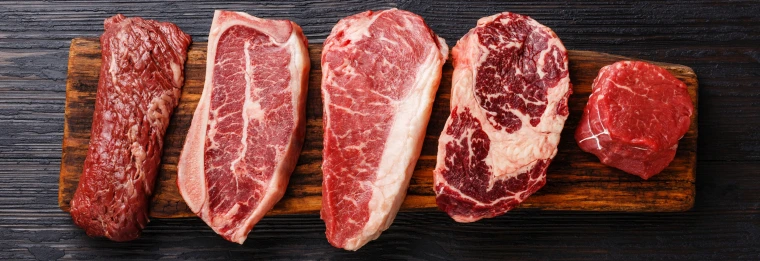
Ranch sustainability requires land care that works for the long haul and management that makes a profit more years than not. Jim Rickert, owner of the Prather Ranch in northern California, makes the case that a ranch must take care of people and animals, too, in order to last, and these goals are synergistic, not mutually exclusive. This two-part interview with Jim chronicles his circuitous path from a masters degree doing linear programming models of farm financial alternatives under Earl Butz, economist at Purdue, later US Secretary of Agriculture under Presidents Nixon and Ford, to running a fully integrated beef operation, with a closed cow herd, a ranch feedlot, and a gold-standard abattoir. Perhaps most unique, Prather Ranch has “an international reputation as a supplier of high quality bovine hides, bones, tissues, organs and other bovine xenograft materials for the medical device, pharmaceutical and biological industries.” If you missed part one of this interview, see episode 72.
[ Music ]
>> Welcome to the Art of Range, a podcast focused on rangelands and the people who manage them. I’m your host, Tip Hudson, range and livestock specialist with Washington State University Extension. The goal of this podcast is education and conservation through conversation. Find us online at artofrange.com.
[ Music ]
This is the second episode in a two-part series with Jim Rickert, manager of the Prather Ranch in northern California. Go to artofrange.com to find the first episode. You mentioned before we started recording that this large-scale, industrial meat packing is a pretty tiny blip on the timescale of human history.
>> Yeah.
>> Yeah, it makes me wonder whether that will continue. We see in some other areas, like reintegrating livestock back into cropping systems just because the cost of synthetic fertilizer is high and we need to add organic matter into cropping systems. Some of those things are beginning to change, largely driven by economics, if not by ideology. If you had a crystal ball, any idea what you see in the future for beef slaughter?
>> Well, I’d like to hope that there’s room for these small-scale systems like we’ve tried to create here. But, you know, we — you know, we — well, this goes back to Walt Browse [assumed spelled]. He believed, and I subscribe to it, Mary and I both subscribe to it, is that in paying people living wages. And so, we pay pretty darn good pay. And our labor cost per unit is at least double what it is in a big plant per unit of output. We’re at least double. And so, it — you know, our — we have to capture a higher-price, and that’s — though I’m trying real hard to keep the price at a level that people in our community can afford to pay — can afford that. Because I think part of sustainability is making it available to the masses, rather than just the wealthy elite. I feel like we’ve missed something if we — if we — we do need to be competitive on prices, too. And that’s a real hard dilemma. I mean, as commodity prices go up and our input costs and electricity, we’ve really worked hard, too. We’ve put in solar fields. I’m in the process of finishing up. It’s under construction right now on our hay form, a 745 kw solar field. And between that and the 286 kw we have here at the slaughter plant and the farm and the headquarters over here, from at least our fee on land we will be — we will produce just about as much electricity as we consume.
>> Wow.
>> And so, but — and we have solar hot water tank in the processing plant that, you know, uses the sun to create that. And, well, I haven’t figured out how to, you know, move cattle 200 miles from our winter pastures. That’s the farthest one away from our summer pasture to our winter pasture without putting them in a truck. I’m pretty sure High Five would not be happy with a cattle herd going down it at 3 miles an hour, like my grandfather did in the day.
>> Yeah, that’s a long walk. Yeah, going back to the large-scale, industrial slaughter capacity, I think this is one of the less obvious, less tangible side effects of a pretty consumerist economy and culture that we expect to get more and more for less and less money, both as consumers and as producers. And, you know, the United States spends a significantly smaller percentage of an individual family’s disposable income on food than nearly anywhere else in the world.
>> And any time in history as well.
>> Yeah, for sure.
>> This is — I tell people all the time that we have done such a great job with this as farmers that we’ve allowed the people to be — you know, we’ve freed up so much labor and drudgery that people had to do to obtain food that they can be poets and writers and you name it, whatever else, astronauts or whatever else. But those people, you know, in history were, and in most — and a lot of other societies were out producing food. And we’ve become very, very efficient in doing that. And people don’t appreciate what a bargain food is in the United States.
>> For better and for worse.
>> For better and for worse. Now, along with that, you end up with systems that are driven — where they drive costs down. And, you know, I can’t understand how — I mean, I read in some of the meat magazines, you know, meat producer magazines that — about some of these cost per unit that — for labor on like on slaughter and I’m just flabbergasted. It’s like 20 bucks. And I’m over 50.
>> Uh-huh.
>> And that’s with me working side-by-side. I don’t even count my time.
>> Right.
>> And it — but if — but I read also that they have an 80% turnover. They have almost all entry-level positions and they teach a person how to do one sim — one thing. They make one cut. They do it over and over and over again and they — that’s all they do. Where our crew, we cross train them and people can do almost anything in the — in the kill floor. They work back and forth, and some of them, there’s people who are a lot better at one thing than another, but these are journeyman butcher with, you know, skilled craftsmen and they’ve been with us for, like I said, 15, 20 years in a lot of cases. I’ve got one young guy that just started with us, and his father worked with us and his grandfather worked with us years ago. So, you know, we’re in the third generation with Bodi [assumed spelled], and I’ve got a — we’ve got a Hispanic family on our farm that the fourth generation is working with us, that have been with us over 30 years. So, we really try to value the people and tell them that they’re valuable and give them the — because I’m scattered out, I can’t micromanage anybody if I wanted to. So, we need to, you know, find good people, give them — pay them well, and ask them to make good decisions. And, you know, I try to more or less give them the direction of what we want to do and we’ll talk about changes and things we’re going, but we don’t — I don’t want to micromanage. They have to make — they’re responsible for the output and we — like we keep track of the pounds per man hour that gets cut every — and so, we — I have them — we write it up on the whiteboard so everybody can kind of see how we’re tracking and how our productivity is. And it’s not — it’s — they could report that to me easily by computer. I mean, they could just send me an e-mail about it, but I want it up on this whiteboard so everybody when they come into the lunchroom they look over there and they go, okay, we’re trending upward or we’re trending downward. And we actually, you know, with our POU report, we evaluate each animal and we try to, you know, look at the cutouts and, you know, what kind of yield we get out of each animal. And so, it’s a — we actually do traceability from an ID standpoint. The animals are ID’d [phonetic] at birth, and that number tracks through their — through to the packages of meat.
>> Yeah, and I appreciate what you’re doing there. I’m philosophizing here, but again, I think this could borne out with quantitative analysis of, you know, large-scale data, but it seems like the cultural push for individual upward mobility in the workforce seems to demand, you know, horizontal geographic mobility, and that destabilizes local communities. Because you’ve got families and social groups that are split up, moving all over the place, trying to chase a few more dollars, and it seems that paying people what they’re worth where they’re at it, in a way, that allows them to remain in the same geographic community has a tremendous amount of social value. And we the effects of that dysfunction all around us.
>> Well, I commonly would say, and my wife is a county supervisor in the Shasta County, the county just south of us. I’m in Siskiyou County today. And I say that — I look at the high school that my children went through and they — there were roughly 20 some kids per grade level. So, it’s small schools. And our export from these valleys and these communities is our best and brightest students, our young people. And if I ran a cow herd where I, you know, disposed of the best animals and I kept the culls, over time that’s not going to — that doesn’t have a good ending. But I feel like that’s what’s happening in our rural communities. And I’m trying to buck that tide a little bit here by — that’s part of what Walt and Mary and I wanted to do, was to be — contribute to the community and make these things happen in a — and it’s a tough go, I mean, to be competitive on all this stuff, too. One of the things that when he passed, when Walt passed away in 2010, he — the ranch is a corporation and he gave a large — he created a charitable foundation to hold and own a significant interest in the ranch. When it all settled out, Mary and I, and with — and he actually left us some shares as well, but we’re the majority owners, but there’s — this charitable foundation is a significant owner. And we take revenue from the ranch and actually goes into the foundation and we use it to support things in our community. And we buy animals at the fair and we, you know, bought computers for all the — at the local high school here, I think there were eight — only eight kids that graduated, we gave them all a laptop a few years ago. And there’s, you know, different community things. We sponsor a — the foundation sponsors a cleanup day in the little town of Macdoel, which has 600 people. And we put — you know, we pay for the dumpsters and all the — and then give the 4-H clubs a few thousand dollars each. There’s a couple 4-H clubs in the valley here and that’s their fundraiser. And they can bring all the kids out and they all walk around town and pick up the trash. And my wife leads the pack of kids around and we pick all of the debris. And this is a tiny, impoverished, little town. But, you know, it’s just kind of part of our, you know, our social contract, I think, with the community. You know, we think that’s — we think that’s an important part of business.
>> I would agree. One of the things that you do that is probably less replicable, which is why I thought we’d wait until last to talk about it, is you sell pharmaceutical grade bovine materials for use in humans —
>> Correct.
>> From your — from your slaughter plant there. Talk a little bit about that. That’s pretty unique.
>> Yeah it was — it was an interesting opportunity. It came to me personally. I was contacted by the, at that time the company was called The Collagen Incorporation. And the collagen company was they were making the dermal fillers that — you remember back a few years ago, they would — they would pump up the actresses’ lips and fill in wrinkles and all kinds of facial. The plastic surgeons used this stuff a lot. And it was made from cow hides. And this company was selling these — well, just sourcing cow hides any old place. And they were just bringing them in and making it — and starting to make this stuff. Well, then they start doing some research and risk assessment and they said, you know, we need to have actually a control supply and actually have — you know, be able to identify it back to the animals. And we need to — we need to really do something here about this. And through a friend, they was involved with it, they contacted me and said we’d like to hire you to help us set up a closed herd. Well, we didn’t — there wasn’t even such a thing as a closed herd by definition at that time. This was back in the late ’80s. And so, we went to work on it. And, in fact, I remember being in Palo Alto and having a group of FDA people and consultants and veterinarians and everything else and we wrote on a whiteboard on there, closed herd with a question mark. And we started throwing what would — what would be in a closed herd, you know? Closed genetics and how you would do it. And we went through the whole. And it turns out that the ISO — U.S., you know, FDA definition is largely what we wrote on that board that day. It has a — you have to manage this herd in a particular way for eight years and you have to do this and do that. Well, it turned out that the Prather rancher who I’ve been managing now for 15 years or so, fit the criteria as close as anything did. And we had just — except that we were buying live bulls. And so, we started doing that. They — we entered into the program, created SOPs, went through the ISO-9000 protocols. You know, you have to identify the animals. You have to do the parentage, at least on the maternal side. And we don’t do it on the male side completely. There are some data available when we [inaudible], but the ones that are bred with clean up bulls we don’t know those for sure. And away we went. We started supplying hides to The Collagen Incorporation. And along the way, that led to some other business. And then the — after a while, we were — we were going to a couple of different little slaughterhouses, and there was one in Stockton and — that we were going to and — anyway, I — finally, I called up the quality guy, quality assurance guy and I said, you’ve got to come over here and watch what we’re doing and just — I’m feeling like we go to these extraordinary lengths to have this clean, absolutely pure situation, and then we take it down here and we comingle these animals with everybody else’s on the planet in a plant that’s 80 years old, and I don’t know what we’re — what we’re — what we’re doing here. I’m feeling like we — and these people also slaughter sheep and you worry about sheep scrapie. And we’re trying to keep away from sheep, but then we just go back and run them in the same pens the sheep have been in. And the guy came and look at it and they go, man, you’re right. And so, they said, well, we want you to build a slaughterhouse. And I said, wait a minute. I — you know, I left a family that owns slaughterhouses. And I — when I was 20 something years old, I told my father and his brothers that I wasn’t — you were never going to catch me with a yellow apron and a hardhat and a scabbard full of knives. I was going to get a college education and get a real job. And low and behold, what was I doing yesterday? I had a scabbard full of knives, a yellow apron, and a hardhat on.
>> Yeah.
>> And actually, later in life, my father, before he passed away, would remind me of that every once in a while, that statement I made as a young man. And he was quite entertained by the fact that I was back in the slaughterhouses. And, you know, you never can tell what happens in life, you know? So, you got to laugh at yourself sometimes. So, that led us to building the slaughterhouse on the — and The Collagen Incorporation actually built the plant for us. It was — you know, and that was in 1990. We opened it in 1996. So, and at that time it cost over $1 million and we didn’t — and when they — and later on they were acquired by The Botox Company and they — they did — they paid us a pretty handsome severance fee, but they shut down the whole Collagen Incorporation. And they — because The Botox wanted to — wanted to eliminate a competitor. And so, then we were left with — that really took a lot of the pharmaceutical business with it. I mean, the big parts of our revenue was there, but we still sell products like — that are used in surgeries for — we use — they use cow bones in some surgeries instead of a steel plate or screw. There’s — if you’ve ever had a dental implant, there’s a Bondo kind of thing that basically glues your implant into your jaw. And we supply the bones that are little bone chips are made — that are ground up and put into that material. There’s also a couple of R and D companies that use collagen patches and there’s different surgeries. And there’s a company that’s — this is really creative, but they’re on the east coast and they’re about ready to launch everything. They’ve been in R and D and they have to go through these — all these trials and everything. But they basically will replicate a bone from you out of a cow bone, and they make it about 90% scale. And they take undifferentiated T cells from your own body fat, or your own body, and basically add a little secret sauce to them and incubate them somehow. And the bone cells in the cow bones trigger your human bone. They coat this — they coat this scaffold they basically create out of a cow bone, they coat this with these — with your own cells. And then your — those undifferentiated cells actually become bone cells. They somehow get the signal from the cow bone and the — and whatever the secret sauce is to become a bone. And they coat this underlying scaffold, this matrix of a cow bone, and you make yourself a new human bone. And over time, they say it just — eventually, it becomes your own bone again.
>> Right.
>> It gradually replaces the whole system. And, but you don’t have the rejection issues that you have out of some other products. And you just get a new bone out of it when you’re through. And it’s your bone, but it’s — inside that — your bone, it’s a — there’s a cow bone matrix. So, it’s really — when the — all this BSE stuff came along, it’s really important to not distribute those kinds of — you know, something that you really can’t — BSE, there’s really no good way to denature that agent by any kind of treatment, so you have to have a really clean source of supply that’s really well documented.
>> Uh-huh.
>> And so, that’s why — you know, we even have — you know, we keep track of lot numbers of every vaccine we give them. If they’re sick, you know, the lot numbers of the products that have been — you know, any antibiotic or something like that. So, it’s a — it’s a really pretty rigorous system that way.
>> Yeah, that’s fascinating.
>> And then we have a set of standard operating procedures. And they — you know, you have to do things a certain way. I mean, when we transport cattle, we have dedicated cattle trucks, the traders, and we’ll — we have our truck tractor, but we also will contract at times. We have two of these. And so, we’ll contract at times with somebody who has their own truck tractor, but it has to go on our own dedicated trailer so we don’t comingle our cattle with other people’s cattle that way. And we do — we spent a lot of time on fencing and have an isolation around our ranches as well, and that adds to the — adds to the issues, too.
>> Yeah, if you’ve got the time, I’d like to use that as a segue to talk a bit about your Ford supply calendar. I think it really would be interesting to talk about where the animals are. You mentioned that they span about 200 miles and cover five different counties —
>> Five counties.
>> In northern California.
>> Yes.
>> And what does all that system look like?
>> Well, when it rains, and that’s been a — you know, when it rains it works really, really well. We’ll — these winter pastures, typically, you know, we’ll start getting rains, and actually, this year it looks like we’re going to get some rains. We’ve got a few already. But we’re going to be getting rains here at the end of October into November. We usually — rain [inaudible] starts down there, we’ll hold the cow here until roughly the first part of November and then we start shipping cattle down. Now, in a perfect — in a normal year, I’ve taken some fields on the winter pastures and I’ve stockpiled a lot of feed in them. I mean, I try to let them get up to be, you know, a foot tall, and then we leave that dry grass there. And it really protects the young forage coming up. Those are almost all annual ranges down in the — in fact, they’re all pretty well annual ranges down in the Sacramento Valley Foot Hills.
>> Uh-huh.
>> And so, we’ll go into those fields that have been stockpiled, and I stockpile the feed around real good water — stock water sources and stuff. And we have fields that are more marginal stock water. Well, I — when we have a lot of rainfall and the ponds and those fields are full and I try to graze those. And we have other considerations. We’ll also look at — you know, some places were real close to residential areas, and we’ll graze the fields close to rural residences. So, it’s pretty short sometimes. I have it kind of planned there so that we don’t end up with a big fuel load to carry a fire into our neighbors. So, there’s some planning around that. And I personally have a home down there on one of the ranches, too, and we to — we pretty well graze the field right around the house down the dirt pretty well because of fire hazard. And we save field in different locations, like I say, depending on stock water and just geography. And, you know, we try to keep the ones closer to the roads grazed down, because if a fire starts, you know, we don’t want to go into a stockpile forage kind of situation. Our summer pastures are almost all irrigated pastured. And so, we do have one Sacramento Valley pasture that’s really useful to us in that it’s an irrigated pasture that’s — it was actually my grandfather’s ranch, and it has a water rice out of a stream that all comes gravity flow and we can — and it’s in the middle of a big winter range around it that goes with the ranch. And so, we — what we do is we try to move the cattle out in that ranch. We try to save the feed so that we have — we try to save a lot of fall feed there. So, we can bring cattle into that, we ship out of it, and then during the summer time I try to not have too many cattle there. And then we can — we can come in the fall and we’ve got, you know, foot high green grass. And for our fall calving cows, I like to breed on that field if I can, because we can — we’re trying to breed cows around the 1st of December. Then, you know, it’s hard to get them to breed while fall calvers — and we have a spring herd and a fall herd, but it’s hard to get fall calvers to want to breed in December in 4,600 foot elevation that’s — you know, it’s getting down towards 10 degrees and the cows are thinking more about survival than they are thinking about, you know, coming into heat and breeding. So, we try to bring them down and breed them in this more favorable climate. And they — you know, they come down and they go, oh wow, I’ve been in this cold country, now all of a sudden it’s, you know, 70 degrees during the day and 50 during the night. And man, you know, everything is really working here for me. And they’ll breed up a lot better in those environments. So, we kind of — we try to nuance that a little as well.
>> Do you have all the cows set to a single calving window? You know, if you’re trying to maintain some slaughter ready animals year-round.
>> We actually breed for over 60 days. We don’t have it — and that allows us to have — if we’re calving twice a year and slaughtering once a week, there is a real challenge in getting the animals. You know, we got to push some and we got to pull some back. Like right now we’re switching in between calf crops and my carcass weights have dropped down in the mid-sixes, because these are 18 month cattle. But then by the time they’re 24 to 26-month-old cattle, I’m going to have nine weights carcass. So, if there’s an ebb and flow of — and these cattle we have now are, once we’ve pushed to kind of — and get them the best feed and really try to push these, but then I’ve got some that I kind of hold back a little bit and we get a little compensatory gain out of them. But they’re the ones that are going to be later. And then, of course, we — our facility is up here in pretty cold country, our slaughter plant is, so we need to get the cattle — get some size on the cattle before we go into the winter here, too, because it can be — we have a pretty good feed lot designed pretty well for cold climates, but it is — it still can get — in the midwinter it can get 20 below zero here. And that’s — I mean, we haven’t had that kind of weather for a while, but we certainly — the coldest I’ve been here is 34 below.
>> Are you keeping all the — do you have all the cattle in the same herd, or do you have multiple groups that are moving around?
>> We have multiple groups and multiple — different pastures. We have two sets of summer pastures. Basically, one up in Siskiyou County and then the other in eastern Shasta County. And so, they’re all the way from 4,000 plus foot elevation to the Shasta County herd is down at about 3,000. And they — so, we — you know, and we only have the two cattle trucks, so we joke sometimes that we’re hauling cattle down. And the last load down in the — to the winter pastures, we can load them up and start bringing them back to the summer pastures on a back haul. You know, it almost seems like continuous trucking and you’re pairing up cattle, and it’s a project. It’s not — it’s not for the faint of heart getting that all coordinated. So, we’re typically — you know, sometime we can make four loads in a day if they’re short — the ones that are close distance between winter and summer pastures. But the long distance one, you can make just, you know, one load a day.
>> A little while ago, I talked with Debbie Row and Felix Radcliffe [assumed spellings] with UC Davis about trying to observe maximum residual dry matter as a management tool. You know, most of the time in the Pacific Northwest we’re trying to make sure we have a minimum residual in order to protect soil stability and provide certain attributes for wildlife habitat. But the idea of having maximum residual dry matter is that you’re trying to graze until you are — until you’re down to some level of plant residue that won’t be terribly dangerous in terms of fire. Do you attempt to quantify anything like that? You mentioned that this is sort of how you operate in places that have higher fire risk, but is it mostly by instinct that you determine how to move and when to move?
>> It’s mostly by instinct and observation. We do most of these conservation easement protected properties, which gives us actually an opportunity to manipulate these — you know, once you put a permanent conservation easement on a property, you know, you don’t have the opportunity to make homes out of it, homesites out it. And all of a sudden, it focuses your — you can put a fence and a stock water system in, and you can do a lot of things that — if you’re just going to sell it off to the next speculator down the line and they’re going to make homesites out of it, nobody makes permanent, long-term improvements. And I just don’t — I’m of the opinion that’s an important thing to have, a long-term vision. Because it’s really hard on these rangelands to make meaningful changes. You know, I used — when we’ve grown, and in other parts of our business in different times, I’ve been owners and farmed walnuts and prunes and pistachios and, you know, tree crops and stuff, and you can throw a lot of money at those because they have really good returns. And you can use magic bullets to — but really, animal agriculture, especially rangeland, you need to use animal impact, and it’s a slow process to change things. You don’t — you just don’t do that. And it doesn’t have an instant return on investment in that first year. You — I’m trying to do things that I see really getting the potential out of it over the next 20 and 30 years, and I’m 73 years old. So, you know, I might not live to see the — really see this — some of these things really be productive and really get there. But it’s — you know, the longest journey begins with the first step. You know, you’ve got to — you’ve got to work at. And, but if the land use is going to change, then you really — it really defeats the whole idea of long-term planning.
>> Uh-huh.
>> And so, yes, we — you know, we — most of those easements have minimum RDM. They’re, you know, typically 400 to 600 pounds. And we’ve worked with — we’ve worked with that. But the maximum side, I try to be — in fact, strategically, I’m — it wasn’t a very good idea, but I have a field that I saved here at the headquarters ranch, of Prather headquarters ranch, Siskiyou County. I have a field that I used to — I would dump water into and it’s kind of a big basin out there. And we just would grow all kinds of forages. But, it was — you know, basically, we’d just make it into a lake in the wintertime and then we’d dry it during the summer. We wouldn’t irrigate it anymore and then I’d use it in the fall. And we’d put some supplement tubs out there and the cattle did really well and, you know, after you wean the calves and what have you. Well, this year, we had a forest fire and burnt the whole damn thing up. So, I had to start feeding hay in August. And it’s been a — I mean, it’s been a scramble. It — we’re still keeping the cow herd going and, but it’s been hard to keep the genetics going. The easy thing would have been to sell, and we’re struggling to keep it to — you know, keep it together.
>> Yeah, I hear that there’s rain headed your way.
>> Yes.
>> But, of course, it takes more than one rain to reset forage supply.
>> To reset a couple years of no rain, yes.
>> Yeah. How much of the land that you’re running on is owned versus leased and permitted? And then, how much of the lease or permit is private versus public?
>> It’s all private land we run on.
>> Okay.
>> But our least — the Prather Ranch Corporation owns 1,000 acres. My wife and I and a partner own the hay ranch, which is 2,000 acres. My daughter owns — and my daughter and son-in-law own another 500 acres of hay ground. And then in various partnerships, the winter pastures are owned either by my birth — in some cases, my birth family, in other cases myself personally. And other partnerships are on some of the other property. So, I have a sundry of issues. Then I’ve got a couple of properties that we lease that are just third parties that I’ve been grazing their land for 15 or 20 years, and they’re just unrelated parties. But in a lot of cases, I personally own a small interest or the majority interest in some cases of these, but I — but we own them in different ownerships than the ranch corporation, the Prather Ranch Corporation.
>> Right.
>> And it’s tough to keep — and it’s tough to keep all these things, you know, their land trade’s hands and —
>> Right.
>> And it just — it’s hard to keep the operation going. And if we had to own all this in fee, I’m guessing that we’d be 60 to $80 million to own all the ground —
>> Yeah.
>> That we graze on. And there was just no way that you could — you could service a debt like that. And so, we’ve had these — and I’m able to buy these lease arrangements, and in some case I’m leasing it from myself. But we were — we had the opportunity — like we own — one of the winter pastures is down near the town of Redding, and we had the opportunity — it was scheduled to be a big, rural home development and 1,800 homes. And we were able to work with the family that had it. And they were friends of ours and we were able to get a conservation easement put on it and then they, after a couple years went by, they wanted us to buy the property since we’d been grazing it. And the residual, subject to the easement, it turned out that my youngest son was graduating from Cal Poly and we owned a condominium down there, and I traded an 800 square foot condominium for a 2,200 acre ranch, which probably the condominium is worth more money than the ranch is today. But anyway, I’m okay with that. And then we also work with a charitable foundation in the Redding area that owns land around the city of Redding. And they have, well, all together, about 4,000 acres. And really, this is inside the city limits of Redding in a lot of the cases, right adjacent to the city. And they’re — we are trying to demonstrate good grazing practices, sustainable agriculture, and we’re also — these people are allowing public access, so we’ve got walking trails and all kinds of things going on, and public interface. And, I mean, I’ve got one place inside town there where their headquarters is for this McConnell Foundation, where if the cows got out, they’ve got about four or five minutes and they’re in the Home Depot parking lot. You know, we’re grazing animals out there and we’re trying to do that instead of using fossil fuels and big teams of people out there mowing and managing forages. And we’re trying to demonstrate that we can manage fuel loads and things with animal agriculture. So, it’s a lot of gyrations. There’s a lot of handholding [inaudible] going on with some of these folks as well. But it’s — and another property we have there that we — that we graze on for these same folks is adjacent to the community college in Redding. And we use some student labor and stuff to help us manage the animals and do some things there as well and make it available to some educational opportunities. But again, we’re trying to manage — in that particular case, we’re trying to manage for fuel loads. We’re trying to banish a lot of different things there. We built a and created a 100 acre irrigated pasture that is going to be a greenway and a big fire buffer for the community college. So, we can — and it’s out of a lake system that this year, unfortunately, is nearly dry. So, we had to scramble to find alternate forages. But we’ve planted some grasses there that they’re a type of fescue that are — can be summer dormant. So, if we have to dry up this pasture because we don’t have water in the lakes that supply this pasture, and we don’t have the rainfall for it, we can actually go back to irrigating it the next year. And these summer garment fescues will actually survive the long, hot summers in Redding. So, it’s been a — we’re trying to create some demonstration projects, too, to kind of get climate resiliency into our system.
>> In these places where you have higher population density, or there are some significant liability concerns if cows get out, what do you do for fencing?
>> We have — we work pretty hard — darn hard on the fencing. And we have — and by and large, they have neighbors, and the neighbors, you know, when you’re up against a residential area, they’ll let you know pretty darn quickly if a cow gets out in their yard.
>> They do?
>> Yeah. No, we end up with — though you have to educate folks, too. We had one who trimmed their oleander plants and threw them over the fence and killed some of our cattle with the oleanders. So, you know, it’s not free lunch.
>> Yeah. Yeah.
>> And, you know, dogs in a community, we try to not calf there, for example, in that one — where the more intense housing developments are, because, you know, Fido comes out and he’s a loving Labrador retriever until he sees a newborn calf and he kills it.
>> Right.
>> And —
>> And by night the herd — his instinct kicks in and they just kind of go crazy when they —
>> And they — and they — and these people turn them out, the dogs out and stuff like that. So, we — you know, I really don’t want to be the guy to have to go shoot Fido, so, you know, we try to — we try to put the right class of cattle in there that can — and if it gets too abusive, maybe, you know, something else might happen. But we, by and large, try to accommodate the community we’re in. There’s a lot of balls in the air in this situation.
>> Yeah, I think the old lingo for that was putting together a ranch.
>> Yeah.
>> You know, people often outside of agriculture would often assume that a ranch is a single, contiguous piece of property where you have a lot of cows. And the vast majority of, you know, commercially or financially independent livestock operations are not set up that way.
>> Not at all.
>> It’s usually a deuce mixture, as my dad used to say, of all kinds of grazing arrangements.
>> Right. And, you know, basically, if this was a contiguous ranch, I think I calculated one day it would be a mile wide and 56 miles long, or something like that, you know?
>> Yeah.
>> And just the likelihood of assembling something like that would be, assuming you could do it, would be many lifetimes to try to — because we just don’t have properties of that size, you know, just helter-skelter in California.
>> Well, Jim, I want to thank you for what you’re doing. I like to say that people that do this kind of work are the people that make the world go round. And I really do appreciate what you’re doing. And if you’ve got any final words, now is the time to offer them.
>> No, it’s just a — it’s a great lifestyle. I love the business. I love the people involved in it. And, you know, sometimes I consider it a — you know, being an agriculturalist in production ag is kind of a disease, you know? But it’s one I embrace and it’s — and it’s — and I’m assuming it’ll be a terminal disease. I’ll do it until I can — until I can’t anymore.
>> Yeah, well, hopefully that doesn’t involve an untimely death.
>> Right. Yeah, I’ve still got 20 and 30 year plans I’ve got to get worked out here, so I’ve still got that in front of me.
>> That’s right. And is your son planning on working with it?
>> He is now running a cow calf operation in another part of the county. He got — he got a real good offer for it. And he’s getting some really good experience there. And I don’t know how that’s all going to turn out, but. And then my daughter is quite interested in this. I had a grandson that came up and worked this summer. So, you know, we’ll see how this all plays out. In the meantime, you know, it’s a — it’s a labor of love, and as long as we can keep doing it, we will.
>> That sounds good. I heard somebody say the other day, everything will work out in the end. So, if it’s not working out yet, it means it’s not the end.
>> There you go. That’s a good — I’ll repeat that to my wife. She asks me about this once in a while, what are we — I remember my mother one time asked me, she said, what’s your exit strategy from all his, son? And I said, well, mom, I think I’m just going to be going forward as hard as I can and fall face forward sometime.
>> That’s right. Well, Jim, thanks for your time. You have a decent website, so we’ll link to that in the show notes.
>> Oh perfect.
>> Thanks for your time.
>> Thank you. Bye.
>> Thank you for listening to the Art of Range podcast. You can subscribe to and review the show through iTunes or your favorite podcasting app so you never miss an episode. Just search for Art of Range. If you have questions or comments for us to address in a future episode, send an e-mail to show@artofrange.com. For articles and links to resources mentioned in the podcast, please see the show notes at artofrange.com. Listener feedback is important to the success of our mission, empowering rangeland managers. Please take a moment to fill out a brief survey at artofrange.com. This podcast is produced by Connors Communications in the College of Agricultural, Human, and Natural Resource Sciences at Washington State University. The project is supported by the University of Arizona and funded by the Western Center for Risk Management Education through the USDA National Institute of Food and Agriculture.
>> The views thoughts and opinions expressed by guests of this podcast are their own and does not imply Washington State University’s endorsement.
[ Music ]