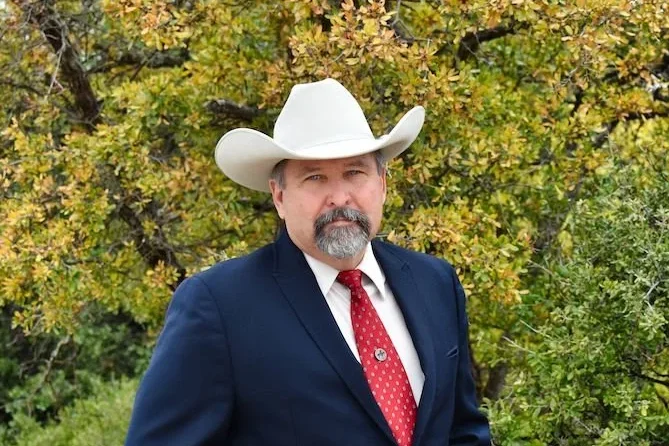
Doug Tolleson is the longtime Chief Scientist at the Texas A&M AgriLife Sonora Research Station and recently retired director of the Grazing Animal Nutrition (GAN) Lab. In this episode, Tip visits with Doug about a career spent connecting animal nutrition to grazing management—from fecal near-infrared spectroscopy that lets managers “read” diet quality of rangeland forage, to prenatal programming that affects animals all the way to finished meat. Doug reflects on the enduring principles beneath every buzzword—holistic, sustainable, regenerative—and on managing for a moving target in a climate of rising variability, where six years in ten are dry and the Sonora “Flex” experiment builds adaptability by managing for drought and swinging for home runs in the wet years. The conversation closes on the value of long-term research stations, some celebrating their second century, and Doug’s advice to young range professionals: stay a “specialized generalist,” never be afraid to learn something, and let the land, the animals, and the weather keep humbling you.
Support for The Art of Range Podcast comes from RanchBot, Western SARE, and the Western Extension Risk Management Education Center.
Host: Tip Hudson
Music by Lewis Roise
Producer: Matt Ziegler, WSU College of Agricultural, Human, and Natural Resources Communications
Mentioned resources
Center for Grazinglands and Ranch Management Ranch Diagnostics Laboratory (formerly GANLAB, as mentioned in this interview)
Texas A&M AgriLife Research & Extension Center at San Angelo
Texas A&M Center for Grazinglands and Ranch Management
Tip Hudson: Welcome to the Art of Range, a podcast focused on range lands and the people who manage them. I’m your host, Tip Hudson, a Range and Livestock Specialist with Washington State University Extension. The goal of this podcast is education and conservation through conversation. Find us online at artofrange.com. We continue the Sages of Rangeland series with Doug Tolleson. Doug is the Chief Scientist at the Texas A&M AgriLife Sonora Research Station, where he has led research and planning for many years in partnership with the San Angelo Research and Extension Center. His work centers on rangeland grazing animal ecophysiology, applying tools like near-infrared reflectance spectroscopy and biophysical modeling to inform grazing management, animal health, prescribed fire, and soil and vegetation monitoring. He also directs the Texas A&M AgriLife Grazing Land Animal Nutrition Laboratory, bringing decades of experience in animal nutrition and rangeland science to this role. You will hear more about both of those in this episode. Well, we’re visiting in person in Kerrville, Texas, and you live near here. Did you grow up in this area?
Doug Tolleson: I did not. I spent some time here as a young man. I was born in Fort Worth, Texas. My parents met at a very young age there. My father had been one of nine children of a tenant farming, sharecropping family in northeast Texas. My mother, her parents had been on a small or medium-sized farming ranch in Mansfield south of Fort Worth, and there were six kids in that family, so everybody can’t stay on the ranch. Grandfather moved to town. He went into the construction business. When my dad moved to town, went to Fort Worth, he started to work for my grandfather, and that’s how my mother and father met. We moved all over the state of Texas with construction jobs. He actually did some work in Sonora, where I live now. About two hours west of where we are, and we actually lived some time in Arkansas. We were in Glenrose, which is between Benton and Malvern, between Hot Springs and Little Rock. I grew up all over Texas, Arkansas, and then went to college, started at UTA, first, University of Texas at Arlington, then went to Arkansas Tech in Russellville, pre-vet, like almost everybody.
Tip Hudson: I nearly went to Arkansas Tech and would have been on a music scholarship.
Doug Tolleson: Great school, really loved it there, great part of the state. Arkansas, no vet school, you had to go to Oklahoma, Louisiana, typically, and being a native Texan, I decided I wanted to try to go back and went to Texas A&M, started out pre vet in animal science, and then really decided, well, chemistry helped me with this decision a little bit, but decided that what I really wanted to do was reproductive physiology and that I would get to do more of that with a degree in that than I would, as a veterinarian. I did that, and then got a degree in repro there at A&M and then started out working ranches, research places, and then ended up later going back to A&M, working in a lab there and got a PhD about 20 years ago now.
Tip Hudson: What things have you worked on? I’ve worked for extension for 23 years, and there’s a variety of stuff. It’s a totally different set of stuff that I’m sure you spent time on here. What have been some of the presenting issues and research opportunities?
Doug Tolleson: A lot of the issues in range or grazing are the same, no matter where you are, but moving from wetter to drier areas, warmer to colder, and that thing, they have shifted some. But everything has pretty much been revolving around grazing management, grazing nutrition, trying to provide the amount and quality of forage for animals depending on what their particular needs are at a given time of year, and then managing the land and the grass to produce that. That then starts to involve brush management, water management, interacting with wildlife, and in some places where the wildlife may be competing with the livestock or the livestock competing with wildlife, depending on how you want to look at it. Everything has pretty much had a grazing management, grazing nutrition, animal physiology because of my repro background. The people that I have worked for have been in those disciplines. Then especially pre-PhD, I was very fortunate to have people who were willing to let me play with some things a little bit and do some research on my own that might have been a little bit of a different tangent than what each one of them might have been doing. But everything really revolved around some grazing management to meet nutritional needs and how that interacts with the physiology of the animal at that given time.
Tip Hudson: Maybe I’ve told you before, but animal nutrition is one of the things that I wished I’d had more of in a range degree. The range degree that I took at the University of Idaho was more focused toward ecology, wildlife interactions, riparian fisheries, and less on animal nutrition.
Doug Tolleson: It’s interesting how the range profession and the discipline, especially from the academic side, has changed throughout the years. At each individual institution, a lot of the range departments have become folded into another department, and some of them have gone more range wildlife ecology, biology type thing. Others have been more range, animal science, veterinary. It really depends on which university that you were at. Even at a place like Texas A&M, it has changed through time. It might have been more of an animal-oriented thing 50 years ago, and it’s morphed into where we were several years ago when we rebuilt the department and everything. It’s now range wildlife and fisheries management. I think it really depended on where you were and which departments morphed into each other as to whether those degrees had more of an animal grazing management type focus, more of a wildlife focus, more of a vegetation, soil, ecology type focus.
Tip Hudson: I visited with Rodney Keith Heitschmidt last night. He had a good time, and we talked a bit about the grazing ecology textbook that he co-edited with Jerry Stuth. Was Jerry the one that started up this Grazing Land Animal Nutrition Lab?
Doug Tolleson: I did.
Tip Hudson: Then you inherited that and are the current director, is that right?
Doug Tolleson: I was the director until about two weeks ago. I’m retiring this year in September. Jeff Goodwin’s now the director of that. It’s been folded under the Center for Grazing and Ranch Management, and they’re going to rebrand the name. I’ll let him tell about that, and there’ll be an announcement about it, so I won’t have a spoiler alert there. But I ran the lab for Jerry for about nine years, and in the late 1990s and early 2000s, I got a PhD under him. Then after he passed away, I went out to Arizona, was at the University of Arizona at the V Bar V Ranch in the middle part of the state for nine years, and then came back to Texas at the Sonora Research Station. Then just a few years ago, I ended up back in charge of the lab again. I’ve had the lab in College Station and then the station out in Sonora, five hours apart, splitting time between both of those. I’ve been involved with the GAN lab, Grazing and Animal Nutrition Lab, for over 20 years because even when I was not there, I’ve done a lot of collaborative work back and forth with them, used the services at the lab a lot when I was in Arizona. Taught a lot of the workshops and things that use their technology and worked with them to continue to build the technology and the methodology. I did that when I came back to Sonora, as well. I’ve really been involved with that lab for at least half of my career.
Tip Hudson: There’s probably a lot of listeners that are in a similar boat to me, where they’ve only dabbled in animal nutrition and may not even know of or know what the GAN lab does. Can you describe where the impetus to form this thing, and then what does it do and how does that change?
Doug Tolleson: The genesis of that lab really started out of work that was going on in the range department at A&M, 40 years or so ago of trying to develop grazing methods, technology, looking at animal science and animal nutrition as part of the key component of how that grazing management needs to work and developing what were some of the very early computer skills tools at that time to really computerize and use larger datasets and use that for some decision support systems. Out of that, the grazing application, I think, was the first one they started, there was a nutritional module that was in that, and there was so much interest in it and need for it that that module sprang out and became an entity of its own, which is what we call the nutritional balance analyzer now, or Nutball. There were a lot of different folks working on fecal indices, both in the wildlife and the livestock side of things, to see if there was something about the chemistry of fecal samples that could help us back into what did the animals eat that resulted in that. Near-infrared spectroscopy was a technology that was really starting to gain a lot of momentum 40 years ago, 30 years ago. Bob Lines did the first livestock research looking at that based off of actually some wildlife work that had been done originally with the technique on white-tailed deer there at A&M and with elk in Idaho, I believe.
Tip Hudson: I wonder if WSU had a research station just south of WANAT for a while. I know at one point, maybe in the 70s, they had a group of captive elk that were fistulated, and they were collecting rumen samples from these elk.
Doug Tolleson: What was the name of that place?
Tip Hudson: The Calhoun Research Station.
Doug Tolleson: I think Starkey, maybe, I guess, Oregon instead of Idaho. I said that wrong then, but I think that’s where the first NIR work for fecal on [OVERLAPPING] had been down there. Then, again, there was a study done at A&M with white-tailed deer that came out about that same time, and it’s about the same time that Bob and Jerry started working on the livestock side as well. Basically, the way that works, the infrared light works very similar to our color vision works. Unique chemical bonds will absorb certain wavelengths of light that correspond with wavelengths in the visible and in the infrared. You can shine light onto a substance and, with the proper detectors, you can measure the wavelengths that bounce back. When you do the difference, you can see which wavelengths were absorbed, and you can track them at which wavelengths they are, and you can create a trace spectrum. Those individual spectra then will differ based on the chemistry of the substance. Spectra of soil will look different than the spectra of grass, which will look different than spectra of fecal samples. Within each of those fecal samples in particular, the spectra from a low-quality diet, low protein, low digestibility will look different than the spectra from a mid-level or a high-level. Wheat pasture fecal spectra physically look different than wheat straw, but chemically they’re going to be different, and that spectra is going to be different as well. When you start to get into the nuances between, say, a cytogram or little blue stem or whatever, as that grass changes the phenology during its growth stage, as animals are taking different bits and pieces of it, the chemistry of that diet will change. The metabolism of the animal and the rumen bugs will change, and so the chemistry of what ends up out on the prairie will also change. The animals will interact with their diet, select that diet, metabolize it, digest it, and excrete it out on the ground so we can collect those samples and then make inferences about what the quality of their diet was.
Tip Hudson: If people are familiar with NIR, they’re likely more familiar with that being used as a substitute for wet chemistry on forage analysis. That technology is fairly mature, but I don’t think I realized that NIR for fecal sampling went back quite that far.
Doug Tolleson: The lab’s 30 years old as a commercial lab, and so the research then predates that four or five more years. It was being born and developed as the real, more widespread commercial application of the NIR for forages and soils and feeds, and that thing was really booming at that time. The fecal NIR technique is really much more mature than a lot of people realize. The lab, I think we have something like 250,000 samples now that we’ve collected over the last 25 or 30 years, and pretty much border to border and coast to coast throughout different times of the year, all months, largely focused through the Great Plains because that’s where cattle are. The lab, it’s probably 85 or 90% of the samples that we’ve gotten during that time have been cattle. But we’ve also got sheep, goats, white-tailed deer, mule deer, pronghorn, caribou, moose, yak, you name it. We’ve got fecal samples from a lot of different types of animals. We were doing fecal NIR with giant pandas 20 years ago when we were at a lab there.
Tip Hudson: I didn’t know until I went to a zoo in Australia that they almost exclusively eat bamboo.
Doug Tolleson: Yes.
Tip Hudson: They’re taking off chunks of extremely fiber stuff.
Doug Tolleson: Then they really pass it through. I tell you, I learned more and became a better ruminant nutritionist after studying the pandas, because they are so polar opposite. No rumen, very little digestion of it, but they manage to figure out how to extract the nutrition that they need and survive.
Tip Hudson: Do they have an enlarged cecum like a horse? I actually ask [OVERLAPPING] .
Doug Tolleson: They have a pass through. It’s a very different digestive strategy. They eat. If they’re not sleeping, they’re probably eating.
Tip Hudson: It’s not hindgut fermentation.
Doug Tolleson: There is some. You’ll get some different bacterial populations there and all. They’re carnivores, with the ability to harvest and then use grass material or herbivorous type diets. They were really interesting and really made me develop a more keen appreciation for what ruminants do. Even horses and other hind get from miners, as well. But ruminants, in particular, because they again, are just so polar opposite.
Tip Hudson: What are the primary applications for the analysis from the GAN lab on fecal samples? Is it nutritionists that send this stuff in or ranchers, all the above?
Doug Tolleson: All the above. We’ll get individual ranches, we’ll get extension programs. The NRCS has funded a lot of the work that has gone through the GAN lab, working with producers to look at not only the quantity of fords they have, but the quality as well and what’s that turning into for the diet of those animals. You can do a variety of different things. You can make grazing management decisions based on looking at the slope of diet quality at a given time and season and how your grazing management maybe, as you go into a new pasture and the quality is higher, and as you’re grazing more down into that sward or maybe gotten some of the more preferred species of plants first and the diets starting to shift, you can see how that diet quality can drop. Along with quantity, you can use that to try to help make some grazing management decisions. You can make supplemental feeding decisions. When to start, when to stop because of the needs of that animal at a given period of time and what the forage is providing. Then you can take that information, put it into a nutritional balance program and see if the forage is meeting the needs of those lactating cows or those growing heifers. If not, what type of feed might be best to meet those deficiencies that might be there. Then other thing that we’re trying to get people to look at a couple of different things. One is to do some sampling for a period of time, maybe a three year period with say a cow calf or sample once a month and build that nutritional baseline. Maybe you get a wet year, dry year, normal year. You can look at what you would expect the nutrition of your animals to be in those different times. After that, you can back off and just sample at the key time periods that you need to make a decision. When does it green up in the spring? When do you get a frost? Then really, something that has emerged over the last quite a few years now everyone looking at prenatal programming. We realize now that and have for a number of years, but the fecal NIR really helps us bring some of these differences out as how that midsummer type forage, which is going to be different in Arizona than it is in Texas, how that period when we’ve got those cows that are early to mid pregnant, the fetus is in a very critical growth stage and developmental stage, how that nutrition is going to affect those animals, not only after when they’re born, their birth weights, waning weights. Then we’re seeing those effects all the way into the feed lock and all the way onto the plate that those prenatal programming nutritional environments are really determining the performance of those animals all the way into consumption. We just did a paper last year using the [inaudible] Roquette data there at Overton, that we found out that even the previous gestation had an effect on the next calf.
Tip Hudson: Oh, my. That’s wild.
Doug Tolleson: Instead of thinking of a three and one mama, baby and the baby that’s inside, we got to think of the baby before because the uterine conditions will carry over to some extent. You can feed your way around it and graze your way around it, but there’s still some effect. We saw that with higher stalking rates, lower diet quality was affecting that animal while it was in the uterus, all the way to the feed line and then the next calf. There’s really not a slack time when we’re thinking about the nutrition so a cow, Ewe, a nanny, a doe. That nutritional environment is going to have long range implications.
Tip Hudson: I’m asking because I’m interested. What are the outputs from the fecal analysis?
Doug Tolleson: The calibrations that we have built are for diet crude protein, diet digestibility, and then we have the fecal nitrogen and fecal phosphorus. The calibrations were built for the diet. We fed known diets of chemistry that we did typical wet chemistry analysis, fed those diets, and then got the fecal samples that resulted from them. That’s how we got diet protein, diet digestibility. Then we took the fecal samples themselves and looked at fecal nitrogen and fecal phosphorus. Those are the four things that you typically get from an analysis that you send to the lab. We’ve done research on a lot of different things, looking at different quantities of certain plants in diets, and we’ve looked at stress. We’ve looked at parasite stress. We can see there’s a threshold of tick, external parasite stress that you can start to see changes in the fecal chemistry. We can see different fecal chemistry in pregnant versus open animals. There’s a variety of different things that we’ve been able to do from an experimental and a research standpoint that we don’t necessarily offer as a commercial service. There’s still more work to be done. But the commercial service was built on predicting basically that diet protein and diet digestibility.
Tip Hudson: We can switch gears a little bit. What would you say are some trends in people’s thinking, either in the research community, scientific understanding or rancher application, ideas about grazing management. Good or bad?
Doug Tolleson: Well, there’s some in both. I’ll probably have people shoot at me for this one. I’ll couch this diplomatically. We get a lot of waves of new buzzwords that have come along in the last 20 or 30 years.
Tip Hudson: Holistic, sustainable, regenerative. Keep going. [OVERLAPPING].
Doug Tolleson: All of those. There’s viability to each one of them. But there’s also, to me, that baseline of just good solid management that is built on what can the soil produce? What kind of grasses do you have? What can they produce? What can they withstand the timing and the amount and followed by what rainfall that you get? I think there are a lot of principles of just good solid grazing management that are built on what soil can do, built on what types of plants you have, how they grow, how they respond. Some are more resilient than others. I think good grazing management has been in vogue for a while, and it’s been preached from back into the early part of the previous century. Some of the early scientists realized we needed to start paying attention to this and listening to some of the more intelligent ranchers who were saying, we need to be paying attention to these things. I think the principles of good grazing management are probably not terribly different than they have been. We’ve learned things, obviously, we’ve gotten better, and there are people who are highly skilled in the art and the science of grazing management that have been able to apply a lot of these different new waves of doing things and been very successful at them. But I think they have paid attention to those basic principles. Then there are people who have had total wrecks because they’ve caught onto something new that sounds good and maybe they didn’t fully understand how all that was going to work. I think that has been both a positive and a negative trend, positive in the sense that a lot of these newer words and things that have come out have gotten people interested, and they have looked into different grazing practices and looked into what are the principles behind those? How do I make those work? Then on the negative side, I think there are folks that have caught onto some fads and thought that that fad that they could just do a particular type of practice, and the principles underneath it didn’t really matter. I think that’s been a good and a bad trend that has come out over the last 30, 40 years.
Tip Hudson: I’ve been around all of that. One of the things we talked about the other day with TCU students was that the quantity of forage is finite. We might be able to marginally increase how much grows, but there still is a finite forage supply. An acre even if you fertilize it, seed it irrigate it, aggressively manage it, it won’t support 1,000 head of cows for a year. It just won’t. Somewhere, as you begin to back off of that, you start to get into a reasonable range of what we would classically call a stalking. Where you’ve got forage supply balanced against animal demand. You can’t consume more than you grow. How much you grow is not infinite. There’s a variety of ways we can get at that and try to promote growth.
Doug Tolleson: Then the amount timing, duration of your rain is going to dictate what the soil and the forage is going to be able to do for you, and or recover from different intensities of defoliation and that sort of thing. But there is an infinite level that you can get to a certain level and then after that, it’s going to be a diminishing return. If you go back to some of the classic, work, everybody’s seen these graphs where on the y-axis, you have some level of animal production and on the x-axis is some level of grazing intensity. You look at it per animal versus per acre in those production they cross. Where that cross occurs is where the magic happens. The science, the intelligence, the management, the paying attention to what’s going on. That’s where all that happens, but the problem is it moves up and down side to side. This is not rocket science, it’s harder.
Tip Hudson: More complicated than that.
Doug Tolleson: It can be, sometimes. [OVERLAPPING].
Tip Hudson: You said [OVERLAPPING].
Doug Tolleson: Appreciation for rocket scientists.
Tip Hudson: They’re really good at math. But the nice thing is, if you do the math right, you get the same answer every single time.
Doug Tolleson: Again, our target is moving. Now, the moon is also moving and Jerry used to say this when they shoot the rocket at the moon, they make multiple adjustments before they get there. ‘Cause if you just shoot it once, you may fly right by it. I think we fly right by our grazing management target sometimes. But when it’s done right, it’s dynamic. It’s changing all the time, because it’s going to rain, it’s not going to rain. It’s going to rain too much. It’s going to rain at the absolute wrong time. It’s going to rain at the absolute right time. The last two summers in Sonora, two summers ago, two years ago, we were in a drought for the year. If you look at our annual rainfall, we were at about 75% of rain for the year. But during the growing season, we were at about 100%. We were in pretty good shape during the summer, even though we were in a drought for the year. The forage production for the entire year was below average. But at a key time, we were in pretty good shape. We were able to graze that in such a way to keep those root crowns there, keep some standing crop, keep soil intact, and all that sort of thing. Well, this year, so then it turned off dry again. Last year at this time, we were dragging water hoses around in the headquarters trying to keep the live oaks green and alive. Historic trees that I’m not going to let them die on my watch if I can keep it and it looked pretty bad. Then it started raining. We basically had a monsoon in our part of Texas, which is not monsoon country. We’re a little hundred miles east typically of that and we had a fantastic summer. It just rained at the right time and the right amount. When the grasses were coming on, we have more forage there than I have ever seen. I’ve only been at the station for 10 years, but I’ve been coming out to the station for a long time. Butch Taylor is still around. A lot of the guys who worked there for 30 or 40 years, everybody’s saying, No, we’ve never seen grass like this. Grasses are putting off runners and sending them out across limestone shelves, trying to find a place to put roots down. It’s almost like carpet. You wouldn’t want to walk barefoot, but it looks like you could. The curly Mesquite, buffalo, all these different things, it’s just solid. There’s hardly no bare ground. We take all the students out and say, Look at this cause you may not ever see this again. I’m not ever going to see it in my life, probably. But that amount timing and duration and where it fits with the phonology of the plants, just everything just lined up. It’s wonderful. Now, though, it has turned into fuel. Now we have dry grass, and I wish I could go down to the south end of the ranch, light it on fire, and go to town. Come back, put out what’s still burning ’cause we could do so much good on tipping that needle back to being less of some closed in savannas [OVERLAPPING] .
Tip Hudson: Suppose it too risky to do it there? ‘Cause Dr. Cothman said that they do it pretty regular, at least he does.
Doug Tolleson: Everybody has a different risk tolerance.
Doug Tolleson: I came up in fire culture and really got a lot of the safety beat into my head working through with some of the public agencies and stuff, and I think a lot of them really they’ve got it right. But I think with a good, well-trained crew and a good plan with the proper contingencies- which is nobody can have a contingency plan for a fire whirl that takes off and goes somewhere and, but the things that you can control and plan for, we burn in burn bands. We have the ability to do that through the Burn associations and through the trust and respect that all the people that went before me, butch and all, built because of they learned through trial and error sometimes. But, yeah, we could absolutely burn. There are places I wouldn’t. There are days that I wouldn’t know; there are days we have to just say, no, we’re not going to burn. It’s not the right conditions. We’re out of prescription. This is not smart. But yeah, we could burn a lot of that right now. Now, it’s starting to green up. We’re going to miss that window, and it’ll be later in the year. We’ve got so much fuel there that, man, could really do some work that would open up some of those getting to be more closed-in brush canopies of the junipers and live oaks. Again, I’m going to get shot for saying that, but we have plenty of live oaks. We’ll be fine if we burn some of them up. They’ll sprout. I’ve got some pictures of some of the ones we did some burns last summer. It looked like, boy, we just torched every one of them; they’re never going to come back. I go, Oh, yeah, they’re going to be fine. I’ve got pictures now of them coming back. But, I would love to be burning would have learned would love to have burned a lot this past winter. Depending on how the rains come this spring, a lot of that fuel is still going to be there. We could do some tremendous work this summer.
Tip Hudson: What have you seen in the changes in how the public perceives ranching? Because I feel like it’s gotten more positive, but [OVERLAPPING].
Doug Tolleson: How many people every year that have talked about Yellowstone?
Tip Hudson: I’m not sure anybody.
Doug Tolleson: Okay.
Tip Hudson: You were talking about the show. Show, yeah.
Doug Tolleson: Because I think that has had some impact on the way people perceive ranching. I don’t know. I won’t go too far into that, but I watched it one time and decided that was not for me.
Tip Hudson: I happened to be behind somebody on airplane one time that was watching it, and I was shocked at how violent it was. I couldn’t look.
Doug Tolleson: I think the attention to ranching and some of the professions that they portray and all has been wonderful. It’s TV, it’s drama. In order, I guess, to attract the audience that they need, they have to do some of those things. I think that has been somewhat detrimental. But I think a lot of the public still views agriculturists in general positively, farmers and ranchers. There are always going to be those that are going to have the attitude. Cows are bad. They’re destroying the planet. I can drive well, drive home this evening. I’m going to see places where I wouldn’t argue with them. There are some places that are going to be mismanaged. Lizard licked is the term that we use out here [LAUGHTER].
Tip Hudson: I have not heard that one yet.
Doug Tolleson: But then, it’s exactly as you can imagine.
Tip Hudson: Right.
Doug Tolleson: Then you’ll get to the fence, and the next place will look wonderful. I think the more that we’re able to educate the public on what is good management and what is not, I think there seems to be a new appreciation from the foodie group and people who are really becoming more interested in where their food comes from and how it’s managed and how is it produced. I think that has been a positive. I think there’s a certain amount of goodwill, and I think it’s growing. For ranchers, for how they’re trying to produce food, feed the world, do it in a way that.
Tip Hudson: provide all these ecosystem services in the same space. I feel like [OVERLAPPING] if you grow cornfield or soybeans, it’s not Western meadowlark habitat.
Doug Tolleson: It’s not. It’s still food. We got to feed 9 billion people in the next 20 years or so. They also need something to drink. That’s another thing that we talk about feeding the world. They’ve also, the first need when you start looking at that hierarchy of needs, we got to have water. We’re going to have to manage for that. I think farmers and ranchers both are developing ways to be more efficient with that water. I think ranchers are going to be seen, for the most part, as good stewards of those watersheds. I think the cowboy way and all that is still going to buy us some goodwill; we’re still seen as those guys and girls in the white hat. I think to answer your question, I still think generally most of the public still views ranchers and range management grazing lands, even in the eastern side of the US, as being good caretakers and good stewards. Whether it’s a large corporate organization or whether it’s a family organization, there’s still families that work for those corporations. There’s still individuals who get out of bed every morning and go out before daylight and feed, care for those animals, check on the water, make sure that the soil and the forage and the plants and the wildlife habitat is being cared for. I think formats like this, getting that word out, talking to the real people- we’re not cartoon characters. We’re not movie actors; we are people.
Tip Hudson: Your chatbot can’t feed you beef or drinking water.
Doug Tolleson: That’s another trend, I guess, that I’m seeing, too. I have been a developer and a user and a promoter of technology and decision support systems and all. But I will say this: we are still going to have to have human beings that get up and go do the work. Use these tools, make us better, more efficient. But I don’t think we will replace talented, hard-working, and passionate human beings with any automation, AI, any of that thing. I think if we do, we’re going to lose something as humans, that interaction with land, with animals, the thing that makes a lot of us get up out of bed and go do what we do we enjoy it, no matter how hard it is and how difficult the day may be, and it’s that attraction, just like somebody who wants to get up and go cook pizza every day or who wants to go build a car or whatever, business they’re in. If you’re attracted to what this profession offers, you’re going to get up and go do it. You’re going to find a way to be able to do that for a living, and it takes a certain individual who wants to do what we do out in the middle of nowhere in the places that we do it. But I think there will always be a place for those of us who do that. There’ll be fewer of us. We’re going to have to be more efficient. We can only work so hard. Like I said, you can only produce so much forage. There’s 24 hours in a day, and there’s seven days in a week, and a lot of us are spending a lot of that time working. But a lot of us are also being able to bring our family along with us and do that. I think there’s always going to be a place for that.
Tip Hudson: To what extent do you think Ranchers see the need to do a good job in order to maintain the goodwill of the public? Because some people just have the attitude, I’m going to do what I want to do, and it doesn’t matter whether soccer moms think what I do is worthwhile for the planet or not, but I feel like that has begun to change.
Doug Tolleson: Again, farmers, ranchers are human beings, and so some of them are really, really nice people. Some of them are not. [LAUGHTER] I’ve met some that I wouldn’t give you a plug nickel for. Some of them don’t care what anybody else thinks or whether they’re going to hand the place off in better shape. But there are not many of those. I think most of the people that are in agriculture. I’m biased because that’s my family came from that. That’s what I’ve done for a living. The people that I have been around have been cut from that cloth. I think most people do care about now they may say, I don’t care what those city people think about me. But they do. One, from an economic standpoint, that’s who’s buying your stuff. You do need to care about what they think. But I think most people, again, they want to be known as good steward. They want the place to be better shape when they hand it off or sell it or whatever they’re going to do with it than it was when they got it. I think there’s again, more of a realization now that it is working with our consumers, even if we don’t want to use this ear tag and we don’t want to do this, if that’s what the consumer wants, cold hard business is, that’s what we need to produce for them in order to stay in business so that your kids, your grandkids, can continue to do this or that you can sell it to somebody to do that. If you don’t want to see it become something other than a working farm or ranch, then the better shape that you take of it, and so that you can hand it off to somebody who could actually go make a living doing that. I think most people are going to the people that I interact with and talk to and listen to and pay attention to; I think a vast majority of them are in that camp in that mindset.
Tip Hudson: Yes, I think so, too. You mentioned that you’re about to retire. In grazing management, range management, what are some things that you feel like where there’s work still to be done that you would like to see continued?
Doug Tolleson: I think this pairing of diet quality quantity, again, the math is easier to say: here’s how much page we have and here’s how much an animal eats and here’s how long I want to leave them there. That’s a little more straightforward, although it is obviously dynamic. But when you start to add multiple species of plants coming and going and maturing and all at different periods of time, and then the needs of that animal changing as they’re reproducing, growing, all the things that we ask of them, the quality side is still going to be, I think, the more dynamic of those. I think we still have a lot of work to do there. The fecal NIR technique, the satellite imagery, and all the improved things that we have now are not always getting that exactly nailed down because there is so much that’s going on. I think there’s a lot of room still to improve that. I think we’ve got to adapt to the new genetics that we have. We’ve got animals. We talk about, well, my grandpa ran 100 cows on this place forever, and I’m going to run that. His cows probably weighed 8-900 pounds; now they weigh a lot more than that. Even though we have bred some genetic efficiencies into them, we’ve got to adapt to that. I think that being able to understand the interactions of what that land is able to provide, what these animals are harvesting from it, and how efficient they are. If we could get five more percentage points of reproductive efficiency, look at how much more beef that would be with the size animals we have and the price that they are now, and trying to stay ahead of those margins.
Tip Hudson: If the cost of getting that is less than or the cost of going to get is less than the value that you get back from it.
Doug Tolleson: We’re going to get back together where that margin is tighter again.
Tip Hudson: Right.
Doug Tolleson: The ability to find and capture those efficiencies. Will it be on the grazing side, will it be on the genetics, for reproduction, making sure that we’re feeding and providing grazing management in such a way that we can take advantage of that efficiency in that higher production. We’ve got animals that can produce a lot more, but we’re not grazing and feeding them in such a way that we allow them to express that genetic optimum. We’re not in that cross between the production per animal and production per acre again. there’s still a lot of work to be done, I think, to take the new tools that we have and some of the improved technology and decision support systems and then really keep asking those tough questions: where is the gap? Where are we not getting this right? Now let’s focus some energy on that.
Tip Hudson: I like the idea of some of these technologies and decision support tools giving us direction. I’m just thinking out loud. It feels like a map. The map can tell you which roads to take, but you’ve still got to drive the road.
Doug Tolleson: Still got to drive the road. [OVERLAPPING].
Tip Hudson: Require somebody to pay attention all the time.
Doug Tolleson: Yes. I’ve had a lot of students and staff that would say to me, Why do we make a plan? Because we always deviate from it. I tell them, the plan is a rudder. If we just go where the wind blows, we’re going to wander around wherever. The plan, even though we deviate from it, that gives us that course, and we know what corrections to make to get back, to get to that objective. I think we’re there now more than maybe we’ve ever been because some of those objectives are maybe they’re not bigger, but maybe we’re expressing and articulating them as being bigger now. Again, we’ve got to feed more and more people on less and less land. we’ve got to do it in weather patterns that are, by all documentation, becoming more erratic and changing and shifting. We can argue about that politically if we want to, but it’s not gonna change. We’re going to deal the hand.
Tip Hudson: One of the big discoveries, I think, in the last 50 years, was that there was more variability than we had been able to measure and account for prior to that; some of our ecological failures were as a result of not accommodating existing variability. But I would agree, certainly in the Pacific Northwest or the inland Northwest, we see increasing variability around.
Doug Tolleson: I’ve got a graph. I wish I could show you, but I use it a lot in the workshops and seminars that I do that I was able to obtain when I got to Sonora. We’ve got over 100 years of rainfall data there, and I’ve been able to prepare that with some of the automated generations of standardized precipitation index and things like that. I use some tools out of the University of Arizona. I’ve got some over 100-year-old graphs of the standardized precipitation index for annual or for seasons. But if you look at the annual and the pluses and minuses, the average rainfall hadn’t changed a lot. Been about 22 ” there. But if you look at the magnitude of the variation in the 10s, 20s, 30s, 40s, leading up to in our part of the world, the drought of the 50s was worse than the Dust Bowl. Seven or eight years of extremely dry weather in the 1950s. After that, we still have variability. But during my lifetime, I was born in 1961; the magnitude of that year-to-year variation was probably 2/3-3/4 of what we were seeing before that drought. Guess is what has started happening now, about year 2000.
Tip Hudson: Back to high.
Doug Tolleson: We’re back to that high variability. What’s coming next?
Tip Hudson: Right.
Doug Tolleson: We got another drought of the 50s coming, or worse or.
Tip Hudson: Low variability isn’t helpful if it’s low precipitation, either.
Doug Tolleson: No.
Doug Tolleson: It’s warmer. Our evaporation is going to be different. But a lot of people my age cut our teeth during times that from a variability standpoint, were easier than what we’re looking at now and what we’re going to hand off to the next generation. I think we’ve got to use all of the tools at our disposal, our 40, 50 years of experience on a place that some multi generation ranch has had more than that, the science that we can bring to bear the data that we can use in record keeping so that we don’t have to repeat history. We can learn from it and get ready for it. If we see that that variability is increasing, then we need to change how we’re managing. Got to be more flexible. We’ve got to figure out how to have some enterprise combination that helps us produce the food and the fiber that keeps the water going, takes care of the soil, keeps the cash flow so we can stay in business and do that in a way that we’re producing a product that the customer wants. They want to buy from us because they see us as being good stewards. Back to your earlier question.
Tip Hudson: Well, that was a really easy segue over to the Sonora station. I would argue that these experiment stations remain important, partly for that purpose to continue collecting these long term datasets because there’s not that many places that have clean data going back 100 years. The Sonora is about to celebrate the hundredth anniversary?
Doug Tolleson: 110 years. I just came back from Arizona a couple of weeks ago. The Santa Rita is over 100-years-old. The Granada in New Mexico is over 100-years-old, and Sonora is over 100-years-old. We’re trying to put a network of three ranges, three centuries, and capitalize at this part of the US, which is going to be top dead center for climate changing and morphing and doing different things. Again, to your point, we’ve got 100 years of data. We don’t have to reinvent this wheel. We can see what has changed. How what we were doing was effective when things were changing what we did when it was dryer, what we’ve done in those wet years. We’ve started a project there at Sonora that we call the Sonora Flex experiment, where we’re actually going back on Leo Merrill’s original four pasture three herd pastures that he developed that on as one of our replicates, and we got some continuous grazing and we got two different replicates of the four pasture versus the continuous, and we’re putting flexibility into that so that we’re not managing for an average. We’re managing for the most often occurring year, which for us, six years out of ten is a drought. We’re managing for drought all the time to give us the ability to set the stage for that wet year because we’re taking care of that grass, we’re taking care of that soil, that watershed. When we get dealt the hand of a wet year, like last summer I wish I had been able to either burn or go get some stalkers. What we did was we used that for more drought relief rest. I’ve got standing crop that I can move animals into. If I can get the labor and all the things to work, we can go ahead and do some burning. The flex part of that is to build that adaptability, build that flexibility in so that you manage for a drought, and then you try to hit home runs when you can. Then we’re looking at, again, other income streams, whether it be drought insurance, whether it be possibly soil carbon contracts, whether it be our hunting, we have that. We’re looking at some ecotourism night sky, bird watching, just being out in the middle of nowhere where there’s not traffic sounds and all that thing. We have, I think, a lot of things to market if we can develop infrastructure and the system to be able to do it in a way that’s not overwhelming us. We’re not in the tourism business, but maybe we can have a few people come out from time to time and that thing. That’s what that experiment is about of trying to again, be able to be ready for that game when we do get those really good years and the timing of the range so that we can bring on more animals or rest a pasture that needs to be rested, burn one that needs to be burned, some combination of all those three. That’s the flexibility part of it. Being at a place that’s got all of that data has given us the ability to go back and look at that and let’s see what has gone on there, and it is absolutely counter to the way academia thinks and functions. We want to go get a two year grant and a crank a student out. Go get the next one.
Tip Hudson: You’re right. Publish results in Year 3.
Doug Tolleson: Publish your results, and it’s Whack a mole, what’s coming out. You end up with these little popcorn projects going on all over the place, which you also need to do so you can train students. They’ve got to go be able to get that experience. But we can also plug them into these long term and long range studies as well. They’ve come up then in a culture of that’s important to have that long term continuity on a given place. I’m really hoping that over the next several years we’ll be able to keep some funding going, keep some of those long term projects going, keep that importance, tie in with those other long term research stations in Mexico and Arizona and maybe build a network there that will gain some traction, get some attention, get some funding because you can only do the research you can get funded and maybe help keep that going and meet that need because your point is absolutely well taken. If we had not invested in those 100 years ago, look at all the things that we would not have learned, and we may be making the same mistakes over again because we didn’t realize and didn’t document and know the positives and negatives of some of the research management actions that we took.
Tip Hudson: Of all the things we could spend money on, it seems like that’s a pretty decent one. We’re seeing two questions and then [OVERLAPPING] Are those the only three stations that are older than 100 years or are they just the ones in this region?
Doug Tolleson: I think there’s got to be. Obviously, when you get in the East, there’s going to be some longer standing Ag research stations. But with regard to range continuously operating, I don’t remember when Fort Keogh came on. There are going to be others. I can’t name them off the top of my head.
Tip Hudson: Great basic experimental range.
Doug Tolleson: These are in the Southwest, and they make a really nice transect. Sonora would be on the eastern end of a drier climate. But we got PJ country that looks pretty similar to places in New Mexico and Arizona. We’re sitting right at this ecotone area between the Edwards plateau, the Tamaulipan brush scrub or South Texas coming up off the river and then not quite to the Chihuahua desert. But we’ve got aspects of all three of those. From one year to the next, it can shift and move around. We think about where’s the 100 Meridian now and where is that dry land. We can be on either side of it theoretically, at different times. But that Sonora Station really is sitting at a very critical place, I think, to be able to learn about all three of those different ecological regions because we got a little bit of all of them there.
Tip Hudson: But you half answered my last question, which is, can you give a 2-3 minute history of the Sonora station and why it’s important? You made a pretty good shot at why it’s important.
Doug Tolleson: Started, again in the early part of the previous century, there had been some droughts in our part of the world down there, very progressive, very forward thinking ranchers realized they had some issues. They were losing animals to maladies that they didn’t know what they were. They realized that there had been overgrazing, the way that sheep and goats and cattle were distributed around there based on where water was located. Got together in 1915 in Del Rio, formed the Texas Sheep and Goat Raisers Association, formed a committee to try to get a research ranch started in that part of the world. There were others in Texas. There wasn’t one in our part of the world.
Tip Hudson: Where’s Del Rio? Rick mentioned that they lived there for a while, and I don’t even know where it’s at.
Doug Tolleson: Del Rio is on the river, on the border. San Angelo would be, again, northwest of us here in Cuverville and Del Rio, San Angelo would be roughly the same east and west. Sonora is not exactly halfway, but basically halfway between the two.
Tip Hudson: Got it.
Doug Tolleson: Del Rio is on the river. They met there, put a committee together. That committee was able to find a piece of land that would be for sale and raised half of the money to purchase that from local people, ranchers, businesses these rural communities. Petitioned the legislature, State of Texas. They got the other half, bought the property, convinced the A&M College of Texas at that time, take it on as what would have been their 13th research station. They said, we can’t do that. Skip 13. It became substation 14. That was the original name of it. We have just painted one of our water tanks at the station and put a windmill there with substation 14 established in 1916. That was the beginning of it.
Tip Hudson: That happened right in the middle of World War I.
Doug Tolleson: Yes. Is that just after 16?
Tip Hudson: Is it 11-14 or 14-18? I can’t believe.
Doug Tolleson: You better look that up. I’m going to fail my history test. I think it was maybe right after. But I could be wrong. But a lot was going on in the early 1900s.
Tip Hudson: July of 1914 to November of 1918.
Doug Tolleson: Right as it was beginning then. There weren’t paved roads out there. There wasn’t electricity out there. The original scientists lived in tents. There was at least one model T we have a picture of their mules and wagons and horses and built actually, the house that I lived in for five years, there was the first house they built out of limestone there, quarried and then they built a larger superintendent’s manager’s house. Pretty much everything at that station is about 100-years-old. The newest facilities we’ve got until just recently, the newest facilities were 40 or 50-years-old. A lot of history there. Ranchers have been coming there through several generations, part of the culture of Southwest Texas. Yeah. We’re going to celebrate that in a couple of weeks. But as much as the history, which they celebrated a lot at the hundred year anniversary, we’re going to take more of a look forward. We’re going to recognize the history because we obviously know we’re going to stand on the shoulders of giants. There’s a rich history there that we’re going to acknowledge and celebrate but we’re also going to take more of a look forward. What’s the next hundred years going to look like because we’re building it now whether we think of it in that way or not, some point in time, somebody 100 years from now is going to look back and see what we did and evaluate how effective we were at dealing with what the world was like at this point in time.
Tip Hudson: Well, you just offered another segue that reminded me. I did have one more question that I actually prefer to end on. Speaking of the people that will look back 100 years from now, do you have any thoughts for young range professionals, things that they should keep in mind, should do?
Doug Tolleson: I’m going to give him a piece of advice that my father told me is when I was griping about algebra one time. He said, “Son, don’t ever be afraid to learn something because you never know when you’re going to need it”. I think I would start with that. Keep an open mind. You may say, I want to be a cowboy. I want to be a wildlife biologist. I want to do this or that. Chase that. But don’t pass up an opportunity to go learn how to identify plants or learn how to ride a horse or learn how to give medications or learn how to manage ground nesting birds or recognize that there are birds that might indicate to you how your range management is going. Keep an open mind, be the first one to work every day and the last one to leave. Don’t neglect your family because family is the most important. But go do the job, be willing to do the work and don’t ever be afraid to learn. Don’t lock yourself into, I am a, insert whatever thing it is you think you want to be because if range management is anything, it is not siloed. You’re going to fail miserably.
Tip Hudson: It’s a specialized generalist.
Doug Tolleson: Yes. I consider myself to be a progressively advancing novice. Trying to learn something all the time. The land will teach me. It’ll humble me, the animals, the weather, how to manage people because at the end of the day, a person has to go make a decision and go do something. It doesn’t matter what the science is. It doesn’t matter. It needs to be based on all of that. But again, somebody has to make a decision and decide, I’m going to go do this thing. That’s what I would say to young folks. Don’t be afraid to learn something. Soak up as much as you can get around people who know more than you. There’s always somebody who knows more than you about something, no matter how smart you think you are. Go spend time around those folks and spend time around folks who absolutely enjoy and passionate about what they’re doing. Those are the people you’re going to learn stuff from. Go learn as much as you can and put the work in. I hear athletes talk about the game we will reward you. If you train and play, the range profession will do the same. It will reward you with an extremely satisfying life if you dedicate to it.
Tip Hudson: It’s a good word. Doug, thank you.
Doug Tolleson: Cool. Thank you for having me.
Tip Hudson: You bet. Thank you for listening to The Art of Range podcast. Links to websites or documents mentioned in each episode are available at Artofrange.com. And be sure to subscribe to the show through Apple podcasts, Podbean, Spotify, Stitcher, or your favorite podcasting app so that each new episode will automatically show up in your podcast feed. Just search for Art of Range. If you are not a social media addict, don’t start now. If you are, please like or otherwise follow The Art of Range on Facebook, LinkedIn, and X formally Twitter. We value listener feedback. If you have questions or comments for us to address in a future episode or just want to let me know you’re listening, send an email to show@artofrange.com. For more direct communication from me, sign up for a regular email from the podcast on the homepage at Artofrange.com. This podcast is produced by CAHNRS Communications in the College of Agricultural, Human, and Natural Resource Sciences at Washington State University. The project is supported by the University of Arizona and funded by sponsors. If you’re interested in being a sponsor, send an email to show@artofrange.com.
Speaker 1: The views, thoughts and opinions expressed by guests of this podcast are their own and does not imply Washington State University’s endorsement.