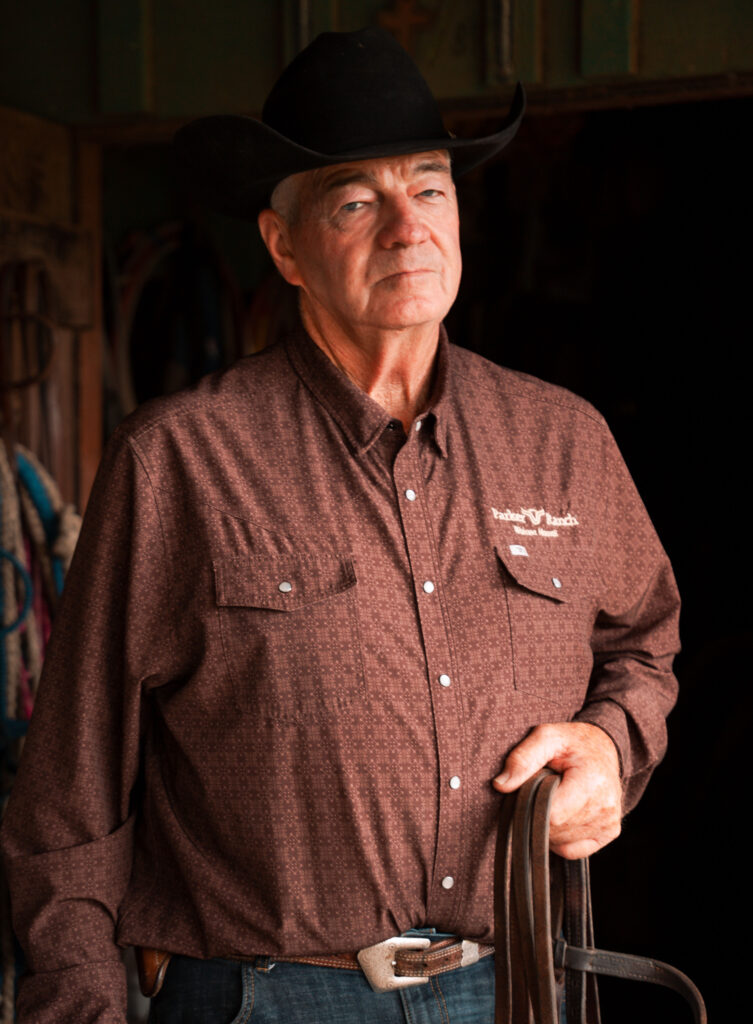
Parker Ranch is the oldest and biggest ranch on the island of Hawai’i and one of the top cow-calf operations in the country. Keoki Wood traces the ranch’s history from John Palmer Parker’s founding in 1847 and the arrival of the Mexican vaqueros who gave rise to the paniolo tradition to its current role as a national industry leader and local community supporter. The ranch team culture, which Keoki has been instrumental in shaping for 22 years, values low-stress animal handling and strong people relationships. This tradition led to Parker Ranch receiving the 2025 National Beef Quality Assurance Award from the National Cattlemen’s Beef Association. Keoki describes lessons learned from a 40,000-acre wildfire, and tells why using grazing to reduce fuel loads needs to be treated as a public good. Listen to hear more about the challenges of managing lands from sea level to 8000 feet elevation, cycles of drought and abundant grass, and keeping calves healthy shipping halfway across the Pacific Ocean.
The Art of Range is supported by RanchBot Monitoring Solutions.
Host: Tip Hudson, Washington State University Extension
Producer: Matt Ziegler, WSU College of Agricultural, Human, and Natural Resources Communications
Keoki photo credit: Dustin Acdal Photography
Music by Lewis Roise
Visit the episode page at artofrange.com for the transcript of this interview and links to other resources mentioned in this episode.
Mentioned resources
Parker Ranch home page
Paniolo Preservation Society: the history of the vaqueros and paniolo culture in Waimea
Keoki was inducted into the Hawai’i Cattlemen’s Council Paniolo Hall of Fame in 2026
Ranch news release about Beef Quality Assurance award (and great photo of Keoki’s team)
Forging ahead: Parker Ranch outlines historic fire’s impact, future plans (West Hawaii Today, 2021)
Tip Hudson: Welcome to the Art of Range, a podcast focused on rangelands and the people who manage them. I’m your host, Tip Hudson, Range and livestock specialist with Washington State University Extension. The goal of this podcast is education and conservation through conversation. Find us online at artofrange.com. My guest today on the Art of Range is Keoki Wood. He is the livestock manager for the Parker Ranch, one of the longtime livestock operations on the Big Island of Hawaii. I’m thrilled to be visiting with Keoki in person. I feel like our spheres have a little bit overlapped for a long time and never had the chance to meet. Keoki welcome.
Keoki Wood: Well, thank you. Appreciate that Tip. I’m glad to be here and I’m glad to share a little bit about Parker Ranch.
Tip Hudson: At this point, I’ve heard from quite a few people about some of the history about how cattle came to Hawaii and how the ranching industry got started. But Parker Ranch really was involved in that from the beginning. I think if my recalling correctly, from the information that I read that the ranch started in 1837.
Keoki Wood: 1847, almost 180 years now. John Palmer Parker founded the ranch back then. His family, they weren’t from a ranching background. He was actually learning the trade. They were merchants. He was learning the shipping routes, and it was a triangular route that went all the way to the far East and took a couple years to make that circular route and supposedly he was on his second voyage as a young man, teenager and decided that that really wasn’t his thing. The romantic version is that he jumped ship in Kealakekua Bay. But I’m pretty sure that if your family owns the shipping company and you decide to do something different, they make sure you have everything you need to survive so they can go back home and say, hey, this is what he wanted to do. He ends up in the coast there, and it’s right where the King’s fish ponds were and it’s interesting because it wasn’t that many years prior that Captain Cook and his gang got pushed off the cliff. But for whatever reason, King Kamehameha says, hey, just leave this guy alone. He’s not bothering us. He goes to work repairing the fish ponds, and eventually hears about the cattle up in the mountains up in Waimea and offers to help rid them of that nuisance. He does a couple of other things in terms of trading and business up in Waimea but also hunting cattle for hides and tallow and a little bit of salt meat, I guess, for the whalers while they were their thing.
Tip Hudson: Wow. That would have been what year?
Keoki Wood: That would have been prior to 1847. He ends up marrying one of King Kamehameha granddaughters. As a result of that, he’s able to acquire, gifted a couple acres of land, which is up on Mana Road. That’s the homestead for the ranch right there. That’s where it all started in 1847.
Tip Hudson: Where did it go from there? There was evidently a market. This is a place where people didn’t previously eat beef.
Keoki Wood: The market was really, I think, at that time, hides and tallow and salt meat with the whalers. I think one of the main reasons for his success early on is when he married the King’s granddaughter, I would assume she came with a small entourage of other people that were not necessarily hired hands, but helpers and servants in a way to support the king’s granddaughter. With that, he built a little compound, if you want to call it, it was right on Mana Road, and that’s where they all live. They had a schoolhouse over there. What was really interesting about John Palmer Parker is that when the royalty would come by, he would entertain them his house was right next to the road. It was a resting place. When the missionaries would come by, he would put on his coat and tie and entertain them. When the Native Hawaiians came by, because they all traveled on the same route, he would put on his [inaudible] and he knew the language, and he chanted with them. It was a chameleon, in a way that he got along with everybody. But he had two sons. With those two sons, he started branching out a little bit, catching more wild cattle. In those days, they used to trap a lot of them, shoot them or trap them. Now they start herding them a little bit. It wasn’t until the early 1900s where they actually started trying to domesticate the cattle and bring in domesticated cattle.
Tip Hudson: If I understand the story, right, that involved bringing in some Mexican vaqueros because was it the king? They knew that they knew how to handle cattle?
Keoki Wood: Yes, King Kamehameha himself had a representative go to California, which would have been Mexico at that time and bring in some vaqueros. They started learning the country and gathering cattle. The Hawaiians, they were amazed by how they rode horses and what they did. The story is, which is, I believe, somewhat accurate is they asked these Hawaiians, these vaqueros, where they came from. They said, Well, we are Espanol. And in the Hawaiian language, there’s no S. Those guys riding the horse became paniolo and that’s what the Hawaiians called themselves when they would ride the horse and work cattle, paniolo. That’s where they originally learned the trade from. They actually had a little village just down the road over here where they called Little Mexico, and that’s where the original vaqueros lived. Most of them went back after, I’m not sure if it was 10 or 12 years but they weren’t here for a very long time. But there was one or two families that actually stayed. Some of our paniolo are descendants of those original vaqueros.
Tip Hudson: It sounds cliche, but even people that are in the cattle industry on the mainland, think of Hawaii as the place of luaus, leis, and lanais and anything but cattle. But it feels like this paniolo culture is a really significant part of the big island in general and not even just this region of the big island. Well, for one thing this is a serious operation. This is not like 50 cows in a dude ranch where you give tourists horseback rides. You guys are one of the biggest cow calf operations in the United States, not just on Hawaii. How did that expansion happen?
Keoki Wood: That’s interesting question, and I pondered that quite a bit. There was actually a chain of events that happened over time, and it’s a very amazing and interesting family history. But John Palmer Parker had his two sons, and of course, they had their offspring. One of them died at a fairly young age. There wasn’t a lot of relatives that inherited the ranch over time. In fact, it always ended up, it was split into two between two family members at one time, and one was Samuel Parker, and the other one was John Palmer Parker III, and he ends up dying at a young age as well, too. His daughter basically inherits her half of the ranch as a child, and her mother puts it into a trust and hires AW Carter who was an attorney on Oahu to basically manage the trust. AW Carter, he wasn’t a rancher, but he was a really loyal and good businessman and loyal to the trust. He’s the one that really expands it. He actually goes out and ends up buying out the other family member and brings the ranch and consolidates the ranch to its original and then expands it to the point of where it was about 500,000 acres, including lease land as well too. He continually grows the ranch and he basically manages that trust for the daughter of John Palmer Parker III and then she passes away at a young age just not too long after she has a son, which was Richard Smart. Richard Smart inherits the ranch at a young age as well, too, and AW Carter continues to manage it even to the point where when he retires, his son manages it for another 12 or 15 years. There’s like 60 something years of AW Carter or his son basically holding this ranch together as a trust. It wasn’t split up like a lot of family ranches are over time.
Tip Hudson: That’s unusual.
Keoki Wood: That’s what I think really kept it together. Part of it is unfortunate situations of some family members dying off. But we’re fortunate that Richard Smart, he did give up some of the leased land, and he definitely did sell a lot of land as well, too, over his years, but basically gifted the ranch back to the community of Waimea. In doing so, he sets up a trust, and the beneficiaries of the trust today are two private schools right in Waimea and then a hospital, which is the largest shareholder, if you will, of the trust, and then a community foundation. He basically gives the ranch back to the community. He was always concerned about education for the youth in Waimea and healthcare and so wanted to support those things with basically a gift of the ranch.
Tip Hudson: That’s the ownership structure today the trust a variety of shareholders.
Keoki Wood: I work for Parker Ranch Inc, which is the for profit side of the trust. It’s an interesting relationship. It can be challenging at times because hospitals and schools, they can consume a lot of revenue, and they don’t necessarily generate a lot. They’re always looking for gifts or some type of support. The cattle business has not always been a profitable business, and so it’s had its lean years as well, too. It’s a struggle to sometimes make the distributions based off of the value of the estate. Because the value is the land, and we try not to sell land. We would prefer not to, but we’ve had to over the years. But still, we’re a pretty significant size cow calf operation. We’re just breeding about just under 10,000 head right now. We primarily we’re an Angus operation. We have some SimAngus that we use as well, too. We use some Charolais bulls as a terminal cross. We raise all our own bulls here on the island. We’ll bring in semen from the mainland and so we have about a 350 head of what we call our seed stock herd. That basically raise all our bulls so they’re totally acclimated to the conditions here. It’s unique in that we go from sea level all the way up to about 8,000 feet, not necessarily contiguous, but that’s the ground that we have to cover. It can be wet and it can be very rocky and dry. Having animals that are acclimated to that is really critical, especially for your bulls.
Tip Hudson: People often see an environment like this and they’re envious because it grows a lot of grass. But of course, you got places that don’t grow grass. At 8,000 feet, that’s a pretty extreme environment. At the bottom of the mountain, on the lee side of the mountain, it’s 6-10 ” of precip down toward the bottom in a very different environment.
Keoki Wood: Savannah looking area. Then we got rain forest and we got a little bit of everything in between. It’s interesting because I’ll bring people from the mainland out on the ranch and we’ll go to one side of the ranch and they’ll be like, this feels just like Arizona. Then we’ll go to another side of the ranch and this feels just like the wet side of Oregon or something like that.
Keoki Wood: It’s quite a range of environment. You’re right, the tropical grasses, we can grow grass pretty much year round, some wintertime. It’s a little slower. We just need rainfall. That’s the big driver for us. We’re so dependent on rain. We don’t have any irrigation. Rainfall, we don’t have any hayfields, we don’t have any surplus forage that is stored. Tropical grasses can be really challenging that way because they don’t cure well, like standing hay would on some cool season grasses. We try to get it while we can, and it’s like feast or famine sometimes. Right now, we have a feast going on. We wish we had more cattle, but prior to February just five months, well, eight months ago, we didn’t have very much grass at all. We were in a major drought.
Tip Hudson: A lot of people are probably not aware that most of your calves at least historically, got shipped to the mainland for finishing, which seems counterintuitive because there’s a pretty large population here that would consume beef and did consume beef. We’ll probably run Lani’s episode first and she described some of the history of the introduction of grain fed beef in Honolulu and the explosion of demand and some of the rapid shift in importing beef from the mainland and the challenges with trying to run packing plants in Hawaii. Describe what your operational cycle looked like, say as of 20 years ago and then what does that look like today?
Keoki Wood: So 20 years ago, well, let’s go back a little bit further. I’ve been here for about 22 years. But prior to that, 30 years ago, they were still leaving most of the cattle here. They had a feed lot on Oahu and they had a packing plant on Oahu. The ranch did. They fed other cattle as well and processed other cattle as well, too. But primarily it was for Parker Ranches markets. That, of course, changed for a couple of reasons. One, the feeding cattle in this tropical environment is pretty tough. It’s humid. They don’t necessarily do well. The packing plant was another issue. It was an old plant. But what really changed our situation here, which happened throughout all of the US was just the efficiencies in shipping and packaging meat. You no longer needed to butcher in the grocery store anymore. You didn’t need a source of fresh meat close to your population. We had the least margin, so we were the first to fall in terms of the economy of growing and finishing and processing meat. We started going to Canada. The reason why we went to Canada was because of the Jones Act. I don’t know if you spoke about that at all.
Tip Hudson: Just briefly.
Keoki Wood: Basically, we needed to move about 10,000, 12,000 head a year, and there was no way to do it with US ships. There weren’t any. We brought in these foreign livestock ships [OVERLAPPING] we couldn’t go from one US port to another US port. We went to Canada, and that worked out pretty well for a while. Over the years, the ranch came down in herd size, and so the volume that we needed to make those ships efficient, we didn’t have anymore. We started moving our cattle in other ways in these containers on shipping regular mats and ships, US flag ships. That allowed us to go into Seattle and into Oakland, and that worked out pretty well for a while. Right now, we’re basically trying to move as many cattle as we can via air freight. We see that as an advantage and an opportunity, but logistically, it’s really limited in how much lift capacity they actually have because it’s just a backhaul. That’s the only way it’s affordable. But we’re still moving. We move about 100 head a week through the airplane. We like the way the cattle get there. It’s hard to take advantage of a growing season in California if it takes you three months to get all your cattle there. The grass is going to be gone. We’re trying to adjust the logistics on that side to have backgrounding and other options besides just trying to time everything for grass. It’s interesting. Grass drives a lot of things the growing season, the markets, everything else. We’re countercyclical to that, which prevents challenges. Provides challenges, but also provides us with some opportunities too. We did have a large grass fed program going for quite a few years, Paniolo Cattle Company. We had about 2,000 head that we marketed every year. It was in all the Safeway stores, we learned a lot during that process. One of them was that it takes a lot longer than we ever thought to finish these cattle in a normal year, and they’re never quite done on the grass that we have. We just don’t have the calories and the grass over here. You look at them and they’re 1,400 pounds, and you’re like, he can still go. He’s not finished yet, but you’re running out of time. That makes you a lot more vulnerable to drought, too, because you’re keeping all these cattle that much longer. Those cattle need a real high plane of nutrition, which is really difficult to do when you have no control over moisture. We found out we were pretty vulnerable on that. Then the dressing percentages on these grass fed cattle are considerably less than what you’d get on a fed animal. You’re talking 52% versus 64. That really hurts you. You’re holding on to it longer. They’re less efficient, you just got a lot of risks tied up in there. The market really didn’t recognize all that. We dialed it back to what we had originally intended our grass fed program to be, which is a way to add value to open heifers. When the market was such that those open heifers weren’t worth so much as to the point where they are today where you try breed them again to get another calf, we would put them into our local grass fed program just supplying, but we do about 800-1,000 now this year.
Tip Hudson: What’s the breed composition right now?
Keoki Wood: Angus and then SimAngus. We were real fortunate on the SimAngus side. We locked into Hook Shear force early on in the game, and we stayed with a lot of that genetics, which was like in the top 1% of tenderness. We always felt like we had a good product that way. We were doing what we could control. We can’t always control the feed part of it, because we just, it depends on the quality of the grass. But the genetics was there. We thought that worked really well.
Tip Hudson: Managing that many animals requires a team. A team that’s all thinking the same direction knows what they’re doing. It’s not like a mom and pop operation and I’m not making fun of mom pop [OVERLAPPING] Hundreds of them that are amazing operations. But then as long as you know what you’re doing, everything’s fine. But trying to communicate to a team of employees what to do is a pretty significant undertaking that, it takes a lot more than just cow smarts and even marketing smarts. You guys won the National Beef Quality Assurance Award in 2025 National Award. That’s not a small thing. How did you get there? How do you manage in a clean way?
Keoki Wood: It is definitely a team effort. The first part is trying to get everybody to read off of the same book, the same page at the same time. Then that is a challenge because once you think you’ve got people that know what they’re doing, you change roles, people move on, and then you’re constantly refreshing yourself and others as well, too. That alignment is really critical. A lot of training we do that. We take it very seriously. We’re having our beef quality assurance training. Everybody is certified on the ranch, of course. Then we do a lot of refresher stuff. It’s definitely challenging, but also the most rewarding because once you have that alignment, then it starts to creep into other areas as well, too, where you need alignment. All of a sudden, everybody’s making decisions in that same direction. If you’re thinking about the animal welfare and you’re thinking about the consumer and you’re thinking about every time you handle that animal, how do you add value? Man, everybody’s a manager, everybody’s moving in the right direction. When somebody doesn’t, for whatever reason, sometimes it’s just a misstep. We can catch it and we can all hold each other accountable. From my standpoint, it’s actually made my job a lot easier because everybody’s managing in the same direction now. There’s certain things that everybody has the same ability to call out on, whether it’s safety or animal welfare. It doesn’t matter who you are. You can stop the operation if you do something like that.
Tip Hudson: Along those same lines, what do you do to prepare animals for shipping? That’s a pretty high stress environment. If they’ve been out here eating grass their whole lives and now they’re going to be in a shipping container, eating out of a bunk, how do you get them ready for that?
Keoki Wood: That is one that I think we work really hard at as well. There’s a couple of things. One is, every time you handle them, so from when you move them when they’re baby calves to branding, how you handle them. Again, if you’re adding more stress the when you work them, then why even work them? Every time you’re working them, you’re trying to desensitize them a little bit to some of the stress that’s going on and prepare them for that time of weaning, where they can still function and think and eat and want to drink and not just worry about everything, keeping the worry out of them. What I tell my guys is just try to keep their feet on the ground. You can tell cattle that are stressed and worried is they’re just moving so much quicker. Slowing things down. That’s hard when you’ve got a lot of work to do and trying to get things done, so we slow things down a lot, try to get really smooth when we’re doing our work. Then when weaning comes along, of course, we’re doing our vaccinations, of course. We’re doing all the clostridials and respiratories, and deworming at branding, then at weaning. Then about 30-40 days after weaning, we’ll booster. When we’re weaning them, they’re exposed to feed, so they know how to eat out of a bun. We try to wait 45 days after weaning before we start shipping, and then we sort, and we sort a lot. Again, because of our grass situation over here, it’s not like we know how many head we got, so we just say, we’re going to put so many tons in the feed truck, and we’re going to feed them. We have a fixed amount of grass. Of course, it’s regrowing. You’re having grass coming all the time. But what we try to do is top off the bigger calves that makes sense, and they’ll bring. But but what we saw was the bottom end just starts coming up that much faster when you sort. Right at weaning, if there’s a lighter end, we’ll sort them off and they don’t have to compete with as many animals. They start doing better. The bigger end, of course, comes off. Then, like I said, if you’ve got limited resources, you got that much less cattle, but you got more feed for what’s there. Just always trying to add value to them, whether it’s the heavy end or the light end and a lot of sorting. My guys do a lot of sorting.
Tip Hudson: Ono said that they’re running two different breeding seasons and it allows them to use their bulls twice and they’re working the bottom country against the top country. What does your breeding? Are you doing a single breeding window? Lani’s got some stuff that breeds year round?
Keoki Wood: In her country, it’s really tough.
Tip Hudson: It’s a whole different world.
Keoki Wood: We’re really fortunate.
Keoki Wood: Most of our country is really good. We breed bulls, turn them out in January and July. We turn them out for 60 days in each season. We will breed our heifers 30 days ahead of time for 30 days, put a lot of selection pressure on those replacement heifers. In ideal situation when we knew that they were big enough to be exposed to the bull and supposedly start cycling, then we would call those open heifers, and they would go into our grass fed program. We haven’t had ideal out of the last ten years, I think, maybe two years have been ideal. The heifers, because it’s pretty hard for them to gain right after winning to when we’re going to breed them, which isn’t very long and they got to do a pound and a quarter, at least, and sometimes you only get three quarters of a pound or less and we were trying to grow our numbers, too, so we needed more heifers so we keep a lot of heifers back. Now we expose an awful lot of heifers, even if they’re a little lighter, which, again, it’s counterintuitive because if you have limited amount of grass, the more you keep, the harder it is for those ones to make the gain but we do that.
Tip Hudson: The ones that do you’ve got some strong genetics that’ll support it.
Keoki Wood: Ones that you got bred that could be, 50% and you’re not going to brag about that. But those are going to be probably your drought proof cows and this is the one thing I wish I would have started doing 20 years ago is breeding those yearlings and really pushing them. Now, the way the market is right now, those ones that didn’t breed, I’m going to expose them for the next season for 30 days too, but I know that their second chance. They won’t get another chance after that and it’s just the market is dictating that the grass-fed market isn’t strong enough to compete against the opportunity for that heifer that really didn’t have the nutrition to breed as a yearly. She gets exposed at 18 months. We have some repeats and a little bit concerned about that while we were doing that initially, we put them in our terminal herd and we weren’t worried about getting a replacement heifer from, wanted to get a calf and that works pretty well if you can do that. Everything calves outside, everything calves on their own so calving ease has always been one of our really high priorities in terms of traits to select for. We give up some growth that way. But that’s the way it has to be. Over the years, they really built a lot of calving ease into it because it’s self selecting and as a result, we have some fairly moderate sized cows, which I think is a good thing.
Tip Hudson: What are you aiming for in bulls with the AI work?
Keoki Wood: Again, it’s been really hard. The Angus breed has been really good. A lot of improvement there, but it’s harder to get those moderate type animals that can handle it so that is, again cabins, we don’t look for a lot of milk. We’re not too worried about winning weights. We focus on some of the carcass traits as well too to get a balance. The first thing though is just, we got to get a life car and work on that.
Tip Hudson: One of the things that I think is counterintuitive about a productive environment like this is that it grows a lot of stuff. But if that dries out, it can also burn and you’re not grazing at all all the time and you guys had a pretty big fire just a few years ago. Was that the first big fire that you’d had on the ranch or is that common?
Keoki Wood: No, well, the fires were common. That fire was the first in that area and the biggest fire in recent history of the island and certainly of the ranch. It was a dry year we were going into it, knowing it was pretty tough, and yet we felt comfortable because we had some old feed out there and that all disappeared in a couple of days, along with a lot of fences and a lot of water lines because all our water lines are above surface and they’re the poly pipe so they burn like a candle wick. That was all gone and in a matter of a couple of days, we got most of the cattle out of the way. We didn’t have too many losses that way but all our infrastructure was gone in about 40,000 acres of what we would consider our more productive area. We have some real marginal land that if we lost 20,000 acres, it wouldn’t have impacted us that much but this was in a critical area affected about 3,000 mother cows, and all of a sudden you don’t have water going to most of that thousand acres. Lani actually helped us out. We sent some cows her way, and she took some for us. We moved others around on the ranch and stacked them up pretty good, and then we got rid of what we couldn’t find water for, but it was a real challenging time and the winds is basically what pushed that fire to places had never gone before. It’s pretty bad when you got to tell your mother in law who lives like 30 miles away that she might have to evacuate because you got to ranch under fire.
Tip Hudson: Is there anything that you’re attempting to do to mitigate for that risk in the future? It’s deliberate?
Keoki Wood: We certainly we got a few firebreaks in place. We’ve got some help with that. Certainly a lot more conscious of trying to reduce fuel load, especially during this time of year and it’s a little bit delayed in terms of this has been one of our wettest July’s that we’ve had, and we really don’t know what Super El Nino means because El Nino usually means a drying time for us. Most of those showers just drift off of the island chain due to the change in the winds, but we’ll see. That would be one of the main things definitely fire breaks and just grazing to reduce fuel load. It’s really unfortunate because a lot of different islands have basically land that’s not being used, fallow land, I guess, former sugar lands, and they’re right up next to rural areas that have urban interface and it’s scary. I see it from a much different perspective now.
Tip Hudson: To what extent I asked Greg Friel this question too, but to what extent is the state or the community open to doing grazing in a way in places that are not part of a ranch to manage that fuel load?
Keoki Wood: I think they’re much more aware that that’s an opportunity that the challenge we have is because there’s other lands that we could graze, but when we have grass, we have more than enough grass so why would you take your cattle from where they are where they have plenty of grass to an area that has grass as well, too?
Tip Hudson: When it requires a ton of logistics of logistics.
Keoki Wood: Then you’re grazing not for production anymore. Then that is not necessarily.
Tip Hudson: But good for the cow.
Keoki Wood: That doesn’t mean it shouldn’t be done and so we do it in some areas. But there needs to be some incentive to actually do that and it needs to be very strategic. It needs to be recognized as a public need and a public good and not just some rancher trying to get a free pasture.
Tip Hudson: No, it’s not a giveaway. It would be hugely expensive for you to take on a project like that.
Keoki Wood: You got to do it with numbers. That’s the advantage the bigger ranchers have. The small ranchers really don’t have any place to go, but if they did have to go somewhere, they’re not going to be able to have the impact. We can go in with three, four, 500 cows, and if it’s the right time in our production cycle, we can go in there and graze it and then get them out. But there’s a lot of logistics and that’s one of the advantages we have as a larger operation and got a good crew. You got to have a crew to do that.
Tip Hudson: You said you’ve been here for 22 years? What did you do prior to that and how did you get into ranching?
Keoki Wood: Prior to that, I worked for another ranch not too far from Parker Ranch, and we ran about 1,000 mother cows over there. It was just me and one or two other guys and I really love that ranch. It was a really neat ranch. I’d hoped to actually become a partner and ownership in that ranch, and it just didn’t turn out. This has been a great opportunity here, but it’s so different like you were mentioning earlier, when it’s just you and maybe one or two other people, it’s pretty much everybody’s understanding what needs to be done, and everybody knows how to do everything. When I came over here, it was really more about collaborative leadership than I had imagined and so you cannot do this job by yourself. If you think you’re just going to tell everybody what to do, it’s probably not going to be a very good outcome. You need everybody to be aligned and you have to be aligned. You have to see it from their view, too and fortunately, by working on a smaller ranch, I understood a lot of that. But it’s a much different perspective when you’re working with a group of guys, on a bigger operation where you just can’t get 1,000 cows in the corral with you and your dog. It’s probably not going to happen. Maybe over time, it could, but you’re going to have to change things, and that’s going to take a while, and you’re going to need help to it.
Tip Hudson: Then you got whoever’s going to do it after you also has to be able to do that, if it works that way.
Keoki Wood: Hopefully, it’s a different structure than when I got here, what we have now and hopefully, I think it’ll be an easier transition for the next guy.
Tip Hudson: Did you grow up here?
Keoki Wood: I grew up here. My wife and I went to Washington State. We lived in Pullman for a while. She did her DVM at Washington State, and I did my undergrad there. Prior to that, though, we were in Hawaii as well.
Tip Hudson: Lani wanted me to pass on a comment before we quit here. She said to tell Keoki that this Hawaiian cattle industry is a reflection of all the great people at Parker Ranch. She was glowing about the history of the Parker ranch and the good that it’s done for the community and for the cattle industry here, and wanted to pass that along because she was pretty sure you weren’t going to toot your own horn.
Keoki Wood: Well, it’s not me at all. You know, I’m just lucky to be here and just keep showing up. But it was really interesting. Her family has a long history, and I understand that Richard Smart even cosigned for her dad’s loan to get the operation that they had and so Richard was that way. I think, he was very generous and supportive but also pretty quiet about it, too. He didn’t want. There’s a story that they planted some trees up on the hill, and you know how you plant trees or do a rock outline of letters or whatever? Well, they did a big P up on the hill there, and it was a big P. And he was like, what did you guys do? He said, tear that out. They just disconnected. There’s one line of trees and then there’s another much shorter line of trees, and there’s supposedly nothing in between.
Tip Hudson: The leftovers of the P.
Keoki Wood: The leftovers of the P. But the ranch has a long history of doing a lot of good things but also the way I describe it we can because of our size on this island industry or the state industry, we can create a wake where others can ride. But then when we decide to do something else, we can also create a vacuum and so we’re very aware of that balance that we need to have and, as much as we would like to really grow the local beef industry again, if it doesn’t make economic sense, we can’t do it all on the burden of our beneficiaries. That’s our primary responsibility to provide for our beneficiaries so we have to balance that out. Yes, we want more food security. We want more local beef and we try to be there for that. But right now the economic signals are not grass fed beef here in Hawaii.
Tip Hudson: Well Keoki, thank you for giving me so much of your time and for taking care of this place.
Keoki Wood: Well, thanks for your interest.
Tip Hudson: I appreciate it.
Keoki Wood: Like I said, I’m just a small part of it and glad to be here so always glad to share that story.
Tip Hudson: Thank you. Thank you for listening to the Art of Range podcast. Links to websites or documents mentioned in each episode are available at artofrange.com and be sure to subscribe to the show through Apple Podcasts, PodBean, Spotify, Stitcher, or your favorite podcasting app so that each new episode will automatically show up in your podcast feed. Just search for Art of Range. If you are not a social media addict, don’t start now. If you are, please like or otherwise follow the Art of Range on Facebook, LinkedIn and X formally Twitter. We value listener feedback. If you have questions or comments for us to address in a future episode or just want to let me know you’re listening, send an email to show@artofrange.com. For more direct communication from me, sign up for a regular email from the podcast on the homepage at artofrange.com. This podcast is produced by CAHNRS Communications in the College of Agricultural, Human, and Natural Resource Sciences at Washington State University. The project is supported by the University of Arizona and funded by sponsors. You’re interested in being a sponsor, send an email to show@artofrange.com.
Speaker 1: The views, thoughts and opinions expressed by guests of this podcast are their own and does not imply Washington State University’s endorsement.